Pros of Living in Indianapolis
#1. Housing is Remarkably Affordable
The median home price in Indianapolis is around $317,000, and median rent runs about $1,250 per month. The overall cost of living is 11% below the national average, with housing specifically 23% cheaper. For a city of this size with this job market, those numbers are hard to beat.
In popular neighborhoods like Broad Ripple, Fountain Square, and Irvington, you can still find solid homes for $200K-$350K. The northern suburbs (Carmel, Fishers, Zionsville) run higher, in the $400K-$600K range, but come with top-rated schools.
#2. The Job Market is Strong and Diversifying
Eli Lilly is the anchor, employing over 12,000 people in Indy alone and investing billions in new manufacturing facilities. But the economy goes well beyond pharma. Salesforce has a major presence. IU Health is one of the largest employers in the state. Rolls-Royce builds jet engines here. Amazon and FedEx have massive logistics operations.
Healthcare, life sciences, tech, logistics, and advanced manufacturing are all growing sectors. The median household income is about $63,000, below the national median but paired with a much lower cost of living, your dollar stretches further here than in most comparably sized cities.
#3. The Sports Scene is Elite
The Indianapolis 500 is the largest single-day sporting event in the world, drawing roughly 350,000 people to the Indianapolis Motor Speedway every Memorial Day weekend. It’s not just a race. It’s a month-long celebration that defines the city’s identity.
Beyond the 500, the Colts play at Lucas Oil Stadium (which hosted the Super Bowl in 2012), the Pacers play at Gainbridge Fieldhouse, and the city regularly hosts the NCAA Final Four, the Big Ten Tournament, and major national sporting events. Indianapolis bills itself as the “Amateur Sports Capital of the World,” and honestly, the claim holds up.
#4. The Neighborhoods Have Real Character
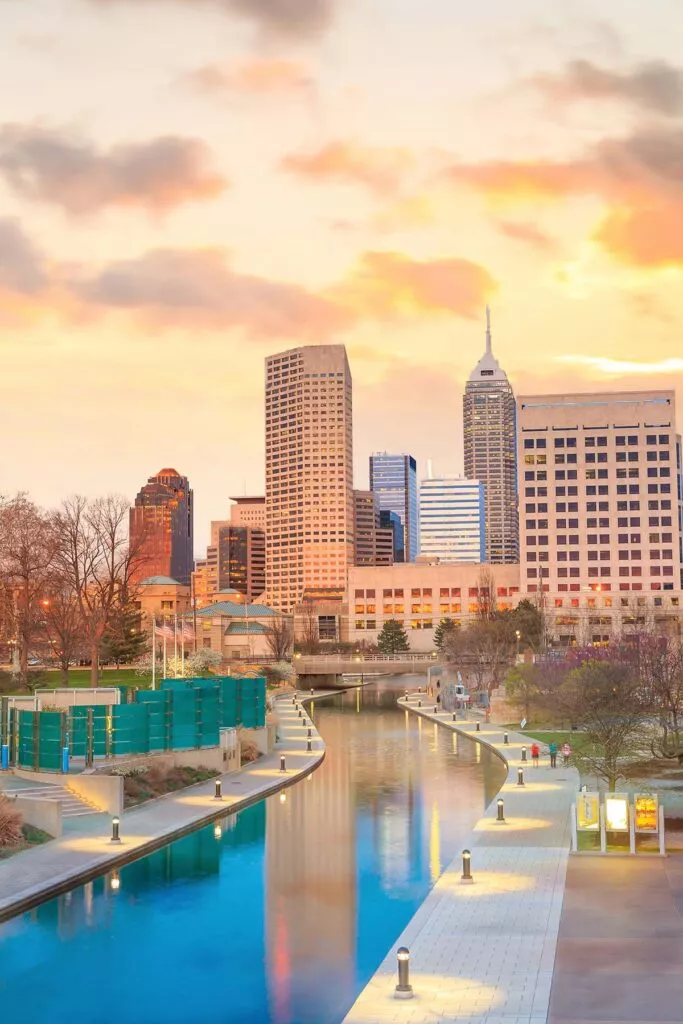
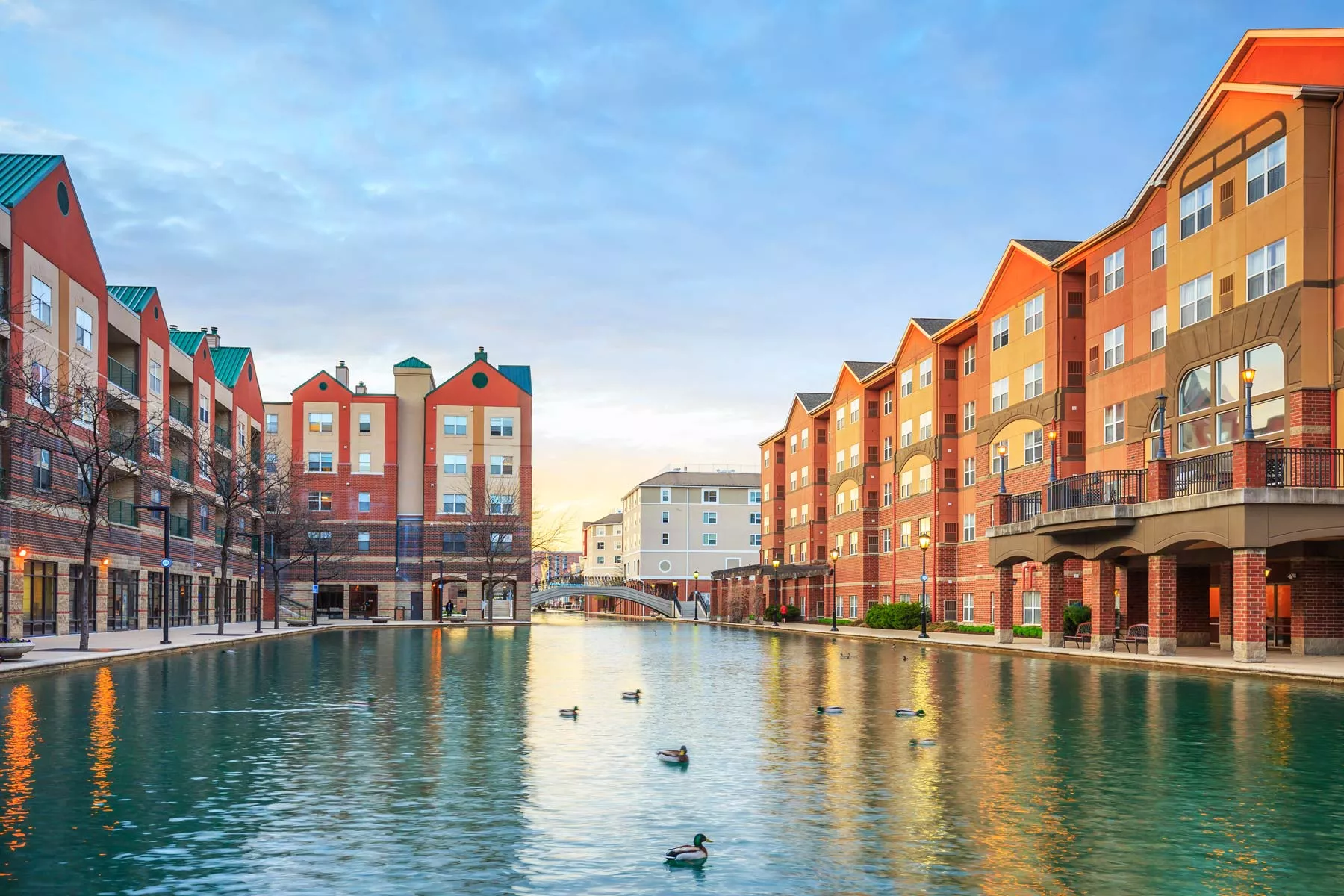
Mass Ave is the arts and culture corridor, with local restaurants, galleries, and theaters packed into a walkable stretch. Broad Ripple is the laid-back bar and restaurant neighborhood along the White River canal. Fountain Square has a vintage, creative vibe with live music venues and dive bars. Irvington is historic and community-oriented.
The northern suburbs (Carmel, Fishers, Westfield) consistently rank among the best places to live in the country, with excellent schools, low crime, and well-planned amenities. Carmel’s Arts and Design District and roundabout-heavy road system are nationally recognized.
#5. The People are Genuinely Friendly
Midwestern nice is real here. People wave, hold doors, and make small talk. The pace of life is noticeably slower than East Coast or West Coast cities. If you’re coming from a bigger, faster city, the friendliness can feel disorienting at first. In a good way.
The city has a strong volunteer culture and a genuine sense of community, especially in the established neighborhoods. Block parties, neighborhood associations, and local festivals are a big part of the social fabric.
#6. It’s Easy to Get Around (By Car)
Indianapolis was built on a grid, and the highway system is straightforward. I-465 loops the city, with I-65, I-69, and I-70 cutting through. Rush hour traffic exists but nothing like what you’d deal with in Chicago, Atlanta, or any coastal city. A 30-minute commute here covers a lot of ground.
The flat terrain and grid layout also make biking viable in many neighborhoods. The Indianapolis Cultural Trail, an 8-mile urban bike and pedestrian path, connects several downtown neighborhoods and is one of the best urban trails in the country.
#7. Family-Friendly Amenities
The Children’s Museum of Indianapolis is the largest children’s museum in the world. The Indianapolis Zoo, White River State Park, and Eagle Creek Park provide solid outdoor and family options. The suburbs have nationally recognized school systems, especially Carmel, Zionsville, and Hamilton Southeastern.
For families, the combination of affordability, good suburban schools, and low-stress living makes Indianapolis one of the strongest options in the Midwest.
- $1,375+0.1%Zillow Observed Rent Index (city) · 2026-0920th cheapest of 106 cities
- $310k±0FRED / realtor.com · 2026-0918th cheapest of 103 cities
- $227k−0.1%Zillow Home Value Index (city) · 2026-0921st cheapest of 105 cities
- 3.3%±0 ptBLS Local Area Unemployment Statistics · 2026-08tied for 14th lowest of 106 cities
- AQI 66ModerateAirNow · 10/20/26tied for 98th cleanest of 105 cities
- $3.77−2.6%AAA · 2026-10-2113th cheapest of 101 cities
Locals’ verdictGrade Indianapolis on cost, weather, jobs, people and safety · where it stands on our rankings
Cons of Living in Indianapolis
#1. Violent Crime is a Real Problem
Indianapolis recorded 209 homicides in 2024, the fifth straight year above 200. The good news is that 2025 saw a dramatic drop, with 133 murders representing a nearly 45% decrease. Overall crime fell 17%. But the city’s violent crime rate still exceeds the national average by a significant margin.
Crime is concentrated in specific neighborhoods, and the suburbs are generally very safe. But it’s a factor that anyone considering a move should take seriously, especially when choosing where to live.
#2. Public Transit is Weak
IndyGo operates the bus system, and the Red Line BRT (Bus Rapid Transit) that opened in 2019 was a step forward, running from Broad Ripple through downtown to the University of Indianapolis. It’s Indiana’s first BRT route and features all-electric buses. But one line doesn’t solve a city-wide problem.
Outside of the Red Line corridor, service is infrequent and coverage is limited. Indianapolis is fundamentally a car city, and if you don’t drive, your options are severely restricted. A Purple Line BRT is planned but still years away.
#3. The Winters are Gray and Long
Indianapolis averages about 25 inches of snow per year and winter temperatures regularly drop into the 20s. But the cold isn’t the worst part. It’s the gray. Overcast skies dominate from November through March, and the flat terrain means there’s nothing to break the monotony of the landscape.
Summers are warm and pleasant (highs in the low 80s), and spring and fall are beautiful. But the winter stretch can feel long, especially if you’re not used to Midwest weather patterns.
#4. The City is Very Spread Out
Indianapolis merged with Marion County in 1970 (Unigov), making the city limits cover 372 square miles. For context, San Francisco is 47 square miles. The result is a city that feels suburban in many areas, with strip malls, wide roads, and car-oriented development dominating outside the downtown core.
If you want a walkable, urban lifestyle, you’re limited to a handful of neighborhoods (Mass Ave, Broad Ripple, Fountain Square). Most of the city is built for driving.
#5. The Cultural Scene is Growing but Still Thin
Indianapolis has improved significantly in this area over the past decade. The restaurant scene, brewery culture, and arts community have all leveled up. But compared to peer cities like Nashville, Austin, or even Columbus, the nightlife and cultural variety still feel limited.
The city’s identity revolves heavily around sports and cars. If neither of those interests you, the cultural calendar can feel repetitive. There’s no major music scene, and the city doesn’t draw touring acts as consistently as larger metros.
#6. Poverty and Inequality Persist
The poverty rate in Indianapolis is about 16%, with sharp disparities by race. The poverty rate for Black residents is nearly 24%, compared to much lower rates for white residents. About 80,000 people live in areas of concentrated poverty with rates above 40%.
Indianapolis Public Schools (IPS) has struggled with declining enrollment and academic performance. Many families with means choose suburban school districts or private schools, which reinforces the inequality cycle.
#7. Indiana State Politics
Indianapolis leans politically progressive, but Indiana is a deeply conservative state. State-level policies on issues like reproductive rights, LGBTQ+ protections, and environmental regulation don’t always align with the city’s values. This is a consideration that matters to some people and not to others, but it’s worth knowing before you move.
Tell the next person the thing the guide misses.
FAQ – Living in Indianapolis
Is Indianapolis a good place to live?
For many people, yes. The affordability, job market, and family-friendly amenities make it a strong choice, especially for young families and professionals who don’t need to live in a coastal city. The tradeoffs are limited transit, winter weather, and crime in certain areas. If you’re okay with a car-dependent lifestyle and choose your neighborhood carefully, the quality of life is high for the cost.
Is Indianapolis safe?
It depends heavily on location. The suburbs (Carmel, Fishers, Zionsville) are exceptionally safe. Some city neighborhoods have elevated violent crime. The 2025 drop in homicides (down 45%) is very encouraging, but the city’s overall crime rate still exceeds the national average. Research specific neighborhoods before deciding where to live.
What are the best neighborhoods in Indianapolis?
Broad Ripple is walkable and lively with bars, restaurants, and canal access. Mass Ave is the arts and culture corridor downtown. Fountain Square has a creative, indie feel. Irvington is historic and community-focused. For suburbs, Carmel, Fishers, and Zionsville offer top schools and low crime.
What is the cost of living in Indianapolis?
The cost of living is 11% below the national average. The median home price is around $317,000. Median rent is about $1,250. Healthcare costs run 14% below the national average. The median household income is roughly $63,000, which goes further here than in most cities this size.
Pros & Cons of Living in Indianapolis (Post Summary)
Indianapolis is a city that works well for practical people. It’s not flashy, it’s not trendy, and it won’t blow you away on a weekend visit. But the affordability, the job market, the sports culture, and the genuine friendliness of the community add up to a quality of life that’s hard to match at this price point. The crime, the sprawl, and the limited transit are real downsides. But for people who value substance over style, Indy deserves serious consideration.
You may also be interested to read: 15 Honest Pros & Cons of Living in Indiana
Frequently Asked Questions About Living in Indianapolis
Indianapolis is one of the most affordable major cities in the country, and the quality of life reflects it. You get professional sports (Colts, Pacers, the Indy 500), a strong food scene that has come a long way in the past decade, and neighborhoods with real character like Broad Ripple, Fountain Square, and Mass Ave. The job market is solid in healthcare (multiple major hospital systems), logistics, tech, and the life sciences. The downsides: winters are cold and gray, the city is very car-dependent, and certain areas have significant crime. But for the cost of living, it is hard to find a better-rounded Midwest city.
Indianapolis is about 10 to 12% below the national average, which makes it one of the best values among large US cities. The median home price is around $260,000, and rents for a one-bedroom average $1,000 to $1,300. Carmel and Fishers (northern suburbs) are pricier at $350,000 to $450,000 but have excellent schools. Indiana state income tax is a flat 3.05%, one of the lower rates in the country. Property taxes are moderate. Groceries and utilities are near or below the national average. The financial math here is favorable for almost everyone, especially young professionals and families.
The city is entirely car-dependent. Public transit (IndyGo) exists but coverage is limited, and most people drive everywhere. The weather has real seasons: hot and humid summers, cold and gray winters with occasional ice storms. Allergies are significant in spring and fall. Neighborhood selection matters a lot because quality of life, safety, and amenities vary dramatically by area. The north side suburbs (Carmel, Fishers, Zionsville) consistently rank among the best in the country for families and schools. Downtown and the near-east side have been revitalized but still have pockets of high crime. And you will need to have an opinion about the Colts and the 500. That is just how it works here.
Helpful Related Articles
- Pros & Cons of Living in Indiana
- Pros & Cons of Living in Chicago
- Pros & Cons of Living in Ohio
- Pros & Cons of Living in Minneapolis
Related Reading
- Pros & Cons of Living in Indiana
- Pros & Cons of Living in Illinois
- Pros & Cons of Living in Ohio
- Pros & Cons of Living in Kentucky
- Pros & Cons of Living in Michigan
- What did the guide get wrong about Indianapolis?
- What does it actually cost you to live here this year?
- What would you tell someone arriving from out of state?