
Pros of Living in Atlanta
#1. The locals are genuinely friendly
The warmth of the people is hands down, my favorite thing about living in Atlanta, Georgia. Southern hospitality is a real thing and you can count on being greeted with a friendly hello and nod most anywhere you go.
Despite having half a million residents, Atlantans have a way of making you feel welcome wherever you go. There’s an enthusiastic city pride in Atlanta and locals love telling you how great the city is, making it easy to strike up positive conversations with locals.
Making friends in Atlanta has proven easier than making friends in other cities we’ve lived in (especially Portland, Oregon). If you’re open to striking up conversations and coming out of your comfort zone, you will find that Atlanta is a very friendly city.

#2. Atlanta is a great millennial city
Millennials make up 25% of Atlanta’s population and since the number is rising, business are catching on. It’s no coincidence that the Ponce City Market was received with such great enthusiasm! And since millennials prefer to shop local and support small businesses, as opposed to shopping at large chains, Atlanta has seen an increase in small shops as well.
In the past ten years, Atlanta has truly transformed into a city that caters to millennials and every time I visit my hometown, I find myself impressed by all the new cool shops and interesting restaurants!
#3. The BeltLine
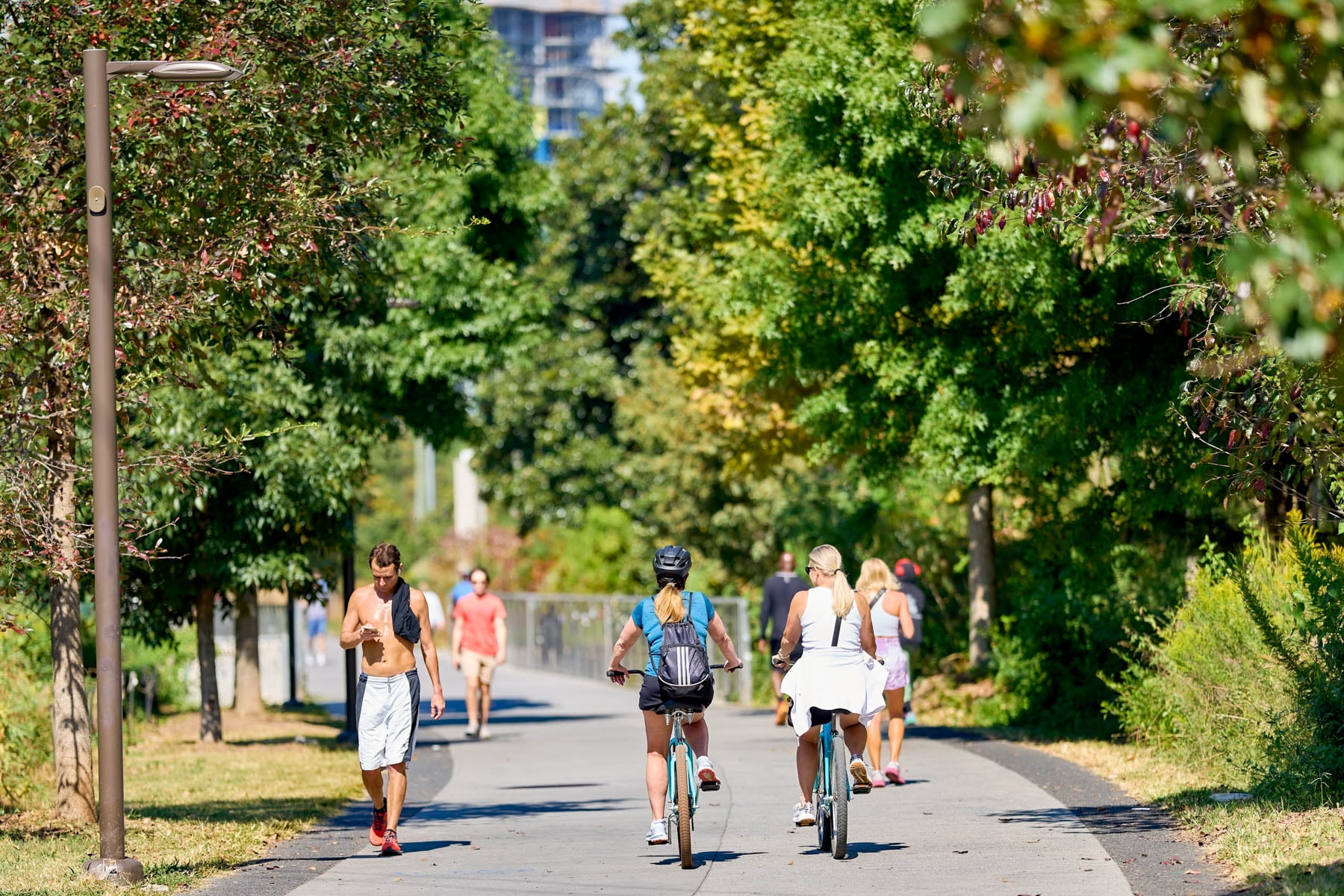
Another big pro of living in Atlanta is the incredible new project currently under construction (but still usable) called the BeltLine.
What is the BeltLine? It’s an expansive network of multi-use trails that unites various in-town neighborhoods.
Similar to the HighLine in New York City, Atlanta’s BeltLine is repurposing 22 miles of unused railroad tracks that encircle the city’s core in-town neighborhoods into walking, hiking and biking trails and green spaces. Yet another ode to the city determined to rise from the ashes into a better future!
Locals take great pride in the BeltLine and it’s not uncommon for folks to suggest walking portions of it with friends as a way to pass the time during the weekends.
#4. The food scene is incredible
Few folks know that Atlanta has recently been called one of the best food cities in the country due to the food diversity, quality and accessibility pleasing both visitors and locals alike.
Don’t make the mistake of assuming you’ll only find southern comfort food while living in Atlanta! Atlanta’s food scene has diversified over the years and you’ll be able to find a plethora of other cultural cuisines as well.
There’s plenty of farmer’s markets, restaurants and bars to choose from while living in Atlanta and one thing is certain — you’ll never go hungry.
Some of my favorite spots include Cafe Intermezzo,
#5. The cost of living is reasonable
They always tell you, “The cost of living’s affordable,” when talking about living in Atlanta. But let’s get real, no where in America truly seems affordable these days.
I can assure however, that living in Atlanta is far from the scraping to make ends meet necessitated by living in a place like San Francisco or New York City. Living in Atlanta you can afford the comforts without the constant worry of empty pockets or credit cards maxed out to the hilt.
And the groceries? You’re not shelling out an arm and a leg for basic necessities. A cart full of decent eats won’t leave you in financial ruin. And don’t get me started on real estate – it’s like stepping back in time. Decent homes that don’t cost a king’s ransom, and with yards to boot!
With a median price of a home is $325,000 (a 10% increase from last year) most folks find the city a reath of fresh air. A 10% increase in housing value may seem like a lot, but other metro regions are experiencing greater housing value surges and Atlanta is nowhere near the top of most expensive cities in America.
And when it comes to the niceties? Dining out, catching a movie, or just a night out in town won’t feel like you’re throwing your savings into a burning pit. It’s more like a pleasant night out than a nail-biting exercise in financial restraint.
Living in Atlanta is like finding a twenty-dollar bill in your jeans pocket on laundry day. It’s not like winning the lottery, but hey, it’s a welcome surprise. It’s like your wallet’s taken a long, satisfying sip of sweet tea on a warm southern day, and it’s got just the right amount of sugar.

#6. Mild winters
You’ve heard the old saying, “Winter is coming,” right? Well, living in Atlanta, it’s less ‘Game of Thrones’ and more like a cozy, Hallmark movie. See, we’ve got what they call ‘sweater weather’ down here. Not the sort where you’re bundling up like an Eskimo, but just enough chill to put a little color in your cheeks.
It’s not like those northern winters where you’re facing a constant barrage of snow and sleet, battling arctic winds every time you step out your front door. It’s more like Mother Nature gently reminding you that it’s time to dust off that favorite sweater of yours, and maybe add a scarf for a dash of style.
When the first hint of frost kisses your lawn, don’t expect to be wrestling with a snowblower or shoveling mounds of snow just to clear your driveway. Nah, it’s more about the beautiful spectacle of it all – perhaps a rare light dusting of white, like powdered sugar on a fresh beignet, just enough to make everything look a little magical.
And driving? No need for those tank-like 4×4’s or carrying around a shovel in your trunk ‘just in case.’ Sure, there might be a freak snowstorm every now and then that’ll keep you indoors for a day, but it’s not the norm.
#7. Atlanta is diverse
Another great perk of living in Atlanta is that the city is the rich diversity found within city limits. With approximately 51% of the population identifying as black, Atlanta is home to the second largest majority black metro area in the country.
What’s more, Atlanta is also home to one of the 19th largest LGBTQ+ populations per capita in the country (approximately 4.2% of Atlanta’s population identifies as gay, lesbian or bisexual). In fact, Atlanta is considered the second best gay-friendly city in the US!
It’s great to live in a city where diversity isn’t lacking!
#8. The Hartsfield-Jackson International Airport
Access to one of the largest airports in the world is definitely a big advantage of living in Atlanta! Employing a staggering 63,000 people, the Hartsfield-Jackson International Airport transfers 107 million passengers a year! It consistently ranks as the busiest airport in the world!
All this to say, having such an efficient airport in your hometown means you’ll always get where you need to go. The airport is great and I’ve always found flying out (and in) to Atlanta a breeze!
#9. Stable job market
If you’re moving to Atlanta with the hope of find a job, you’re in luck. With 16 Fortune 500 companies within city limits, Atlanta has one of the highest concentrations of Fortune 500 companies in the country. Large employers include hospitals, universities and infrastructure, there’s ample career opportunities to be had if you’re living in Atlanta.
Renowned companies like Delta Air Lines, The Home Depot, and Coca-Cola provide a steady stream of job prospects while the city’s burgeoning tech and entertainment sectors create an expanding reservoir of diverse roles.
- $1,942+0.3%Zillow Observed Rent Index (city) · 2026-0980th cheapest of 106 cities
- $415k−1.2%FRED / realtor.com · 2026-0955th cheapest of 103 cities
- $380k−0.2%Zillow Home Value Index (city) · 2026-0964th cheapest of 105 cities
- 3.4%+0.2 ptBLS Local Area Unemployment Statistics · 2026-08tied for 18th lowest of 106 cities
- AQI 52ModerateAirNow · 10/20/26tied for 73rd cleanest of 105 cities
- $3.73−1.7%AAA · 2026-10-2110th cheapest of 101 cities
Locals’ verdictGrade Atlanta, Georgia on cost, weather, jobs, people and safety · where it stands on our rankings
Cons of Living in Atlanta
#1. Lack of public transportation
Make no mistake, you will absolutely need to have a car for daily life in Atlanta and should be taken into account if you plan to move to Atlanta. The lack of public transportation is striking. I mean sure, there’s MARTA, but avoiding it is considered sport because it’s inefficient and feels unsafe.
You’ll need a car while living in Atlanta, without a doubt, so make sure it’s accounted for in your budget because — as you know — the gas, car insurance and maintenance adds up quickly. At least Georgia doesn’t have the most expensive gas in the country (looking at you, California)!

#2. The summer heat and humidity
Atlanta’s summer weather is notorious for being hot and muggy. Temperatures average 88-90°F from June – August but it’s the sneaky humidity that gets you! So you’ll definitely need this bad boy while living in Atlanta, make no mistake about it!
I will say though, the hot summers are nothing in the grand scheme of things because the temperatures are mild and pleasant most of the year, so it’s hard to complain about a few hot months!
P.S. Allergies are rampant during the hot and muggy summer months and bugs making it nearly impossible to enjoy the outdoors for long periods of time. Prepare for that!
#3. The urban sprawl
This might be nit-picky on my end but I really dislike that Atlanta has three downtown cores (Buckhead, Midtown and Downtown). The sprawling nature of Atlanta has led to a significant dependency on cars, resulting in congested roads and lengthy commutes.
Atlanta’s notorious traffic, particularly on the I-285 and I-85, can make even the shortest of trips a time-consuming endeavor (more on that below).
Moreover, the spread-out nature of the city makes public transportation less effective and efficient. Despite MARTA, the city’s public transit system, many areas remain poorly connected, necessitating a car for most people to reach work, shops, and recreational activities.
Additionally, urban sprawl has contributed to the fragmentation of communities and increased the environmental footprint due to higher energy consumption and increased pollution.

#4. Atlanta’s traffic is some of the worst in the country
The one piece of advice I often give friends thinking about moving to Atlanta is to live within the city limits or choose a neighborhood close to work because traffic will take up too much time otherwise. It feels like the traffic never lets up!
Give yourself plenty of time to get from Point A to Point B because the constant traffic (which is not just confined to weekdays) is one of the biggest cons of living in Atlanta. Atlanta consistently ranks as one of the worst cities in the country for traffic.
The sprawling nature of Atlanta, a product of its urban expansion, has created an intricate web of freeways that are often clogged with cars.
Public transportation, while present, often falls short due to the city’s sprawling layout. MARTA, the city’s primary transit system, does its best but can’t fully compensate for the car-centric design of Atlanta. The result? An increased reliance on personal vehicles, making the roads even more crowded.
#5. The bugs
Believe it or not, but Atlanta is considered the 4th worst city in the country for bugs. We’re talking ticks, mosquitos, cockroaches (oh and they have wings), fleas, etc. The sheer quantity of bugs is a major drawback of living in Atlanta because you can’t enjoy the outdoors too long during the summer months without getting eaten alive.
Given the city’s warm, humid climate and abundant green spaces, these critters have found a haven in Atlanta, often to the dismay of its residents. Add in the hot summers and mild winters, and you’ve got an ideal breeding ground for these pests, leading to a year-round bug season.
Among the most notorious are the palmetto bugs, or American cockroaches, which can grow to an alarming size and are often found in homes and buildings. Meanwhile, fire ants create large, visible mounds that can mar the landscape and deliver painful stings. Termites, too, pose a significant problem, causing considerable property damage each year.
In fact, I didn’t realize that folks in other parts of the country could keep windows open without screens! If you’re moving to Atlanta you can say goodbye to that — there’s a reason screened in porches practically come standard with most homes.

#6. Lack of variety in outdoor recreation
Some locals will tell you that Atlanta has ample outdoor recreation opportunities, but after 20+ years of living in Atlanta I can tell you that we’re lacking in the outdoor arena.
Don’t get me wrong, there’s a lot of beautiful places nearby like Stone Mountain, the Chattahoochee River and a handful of healthy forests — but by and large, Atlanta’s landscape gets somewhat boring after a while.
I’ll probably get some flack for sharing my unpopular opinion, but I want to be honest with you here. Lack of outdoor recreation and natural scenery was a con of living in Atlanta for me personally, and it wasn’t until I moved out west that I realized just how nutty folks get for outdoor activities!
Don’t hate the messenger — If you are looking for some outdoor recreation in Atlanta, you may find this article helpful.
Tell the next person the thing the guide misses.
FAQ – Living in Atlanta
If you don’t mind humid hot summers and enjoy mild winters, lots of green space, good food, and millennial vibes then Atlanta is a great place to live.
Relatively speaking Atlanta is a very affordable major US city to live in part due to low cost of housing and groceries compared to the national average.
Pros & Cons of Living in Atlanta Georgia (Post Summary)
In sum, these are the HONEST pros & cons of living in Atlanta Georgia
- The locals are genuinely nice
- Atlanta is a great city for millennials
- Mild winters
- Incredible food scene
- Reasonable cost of living
- Atlanta is diverse
- The BeltLine
- The great airport
- Stable job market
- Lack of public transportation
- The summer heat + humidity
- Traffic
- The urban sprawl
- The bugs
- Lack of varied outdoor recreation
Helpful Related Articles – Living in Atlanta
Living in Georgia: 16 HONEST Pros & Cons of Living in Georgia (Let’s Talk)
Living in Atlanta: 15 Honest Pros & Cons of Living in Atlanta, Georgia (Local’s Guide)
Best Places to Live in Florida: 15 Best Places to Live in Florida
Living in Florida: 20 Honest Pros & Cons of Living in Florida (+ Forum)
Living in South Carolina: 15 Honest Pros & Cons of Living in South Carolina
Living in North Carolina: 12 Honest Pros & Cons of Living in North Carolina
Living in Tennessee: 15 Honest Pros & Cons of Living in Tennessee
Pin Living in Atlanta


Atlanta in 2026, the Short Version
Update from The Honest Local, September 2026: everything from here down was added after the original local wrote this guide, with a source for each figure.
Housing cooled but never got cheap. The median listing price across the Atlanta metro was $415,000Median listing price, realtor.com via FRED, September 2026. Updates itself when the source does. in September 2026 (Realtor.com data via FRED), and Zillow’s rent index puts the typical Atlanta rent at $1,942Typical rent, Zillow, September 2026. Atlanta, GA (city). Updates itself when the source does. a month, up 0.3% from the month beforeTypical rent, Zillow, September 2026. Atlanta, GA (city). Updates itself when the source does.. Flat rent in a growing city is a small miracle. Take it.
The BeltLine finally connected its two halves. Southside Trail segments 2 and 3 opened in June 2026, a 1.9-mile paved link that joins the Eastside and Westside trails, which puts 16.7 of the 22 mainline miles in the ground. The full loop is funded through 2030. And on April 18, 2026, MARTA opened the Rapid A Line, its first bus rapid transit route (5 miles, 14 stations, a bus every 10 to 15 minutes), the same day it redrew the whole bus network from 113 routes down to 81 with far more all-day frequency. Real progress, not a press release.
The job market. Metro unemployment was 3.4%Unemployment rate, BLS, August 2026. Preliminary. Updates itself when the source does. in August 2026 (BLS), and the city itself crossed 529,000 residents in the Census Bureau’s July 2025 estimate. Georgia’s flat income tax sits at 5.19% for 2026 (the next scheduled cut did not trigger this year, per the Tax Foundation). And yes, the World Cup came through town. Mercedes-Benz Stadium hosted eight matches in June and July 2026, including the England and Argentina semifinal on July 15, and the city mostly pulled it off (traffic was exactly what you’d expect).
Figures marked with a dotted line update themselves from BLS, Zillow and realtor.com via FRED. Last checked October 21, 2026.
Locals split hard on this one. Many are frustrated by cost, safety, and a sense the city keeps changing under them. Transplants often praise the food, the diversity, and how central Atlanta is to mountains and coast alike, while longtime residents complain about traffic, rising cost of living, and neighbors they describe as unfriendly or ‘clannish.’
The recurring warning is about crime and cost together: people keep asking why the guide doesn’t address crime directly, and renters say wages haven’t kept up with rent and grocery prices. Bugs come up again and again too, with newcomers shocked to learn cockroaches here can fly. The real surprise for anyone reading a basic guide is how strongly Atlanta shows up as an LGBTQ hub in the South, even as some queer locals quietly keep exit plans ready in case state politics turn harsher.
“Georgia is absolutely awful for queer folk but Atlanta is still really great for us.”
Demeter Reader
“Crime is horrid, people are super rude, locals have fled to to the influx of rude Northerners.”
Jackson Reader