(Neutral) Things to Know About Living in Idaho
1. The Political Scene
Overall, Idaho is considered a very red state. The last democratic governor in the state was Cecil Andrus, who left office in 1995. You won’t find many Democratic politicians in office outside of Boise, and conservative state policies reflect that.
Worth mention: The political leanings of a city or state are neutral considerations and I won’t be labeling them as pros/cons. Rather, I’ll mention the stats for you to take into consideration before moving to Idaho.
2. Relaxed Gun Laws
Idaho is considered one of the most gun friendly states in the country. Laws allow residents to conceal and carry from the age of 18 and there are no requirements for universal background checks (also no assault weapon restrictions).
If you’re interested in learning more about the gun laws in Idaho, read this handy guide.

3. Boise Is One of the Fastest Growing Cities in the USA
In 2018, Boise was ranked the fastest growing city in America. The city’s popularity only grew during the global pandemic when hordes of millennials (and families) ended up moving to Boise for the more relaxed COVID regulations.
In fact, a shocking 194% more people moved to Idaho during the pandemic, making it the state with the most growth during that time.
Curious about Boise? Read: 15 Honest Pros & Cons of Living in Boise
Pros of Living in Idaho

1. The Affordable Cost of Living in Idaho
When compared to the national average, the cost of living in Idaho is (surprisingly) reasonable. Now, I completely understand that the cost of living has risen significantly over the past 5 years, but even still — folks are moving to Idaho to enjoy a more affordable way of life.
Median home prices in Idaho are on par with the national average (around $435,000), which, while increasing, still beats the soaring prices found in neighboring states.
Plus, essentials like groceries and healthcare often come in at lower prices too. In short, living in Idaho means you can enjoy a beautiful state without breaking the bank — a perk that can’t be overstated.
2. Relaxed & Friendly Locals
One of the biggest perks of living in Idaho is the relaxed vibe of the friendly locals. The state’s lower population density, with about 22 people per square mile, compared to the national average of around 93, plays a big part in fostering close-knit communities.
This slower pace of life often translates into people having more time for neighborly chats and community involvement. In towns across Idaho, it’s common to see a high level of civic engagement and local events that bring people together. So, if you’re looking for a place where the community spirit is strong and people tend to know and look out for each other, Idaho should be considered.

3. It’s Paradise for Nature Enthusiasts
Idaho is a treasure trove of natural beauty with a whopping 80% of land managed for public use. This means endless trails for hiking and biking and whatever form of outdoor recreation you prefer best. Plus, with more than 100,000 miles of rivers (more than any other state), you’re in for a treat if you love water sports like kayaking, rafting, or fishing.
Not to mention, Idaho’s home to 18 ski resorts, offering some of the best slopes for skiing and snowboarding. The state’s diverse landscape, from lush forests to rugged mountains, provides a playground for all sorts of outdoor activities year-round. All told, folks are moving to Idaho in hordes to take advantage of the great outdoors, and it’s hard to blame them.
4. Idaho is a Tax-Friendly State
Idaho has a progressive income tax system, with rates ranging from 1% to 6.5%, depending on your income bracket. Depending on where you’re moving from, you may find yourself with a lot more take home pay.
For example, if you’re moving to Idaho from the neighboring state of Oregon, your income tax will decrease by 3.5-9% (depending on income). However, if you’re moving to Idaho from Washington (which doesn’t impose a state income tax), you’ll find your take-home pay reducing by up to 6.5%.
Things to consider, for sure. Likewise, Idaho’s property taxes are also on the lower side, which is great news if you’re planning to buy a home.

5. The Craft Beer Scene is Top-Notch
With over 90 craft breweries dotted around the state, it’s a paradise for beer aficionados. Idaho ranks among the top states in the country for the number of breweries per capita, which means you’ll never go thirsty while living in Idaho.
The reason? Idaho is one of the largest producers of hops in the USA. This means local breweries have access to some of the freshest and finest ingredients right in their backyard. From hoppy IPAs to smooth stouts, the variety is impressive. And it’s not just about the beer; these breweries often serve as community hubs where locals gather, enjoy live music, and savor food truck delights. So, if you’re moving to Idaho, get ready to explore a vibrant and diverse craft beer scene filled to the brim with eager locals and visitors alike.
6. Low Crime Rates
Idaho’s got a reputation for being a pretty safe place, but don’t just take my word for it. The state consistently ranks as one of the safest in the country, with a crime rate that’s well below the national average. In fact, Idaho’s violent crime rate is about 207 incidents per 100,000 people, compared to the national average of around 379.
And when it comes to property crime, Idaho also scores low, with rates significantly lower than many other states. What does this mean for you? Well, moving to Idaho could bring some peace of mind, knowing you’re in a state where safety is a top priority. It’s one of those places where people still feel comfortable leaving their doors unlocked.
- $593k−1.0%FRED / realtor.com · 2026-0944th cheapest of 50 states
- $479k+0.4%Zillow Home Value Index (state) · 2026-0839th cheapest of 50 states
- 3.6%±0 ptBLS Local Area Unemployment Statistics · 2026-08tied for 21st lowest of 50 states
- $4.95−0.8%AAA · 2026-10-0544th cheapest of 50 states
- 95.5US = 100BEA Regional Price Parities (SARPP) · 2024
Locals’ verdictGrade Idaho on cost, weather, jobs, people and safety · where it stands on our rankings
Cons of Moving to Idaho

1. Idaho is Very White (Lack of Diversity)
Idaho is known for many great things, but when it comes to diversity, our state ranks as one of the worst. Relying on numbers alone, according to the U.S. Census Bureau, about 82% of Idaho’s population identifies as white, which is significantly higher than the national average. The state’s Hispanic and Latino population makes up about 13%, while other racial and ethnic groups represent a smaller percentage.
This lack of diversity is more pronounced in some areas than others, and it’s something that’s reflected in the state’s cultural and social dynamics. While Idaho offers a great quality of life in many respects, it’s not welcoming to those that don’t fit the homogeneous white mold. Hell, Coeur D’Alene is practically the capital for the racist extremist.
2. The Job Market is Limited
I think Idaho is a great place to settle down and raise a family, but if you’re the ambitious sort, you may find yourself frustrated with lack of career growth. There’s a few key things to know about the job market in Idaho. As of October 2023, the state’s unemployment rate was sitting at a low 3.2%, which is a good sign for job seekers (in certain fields).
The state has a healthy mix of industries, including manufacturing, education, health services, and leisure & hospitality, all showing significant year-on-year growth. Education and health services, in particular, have seen a remarkable 7.4% increase in jobs over the past year.
But if you’re looking to grow a career outside of the hospitality and farming industries (such as tech), jobs won’t be easy to come by. Harder still is advancement and promotions. As such, I don’t recommend moving to Idaho unless you can work remotely or you have a nice job offer waiting for you when you arrive. In my opinion, Idaho can be tough for the ambitious sort.

3. Poor Public Schools
If you’re moving to Boise with a family in tow, you’ll need to strongly consider their schooling options. Idaho’s public school system is rated as one of the worst in the country. For starters, only 47% of 3-5 year olds are enrolled in school, which is the second-smallest share in the nation. For reference, the national average is 61% enrollment rate.
Idaho is one of 12 states that doesn’t offer state-funded Pre-K programs to children under 5 years old. Secondly, our high school graduation rate clocks in at 80%, which is well below the national average of 86%. In fact, that abysmal graduation rate puts us in the top 10 lowest across all US states.
All this to say, you’ll definitely want to factor in the expense for your child’s education when considering the cost of living in Boise. Otherwise you’ll be taking a risk in our under-performing public school system.
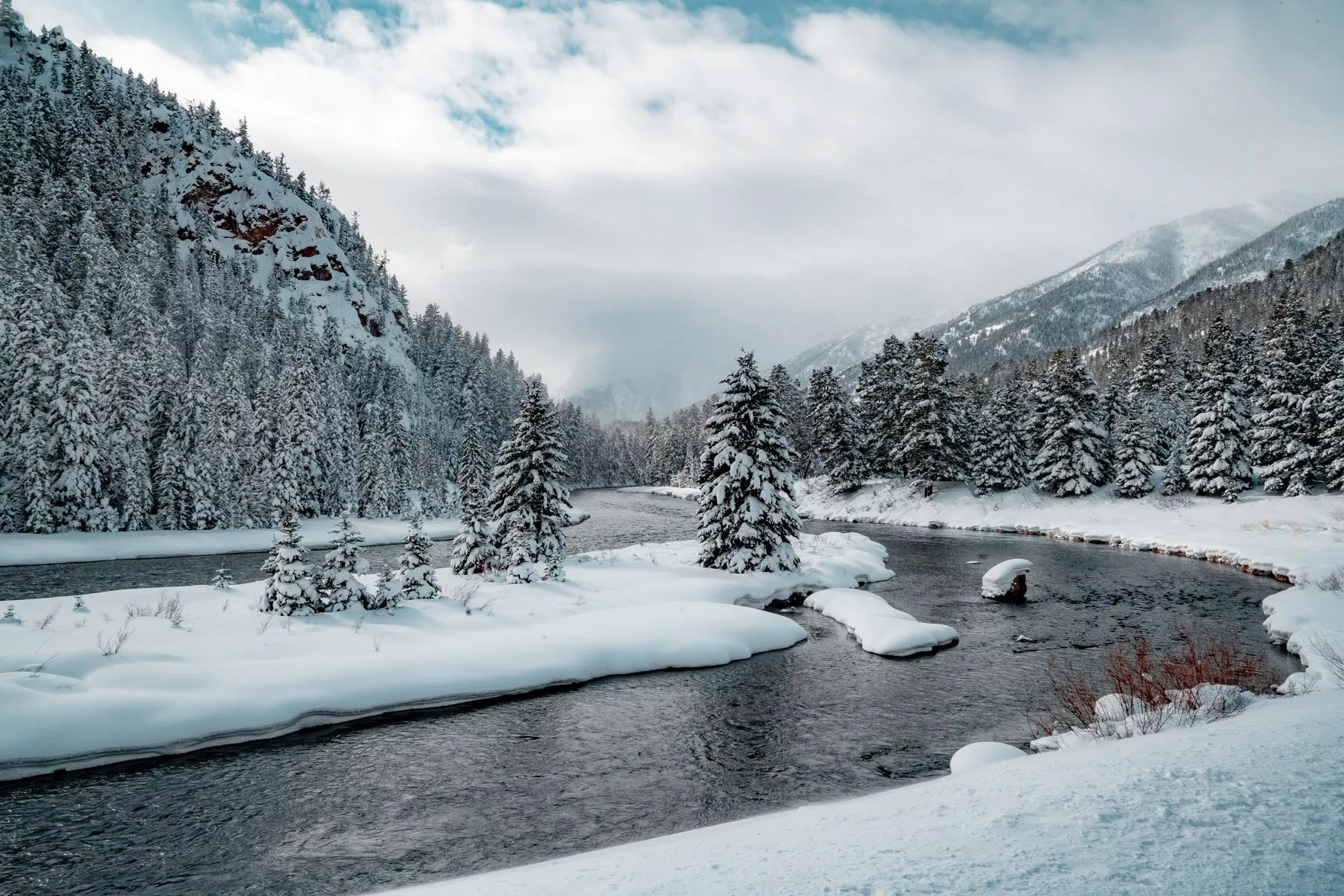
4. Winters Can Be A Brutal Affair
Depending on where you live in Idaho, winters can range from meh to downright terrible. The upper panhandle of the state sees loads of snow and ice every year which means road closures, driving hazards galore, and reduced movement generally speaking. The lower portion of Idaho sees its fair share of snow as well but roads are generally better maintained in winter.
Speaking for myself, I’ve gotten used to it and enjoy winter recreation but if I could shorten it by two months I’d absolutely do it.
5. Long Drives & Isolation
Another consideration if you’re thinking about moving to Idaho is the relative isolation which requires a lot of long drives depending on where you live in the state. In larger cities like Boise this won’t be much of a problem but elsewhere this can be a pretty big deal. I know folks who drive an hour plus for basic groceries. Rural life has its charms to be sure but it’s worth considering how well you’d do way out here.
Even in cities like Boise there’s a feeling (that lots of us love but certainly not everyone) that you’re really out there. The closest big city is Salt Lake which is 5 hours away driving. Beyond that there’s Portland, Oregon at 6.5 hours.

6. Wildfires
Wildfires is one of the scariest cons of living in Idaho. In fact, Idaho is the fifth worst state for wildfires. Every summer it’s only a matter of time before they start burning somewhere in the state. Sadly it’s a when, not an if type of situation and then the question is how bad and how close to me?
It’s downright scary and also a real downer in terms of things closing down. When the skies get hazy you can’t go out there safely. I’ve tried before and then I just get sick – pretty much like a bad cold which lasts a week or more. And there’s no escaping that unless you literally leave the area.
Tell the next person the thing the guide misses.
Retiring in Idaho FAQ
Yes, Idaho is a gem of a place to live in, especially if you enjoy the tranquility of nature and have a strong sense of community. Known for its breathtaking landscapes, from majestic mountains to peaceful lakes, it’s a paradise for outdoor enthusiasts. The cost of living is generally affordable, and the state boasts a low crime rate, adding to the appeal. Plus, Idahoans are known for their friendly and welcoming nature.
Yes, Idaho is known for its affordable living, lower than average crime rates, and a wealth of outdoor activities – perfect for those looking to stay active in the Golden Years. Plus, the state’s low cost of living, including reasonable healthcare costs and a tax structure that’s pretty friendly to retirees, makes your retirement savings stretch further. So, if you love nature and a quieter, more laid-back lifestyle, Idaho should be strongly considered.
The cost of living in Idaho varies depending on the area, but generally, it’s known for being pretty affordable, right in the middle of the national average (about 28th).
No. Marijuana, both for recreational and medicinal use, is illegal in Idaho. Making Idaho one of the few states in the United States where marijuana in all its forms is still not legal. Possession, cultivation, and sale of marijuana are subject to criminal penalties in Idaho
Idaho actually comes across as pretty tax-friendly, especially when you look at the numbers. The state has an low income tax rate (5.8%), which is noticeably less than the national average, pegged around 10.9%. So, if you’re crunching the numbers and comparing tax rates, Idaho stands out as a more affordable option in terms of state income tax. This lower tax rate is one of the perks that makes Idaho attractive, especially for folks who are mindful of their tax burdens.
People who live in Idaho are called “Idahoans.”
Map of Idaho
Compare the Pros vs the Cons of Living in Idaho
| Neutral | Pros | Cons |
|---|---|---|
| The Political Scene | The Affordable Cost of Living in Idaho | Idaho is Very White (Lack of Diversity) |
| Relaxed Gun Laws | Relaxed & Friendly Locals | The Job Market is Limited |
| Boise is growing quickly | It’s Paradise for Nature Enthusiasts | Poor Public Schools |
| Idaho is a Tax-Friendly State | Winters Can Be Brutal | |
| The Craft Beer Scene is Top-Notch | Long Drives & Isolation | |
| Low Crime Rates | Wildfires |
List of the Pros & Cons of Moving to Idaho (Post Summary)
In sum, here’s the things you should know before moving to Idaho.
- The political scene
- Relaxed Gun Laws
- Boise is one of the fastest growing cities in the USA
- The Affordable Cost of Living in Idaho
- Relaxed & Friendly Locals
- It’s Paradise for Nature Enthusiasts
- Idaho is a Tax-Friendly State
- The Craft Beer Scene is Top-Notch
- Low Crime Rates
- Idaho is Very White (Lack of Diversity)
- The Job Market is Limited
- Poor Public Schools
- Winters Can Be Brutal
- Long Drives & Isolation
- Wildfires
Please don’t hesitate to reach out with any questions you might have! I’m (more than) happy to help!
Cheers!
Pin Living in Idaho


Helpful Related Links
Best Places to Live in Idaho: 15 Best Places to Live in Idaho
Living in Boise: 15 Honest Pros & Cons of Living in Boise
Living in Washington State: 15 Honest Pros & Cons of Living in Washington State
Living in Oregon: 15 Honest Pros & Cons of Living in Oregon
Living in Montana: 15 Honest Pros & Cons of Living in Montana
Living in Wyoming: 15 Honest Pros & Cons of Living in Wyoming
Living in South Dakota: 15 Honest Pros & Cons of Living in South Dakota
Living in Nebraska: 15 Honest Pros & Cons of Living in Nebraska
The 2026 Numbers
Update from The Honest Local, September 2026: everything from here down was added after the original local wrote this guide, with a source for each figure.
Houses are no longer a bargain. Zillow’s index puts the typical Idaho home at $478,744Typical home value, Zillow, August 2026. Idaho. Updates itself when the source does. as of August 2026, up 0.4% from the month beforeTypical home value, Zillow, August 2026. Idaho. Updates itself when the source does.. The typical American home sat at $368,697 that same month.
The income tax got cut again. House Bill 40, signed in March 2025, dropped Idaho’s flat rate from 5.695% to 5.3%, and that rate carried into 2026. The old 1% to 6.5% brackets are gone entirely.
Growth has not slowed down. Idaho grew 1.4% in 2025, second only to South Carolina, and 10.4% since April 2020, the fastest of any state over that stretch.
Jobs are fine, not booming. Unemployment came in at 3.6%Unemployment rate, BLS, August 2026. Preliminary. Updates itself when the source does. in August 2026, but the state added just 8,500 jobs in the year to August 2026, 1.0% (BLS, preliminary). Micron’s first Boise fab hit its cleanroom milestone in spring 2026 and a $30 billion second fab was announced in June 2025, so the big money is still coming.
Two ballot fights land on November 3, 2026. HJR 4 would hand the legislature sole authority over marijuana law, and a separate certified measure would write a right to “reproductive freedom” into state law. Which way those go changes the answer to a couple of the FAQs below.
Fire came to town. The Claremont Fire pushed evacuation orders inside Boise city limits in summer 2026, and the Tartar Fire west of town burned 158,027 acres. More on that in the cons.
Cost of Living in Idaho
Idaho costs almost exactly what the country costs, right up until you buy a house. The Bureau of Economic Analysis price parity for 2024 is kinder at 95.5, about 4.5% under the country, and it scores Idaho housing at 90.0. On MERIC’s own categories (second quarter), groceries run above the line at 103.8 and so does transportation at 105.6, while utilities come in at 73.9, the number on this page most likely to make a Californian smile.
Housing is where the average stops being true. Zillow’s typical Idaho home was $478,744 in August 2026, against $368,697 nationally on the same index. Asking prices are worse. Realtor.com’s median listing was $599,000 here and $424,500 nationally that month, a 41% gap, and Idaho ranks 44th of 50 states for cheap listings. The median renter hands over 28.7% of their income (Census, 2020 to 2024), a hair under the 30% line where the housing people start saying burdened.
The rest of the monthly bill. Residential electricity ran 13.73 cents a kilowatt hour in July 2026 against 18.31 nationally (EIA), which goes a long way toward that utilities score. Income tax is a flat 5.3%Top state income tax rate, the Tax Foundation, 2026. Updates itself when the source does., one bracket, everybody.
Cost of living by city in Idaho
BEA only prices metro areas, so the three small towns get a blank in that column, and BLS and Zillow skip some small towns too, which is why Sandpoint and Hailey have more blanks.
| Metro area | Typical home | Typical rent | Prices vs US | Unemployment |
|---|---|---|---|---|
| Boise | $493,500 | $1,919 | 98.4 | 3.3% |
| Coeur d’Alene | $605,200 | $1,825 | 98.3 | 3.7% |
| Idaho Falls | $410,200 | $1,409 | 94.4 | 3.0% |
| Twin Falls | $386,800 | $1,565 | 92.1 | 3.2% |
| Lewiston | $377,700 | $1,466 | 91.2 | 3.0% |
| Pocatello | $353,100 | $1,097 | 88.9 | 4.0% |
| Rexburg | $443,000 | $1,147 | 3.4% | |
| Sandpoint | $659,700 | $1,912 | ||
| Hailey (Sun Valley) | $1,068,500 |
Read that table twice. Pocatello is the cheapest place BEA prices in Idaho, 11% under the US, and it also carries the highest unemployment of the six metros. Coeur d’Alene costs the same to live in as Boise on BEA’s parity and $112,000 more to buy into. Idaho Falls and Twin Falls are where the old “cheaper than the coast” story still holds, with two of the three lowest unemployment rates on the list. And Sandpoint at $659,700 and the Wood River Valley at $1,068,500 have priced themselves out of that story entirely.
Where to Live in Idaho, by Who You Are
Lesa asked in the thread what summers are like, since the winters get all the press, and Rick R.’s last line is a where-to-live tip in disguise.
Hi Lesa
Rick R., in the thread, June 2025
Since it doesn’t look like anyone responded to your question, I thought I might give it a shot. I lived in the Boise area of Idaho, and the summers were generally dry and hot, with temperatures in June and July ranging into the 90s, with some days in the lower 100s. I recall one summer when we had over 30 days of +90° F temps. We experienced a heat dome, which fried the whole northwest. Humidity is low though, which makes it much easier to bear. Summer temps in other parts of Idaho tend to be less extreme as you move away from the Boise micro-climate and move up in elevation.
The weather records back him up. Boise’s average July high is 92.7°F, and McCall’s, two hours north and about 2,300 feet higher, is 81.4 (NOAA normals, 1991 to 2020). So if summer is your worry, the where-to-live answer is up, not out.
Families with kids
The suburbs west of Boise are where the growth went. Meridian grew from 117,810 people in 2020 to 142,988 in 2025, a 21.4% jump that makes it the fastest growing city over 100,000 in the state, and Caldwell grew 27.4% over the same stretch to 76,629. The metro’s typical home is $493,500 and unemployment is 3.3%. If that price is the problem, Idaho Falls ($410,200, 3.0% unemployment) and Twin Falls ($386,800, 3.2%) are two family-sized cities where the house still costs less than the Boise metro’s.
Retirees
The tax math works and the medical math doesn’t. Now the part nobody selling you a lot in Coeur d’Alene mentions, from Susan, who’s been here 20 years.
The very poor medical health care in the state should also be mentioned especially for those considering retiring in the state. I have found that medicine is about 20 years behind in terms of treatment options and technologies available. Idaho is also listed near the bottom for number of physicians per capita. Transplants usually seek or retain their medical care out of state while natives unfortunately often receive less than ideal treatments.
Susan LeVeque, local for 20 years, in the thread, September 2025
The count behind her 20 years is 183.8 patient-care physicians per 100,000 people, second fewest in the country after Mississippi (AAMC, 2020 data).
So retire near a hospital you’ve checked out yourself, and near an airport. On price, Pocatello is the value play, a $353,100 typical home and the cheapest rent on the table at $1,097, with Idaho State University’s campus in town for the lectures and the games. Lewiston is $377,700 and prices at 91.2 on BEA’s scale, second only to Pocatello, and on a fixed income that scale is the number to watch. Coeur d’Alene is the one everybody pictures, and it’s $605,200 to picture it from your own porch.
People in their 20s
Boise, and then the college towns. Below Boise, Pocatello and Rexburg are where a first apartment costs the least. Pocatello (Idaho State) rents for $1,097, Rexburg (BYU-Idaho) is $1,147 with 3.4% unemployment, and Moscow (University of Idaho) grew from 25,466 to 26,721 people in five years, which for Moscow counts as a boom. Just know that Rexburg is a BYU-Idaho town and lives like one, and that none of the three has much of a career ladder after graduation. Everybody ends up in Boise eventually.
Remote workers
You’re the reason Sandpoint costs what it costs. The town went from 8,654 people to 10,645 between 2020 and 2025, a 23.0% jump, and the Sandpoint area’s typical home is now $659,700 with rent at $1,912, on a lake. The Wood River Valley, Hailey and Ketchum, is the exception to every price rule on this page at $1,068,500. If you want big scenery without the mortgage, Twin Falls at $386,800 sits on the rim of the Snake River Canyon. Two cons hit you harder than anyone.
Moving to Idaho, the Checklist
The stuff nobody writes about and everybody Googles. The rules and fees come from the Idaho Transportation Department and the State Tax Commission, checked September 24, 2026, and every item links to the page it came from so you can see if a fee has moved.
- Driver’s license, 30 days. Idaho gives you 30 days from the move to get an Idaho license, whether your old one has expired or not. Bring proof of citizenship or lawful presence, identity, Idaho residency and your name, and a second, different proof of residency if you want the Star Card, which is Idaho’s REAL ID. The ITD guide says anyone who’s never held an Idaho license takes the written test on Idaho traffic law ($5), and the road test only comes up if you’ve never been licensed, your license is from abroad (Germany, Korea and Taiwan excepted), or it’s been expired 25 months or more. You’ll need 20/40 vision in at least one eye. The license itself is $35 for four years if you’re 21 or older, or $60 for eight if you’re between 21 and 62. (Straight from Idaho Transportation Department, New to Idaho and the driver’s license fee table.)
- Your car, also 30 days. Title and registration both switch within 30 days, and you bring the car with you, because a DMV employee checks the VIN at the counter. Bring the current title and registration, the lienholder’s name and address if the bank holds the title, and your ID. Your insurance has to be with a carrier admitted in Idaho, at the state minimums of $25,000 per person, $50,000 per accident and $15,000 property damage, and the state checks coverage electronically. State registration runs $69 a year for a car one or two years old, $57 at three to six years and $45 at seven and up, plus your county’s admin fee ($9.50 in Ada), plus $140 a year for an electric car or $75 for a plug-in hybrid. The title is $14 plus a county fee, $21 all in for Ada County. Plates come by mail, so allow six weeks. DMV counters are run by the county sheriff or assessor. (Straight from ITD, New to Idaho and ITD, vehicle registrations and fees.)
- Income tax. You’re an Idaho resident for tax purposes if you’re domiciled here all year, or keep a home here all year and spend more than 270 days in the state. The year you move, you’re a part-year resident, and Idaho taxes what you earn from the day you arrive, plus anything from Idaho sources. The rate is a flat 5.3%Top state income tax rate, the Tax Foundation, 2026. Updates itself when the source does. (Tax Foundation, 2026). (Straight from the Idaho State Tax Commission’s individual income tax guide.)
- Property tax, and the form you have to file. The homeowner’s exemption takes 50% of your home’s value and up to one acre off the tax rolls, up to $125,000, and it’s a big part of why the effective rate up top is under half a percent. Here’s the catch for a mover. It ends when a house changes hands, so the previous owner’s exemption dies with the sale and you apply for your own at the county assessor’s office. Don’t skip it. If you’re 65 or older, blind, widowed or disabled, the Property Tax Reduction program takes another $250 to $1,500 off, for the 2027 program if your 2026 income after medical expenses was $40,030 or less, and it requires the homeowner’s exemption to already be in place. (Straight from the Idaho State Tax Commission’s homeowner’s exemption page and its property tax reduction page.)
Idaho vs Washington, Montana and Utah
| Idaho | Washington | Montana | Utah | |
|---|---|---|---|---|
| Prices vs US (100) | 95.5 | 107.0 | 94.6 | 98.9 |
| Housing vs US (100) | 90.0 | 126.0 | 84.6 | 107.8 |
| Typical home | $478,700 | $591,900 | $471,700 | $534,600 |
| Median household income, 2020 to 2024 | $77,800 | $98,141 | $72,509 | $95,166 |
| Unemployment | 3.6% | 4.9% | 3.2% | 3.5% |
| Violent crime per 100k | 221 | 292 | 422 | 225 |
| Property crime per 100k | 624 | 2,017 | 1,468 | 1,319 |
| Income tax on wages | 5.3% flat | none | 5.65% top | 4.5% flat |
| Effective property tax (Census) | 0.49% | 0.81% | 0.72% | 0.52% |
| Combined sales tax | 6.03% | 9.57% | none | 7.42% |
| Median age | 37.3 | 38.3 | 40.4 | 32.0 |
| Movers in 2025 | +19,915 | +9,238 | +6,348 | +3,343 |
Against Washington. It’s the trade most Northwest transplants weigh. Everything else costs more. Washington wins on the paycheck even after its prices. You get the cheaper house here, and you get to leave your bike unlocked.
Against Montana. Montana added 6,348 movers in 2025.
Against Utah. If the paycheck is the whole question and you can carry the mortgage, Utah’s numbers probably win.
Questions people ask about Idaho
What do I need to do when I move to Idaho?
Four things, all in the checklist above. Get an Idaho driver’s license within 30 days ($35 for four years if you’re 21 or older), retitle and register your car within 30 days with the car present for a VIN check and Idaho insurance in place, understand that you’re a part-year resident for income tax the year you arrive, and file for the homeowner’s exemption at the county assessor the moment you close on a house, because the previous owner’s exemption dies with the sale.
Is Idaho cheaper than Washington, Montana and Utah?
Cheaper than Washington and Utah, about even with Montana. On BEA’s 2024 price parities Idaho sits at 95.5 against Washington’s 107.0, Utah’s 98.9 and Montana’s 94.6, and Idaho housing scores 90.0 against Washington’s 126.0. The typical Idaho home is $478,700 against $591,900 in Washington and $534,600 in Utah, and only $7,000 more than Montana. Washington pays better and has no income tax, which is the trade the neighbor section walks through.
Where in Idaho should I live?
It depends on who you are, and the where-to-live section above sorts it that way. Families went to Meridian and Caldwell west of Boise, or to Idaho Falls and Twin Falls for a cheaper house. Retirees should pick Pocatello or Lewiston on price and then check the hospital before the porch. People in their 20s want Boise for the job market. Remote workers already found Sandpoint and Coeur d’Alene, and paid for it.
Figures marked with a dotted line update themselves from BLS, Zillow and the Tax Foundation. Last checked October 5, 2026.
Only a quarter of posters said they’d move to Idaho again, and the thread splits sharply between transplants drawn by low crime and lower taxes and locals who warn newcomers away from the state’s shortcomings. Longtime residents keep repeating one practical warning: medical care lags badly, with one 20-year local saying treatment options are about 20 years behind and that Idaho ranks near the bottom for physicians per capita. Other posters flag winter inversion layers that trap pollution and block the sun for days, plus summers that can hit the 100s in the Boise area.
What a newcomer wouldn’t expect from a simple pros-and-cons guide is how much of the conversation turns into a fight over the state’s racial makeup, with commenters arguing for pages about whether being predominantly white counts as a con at all. A few locals push back, noting that most white nationalist incidents traced to the area actually involve out-of-state people rather than Idahoans themselves.
“I have found that medicine is about 20 years behind in terms of treatment options and technologies available.”
Susan LeVeque Local · 20 years
“Your first 'con' is the very BEST reason to consider Idaho! It also accounts for the low crime and lower taxes.”
john844 Reader
“the summers were generally dry and hot, with temperatures in June and July ranging into the 90s, with some days in the lower 100s”
Rick R. Reader