Pros of Living in Colorado
1. The Economy is Booming
Let’s start our list of the pros of moving to Colorado with one everyone will love. Colorado’s unemployment rate was 4.0%Unemployment rate, BLS, August 2026. Preliminary. Updates itself when the source does. in August 2026 (BLS preliminary), 24th among the states. Median household income here was $95,470 in the Census Bureau’s 2024 American Community Survey, which is well above the national figure and is the main reason the high housing costs further down this page are survivable at all.
One of the best parts of the economy here in Colorado is that it’s not just based on any single industry but rather a range of growing ones. Tourism is a huge driver of economic opportunity in Colorado thanks to the stunning natural scenery and plenty of recreational opportunities.
Another important aspect of Colorado’s economy is its growing technology industry with some of the top areas being cybersecurity, aerospace, and biotechnology. The state is known for producing a variety of crops, including wheat, corn, and hay, as well as raising cattle and sheep. Other major industries in Colorado include agriculture, manufacturing, and healthcare.
2. The Job Market Is Diversified, Not One Company Deep
The thing I would actually sell you on is not a ranking, it’s the spread. Aerospace and defense along the Front Range, federal labs in Boulder and Golden, health systems in Denver and Aurora, oil and gas in Weld County, agriculture on the eastern plains that has more in common with Kansas than with Aspen, and a tourism economy that runs on the mountains. No single employer can wreck the state by leaving.
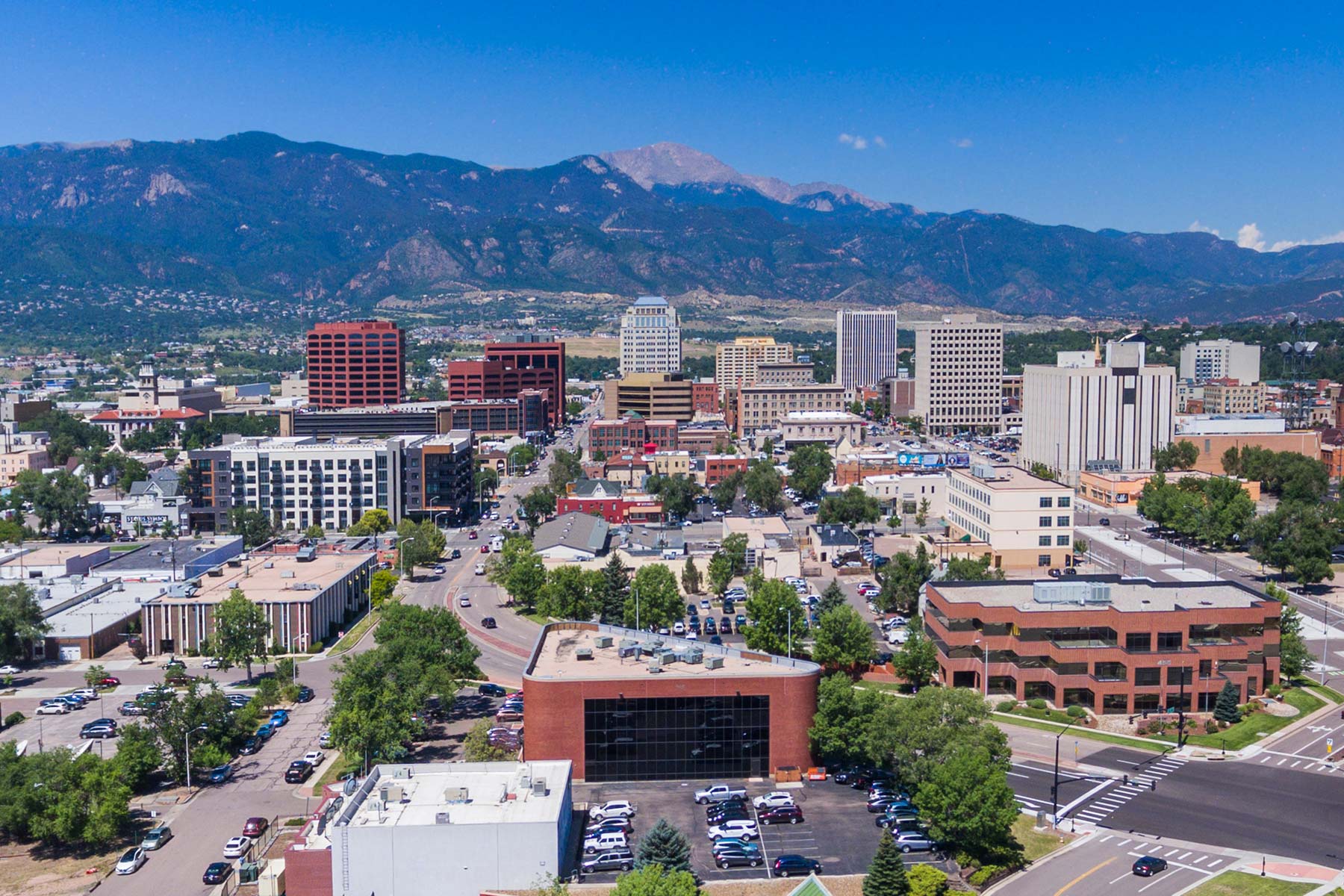
One employer can still wreck a single city, though. Colorado Springs is finding that out. The Pentagon confirmed on September 2, 2025 that US Space Command headquarters is moving from Peterson Space Force Base to Huntsville, Alabama, taking at least 1,400 civilian positions, with roughly half of them relocated by 2028. If you are moving to the Springs for defense work specifically, ask where your program lands after 2028.
3. Living in Colorado the Natural Beauty is Amazing
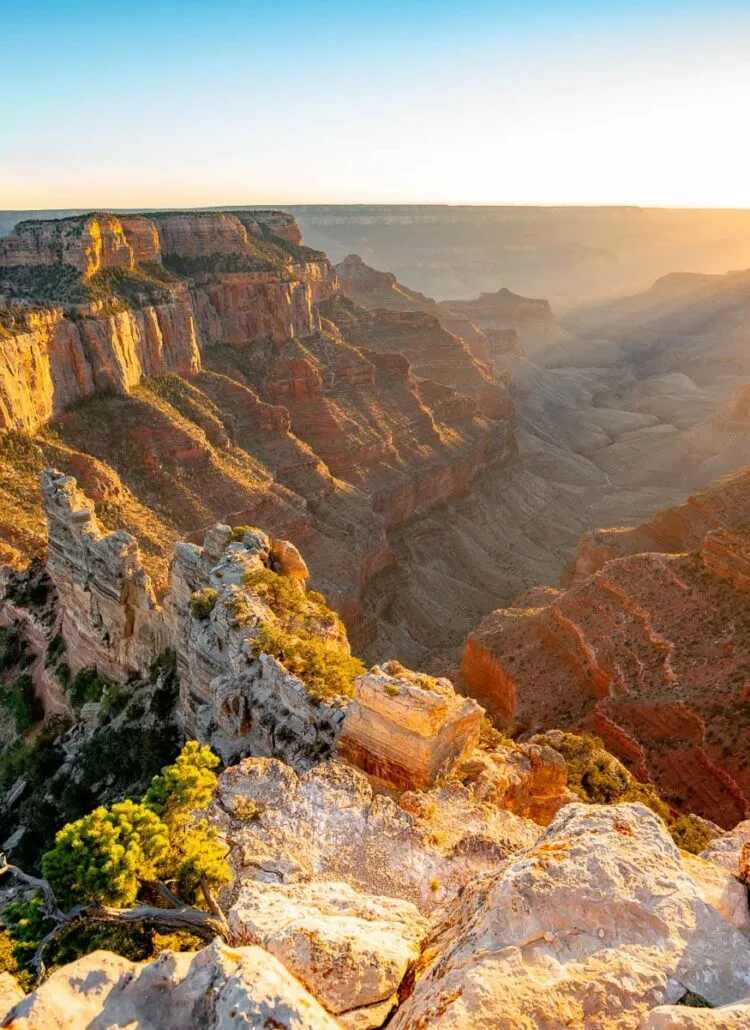
Nature nuts (like me) rejoice, Colorado is one of the most beautiful states in America chocked full of truly breathtaking natural wonders. Almost everywhere you turn you’ll find incredible and varied natural splendor. From some of the highest peaks in America to some of its deepest canyons, wild and scenic rivers, rugged wilderness, high desert, and so much more.
Colorado has four national parks. Rocky Mountain, Mesa Verde, Black Canyon of the Gunnison, and Great Sand Dunes. Rocky Mountain is one of the five most visited national parks in the country. Mesa Verde, down in the southwest corner, is the one people forget, and it is the best of the four if you care about anything older than a ski lift. Beyond the parks you have 11 national forests, 2 national grasslands, and millions of acres of BLM land.
4. World Class Outdoor Recreation
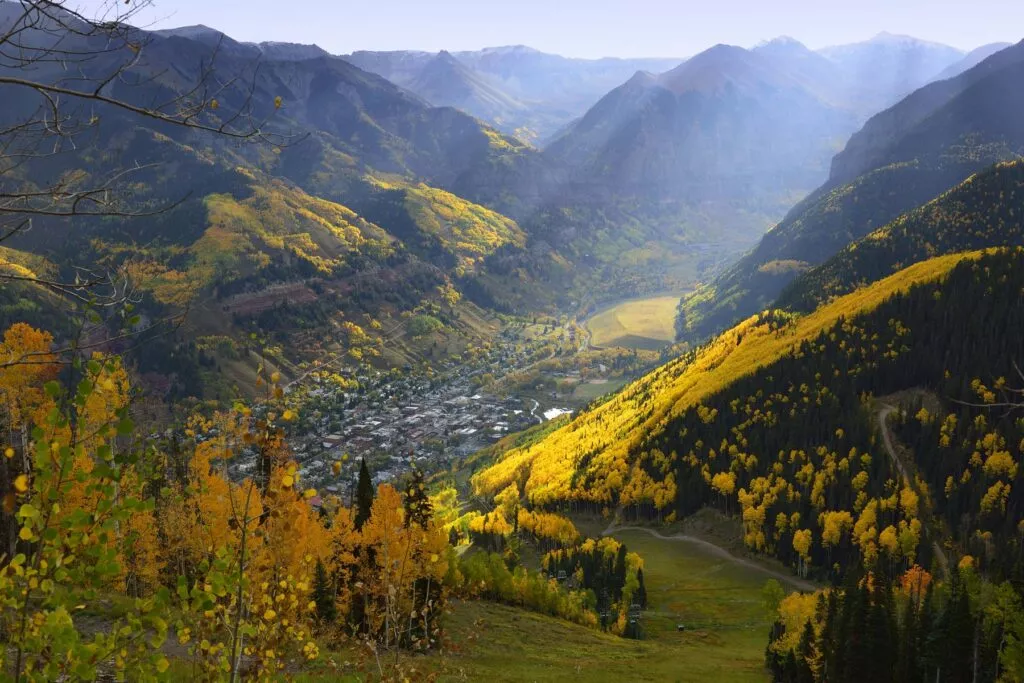
Just about every sport you can name is accessible here, and winter is the headline. The big Colorado ski destinations are Vail, Aspen and Snowmass, Breckenridge, Keystone, Steamboat, Winter Park, Telluride, Crested Butte, and Copper Mountain, most of them off I-70 or US 40 within a few hours of Denver. One correction worth making, because I see it in print constantly. Park City and the Cottonwood Canyons are in Utah, a full state west of here. Anyone who mixes up the two has never sat in the I-70 ski traffic at Georgetown on a Saturday morning.
Summer is just as loaded. Telluride and Crested Butte are serious mountain biking towns, there are 53 true fourteeners to work through if peak bagging is your thing, and the public land is close enough to a Front Range address that you can be at a trailhead before most people finish their coffee. If outdoor recreation is the reason you are looking at this state, it delivers.
The outdoor access is the reason most people move here. It is also the reason most of them stay after the first winter utility bill.
5. Colorado Is a Highly Educated State
Thinking about moving to Colorado to surround yourself with intellectuals? Smart idea. About 44% of Colorado adults over 25 hold a bachelor’s degree or higher in the Census Bureau’s American Community Survey, which puts the state in the national top five. Boulder and Fort Collins skew that number hard, and so does the federal science payroll in Boulder and Golden.
For one reason or another Colorado seems to attract smarty pants from all over the world. Perhaps is the emerging tech sector or maybe the more educated folks want to feel above everyone else literally (Colorado is the highest state in the US in more ways than one).
6. Coloradans are Friendly Folks
I am going to give you this one without a ranking attached, because the ranking sites all disagree with each other. What I can tell you from living here is that Colorado friendliness is real but it is trailhead friendliness, not front porch friendliness. Strangers will happily talk to you for twenty minutes about tire chains, snowpack, or which pass is closed. Getting invited to dinner takes longer.
Transplants notice this. A lot of people arrive from the Midwest or the South expecting the same warmth they left and find something more polite than close. Give it two ski seasons.
7. Living in Colorado is a Healthy Choice
Healthy living really is the default setting here, and it is less about kale than about geography. The trails, the bike paths and the ski hills are close enough to an ordinary workday that exercise stops being a plan and becomes a commute. The Front Range bike network runs for miles along the Platte and the Cherry Creek, and a Denver address puts you inside two hours of four national forests.
One caveat on the health picture that is new this year. Colorado’s Medicaid population is being reworked. The Colorado Sun reported on September 2, 2026 that 377,000 Coloradans received letters about new Medicaid work requirements. If your household is on Health First Colorado, that letter is not junk mail and the paperwork deadline is real.
8. Colorado is a Sunny Place
For me, how much sunshine a place gets is critically important, so this was a real factor in moving here. Now, the number you will see on every Colorado tourism page is “300 days of sunshine,” and I would not lean on it. The National Weather Service 1991 to 2020 normals put Denver at roughly 3,100 hours of sunshine a year, about 70% of the possible total. That is genuinely sunny. It is not 300 cloudless days, and the difference matters if you are moving here to treat seasonal depression.
The amount of sunshine that Colorado receives can vary depending on the region. For example, the eastern and southern parts of the state, including Denver and Colorado Springs, tend to receive more sunshine and have a more arid climate, while the western and northern parts of the state, including the mountains, tend to be cooler and receive more precipitation.
9. Less Expensive Than Other “Desirable” West Coast States
Colorado is expensive compared to most of the country, but it is not West Coast expensive, and the gap actually widened in the state’s favor this year. MERIC’s second quarter of 2026 series puts Colorado at 102.7Cost of living index, MERIC, second quarter of 2026. housing 108.6. Updates itself when the source does., which is 2.7% above the national average, down from 105.2 in the prior series. That is a real move, and it is mostly the rent side of the ledger doing it.
Eight western states now cost more to live in than Colorado. Hawaii, California, Alaska, Washington, Oregon, Arizona, Montana, and, as of this year, Nevada. Utah, Idaho, Wyoming and New Mexico are all still cheaper than Colorado, and if you are shopping the Mountain West purely on price, that is your short list. Albuquerque in particular gets a lot of Front Range refugees who wanted mountains without a $575,000 median listing price.
Western States with Highest Cost of Living
| State | Cost of Living Index (Q2 2026) |
|---|---|
| Hawaii | 185.8 |
| California | 140.3 |
| Alaska | 124.5 |
| Washington | 115.1 |
| Oregon | 110.4 |
| Arizona | 108.6 |
| Montana | 106.0 |
| Nevada | 105.4 |
| Colorado | 102.7Cost of living index, MERIC, second quarter of 2026. housing 108.6. Updates itself when the source does. |
| Idaho | 99.4 |
| Utah | 98.4 |
| Wyoming | 94.4 |
| New Mexico | 90.2 |
Source: Missouri Economic Research and Information Center, second quarter 2026. 100 is the national average.
A caution on that index. It is a blended figure, and it hides the thing that actually gets people. Housing in Colorado runs well above the national line while groceries and utilities run close to it, so the state feels affordable right up until the mortgage or the rent lands.
- $569k−1.1%FRED / realtor.com · 2026-0839th cheapest of 49 states
- $533k+0.1%Zillow Home Value Index (state) · 2026-0843rd cheapest of 49 states
- 4.0%+0.1 ptBLS Local Area Unemployment Statistics · 2026-0827th lowest of 49 states
- $4.26+0.6%EIA Weekly Retail Gasoline Prices · 2026-09-2118th cheapest of 50 states
- 103.1US = 100BEA Regional Price Parities (SARPP) · 2024
Locals’ verdict3 locals scored cost, weather, jobs, people and safety; where Colorado stands on our rankings
The percentage shows at 10 votes.
Cons of Moving to Colorado

1. High Cost of Living
Cheaper than the West Coast is not the same as cheap. Colorado still sits above the national line at 102.7Cost of living index, MERIC, second quarter of 2026. housing 108.6. Updates itself when the source does. on MERIC’s second quarter of 2026 index, and the two line items doing the damage are housing and, newly, insurance.
The one that surprises people now is homeowners insurance. Insure.com’s 2025 study put the Colorado average at $4,963 a year against a national average of $2,543. That is roughly double, and it is not a rounding error in a monthly budget. Hail is the biggest driver, wildfire is the fastest growing one, and a mountain or foothills address can push a quote well past that state average. Get a real quote on the specific address before you make an offer, not a generic state estimate.
The tax side is genuinely gentle by comparison. Colorado charges a flat 4.40% income tax, the state sales tax is only 2.90% (the combined state and local average is 7.89%), and the effective property tax rate on owner occupied housing is 0.50%, one of the lowest in the country. All Tax Foundation, 2026. At 0.50%, the property tax on a $600,000 Colorado home works out to roughly $3,000 a year, which is why the tax bill is almost never the line that scares new arrivals here. The insurance bill is.
2. Expensive Housing Prices
If you’re looking at moving to Colorado to save a buck on home prices, think again. The statewide median listing price was $568,900Median listing price, realtor.com via FRED, August 2026. Updates itself when the source does. in August 2026 (Realtor.com data via FRED), and the Census Bureau’s 2024 American Community Survey put the median value of an owner occupied Colorado home at $539,400.
By metro, as of August 2026, Denver is at $574,900, Fort Collins at $575,000, and Colorado Springs at $489,000. Boulder and the mountain towns are their own planet. Prices have flattened rather than fallen, so the relief people keep waiting for has not arrived, it just stopped getting worse.
Renting is the better story right now, and it is not the story anyone was telling two years ago. Apartment List’s August 2026 report has Denver among the largest rent declines in the country, the result of an apartment construction boom finally landing. The Denver median one bedroom was $1,427 and the two bedroom $1,778 as of July 2026. Still above the national medians of $1,221 and $1,376, but moving in your direction for once. If you are not certain which side of the Front Range you want to land on, rent for a year and let the market keep working.
3. Wildfires
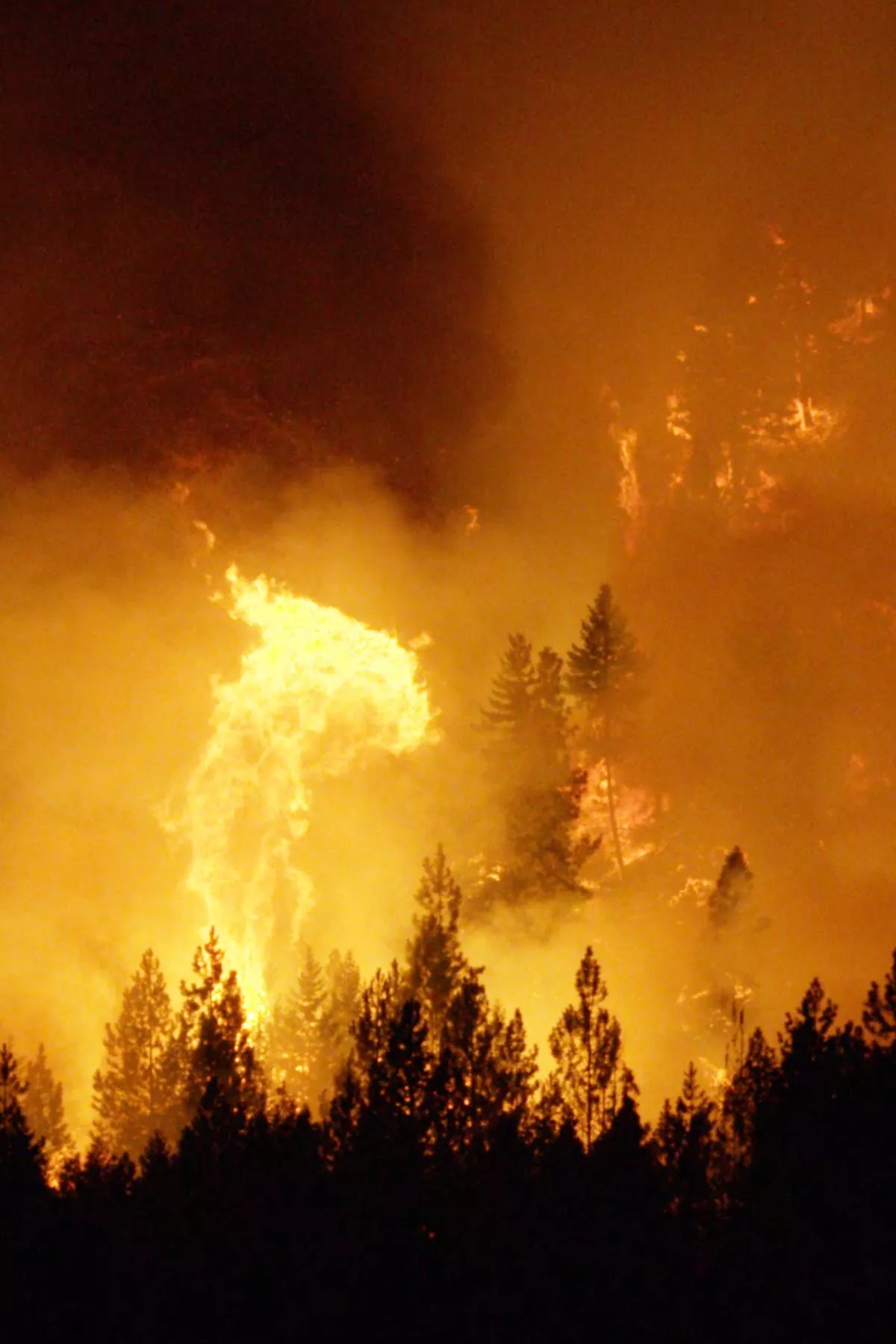
This is the con I would weigh hardest, and 2026 is the reason. 2020 still holds the acreage record, with the Cameron Peak Fire alone burning 208,913 acres and the East Troublesome Fire 193,812. But 2026 was the year the risk stopped being abstract for people who do not live in the mountains.
Roughly 235,000 acres burned statewide in 2026 after a record low snowpack in January and a record March heat wave. The Aspen Acres Fire, which started June 29, 2026 south of Pueblo, ran to 102,004 acres across three counties and destroyed more than 850 structures including 319 homes, which makes it the second most destructive fire in Colorado history. Three people died in the state’s fires that season. In 2025, the Lee Fire in Rio Blanco County burned 137,758 acres, the fifth largest in state history.
One correction to the geography, because it gets repeated a lot. The big acreage fires are mostly in western and southern Colorado, but the population is not. The great majority of Coloradans live along the eastern Front Range urban corridor, from Fort Collins down through Denver to Pueblo. That corridor is exactly where both of the two most destructive fires in state history happened.
Which brings me to the Marshall Fire. On December 30, 2021 it destroyed 1,084 homes and 7 commercial buildings in Superior and Louisville, in a single day, in winter, in the suburbs, on grass rather than timber. It is still the most destructive fire the state has had. If you take one thing from this section, take that one. Colorado wildfire is not only a mountain cabin problem.
4. Harsh Winters
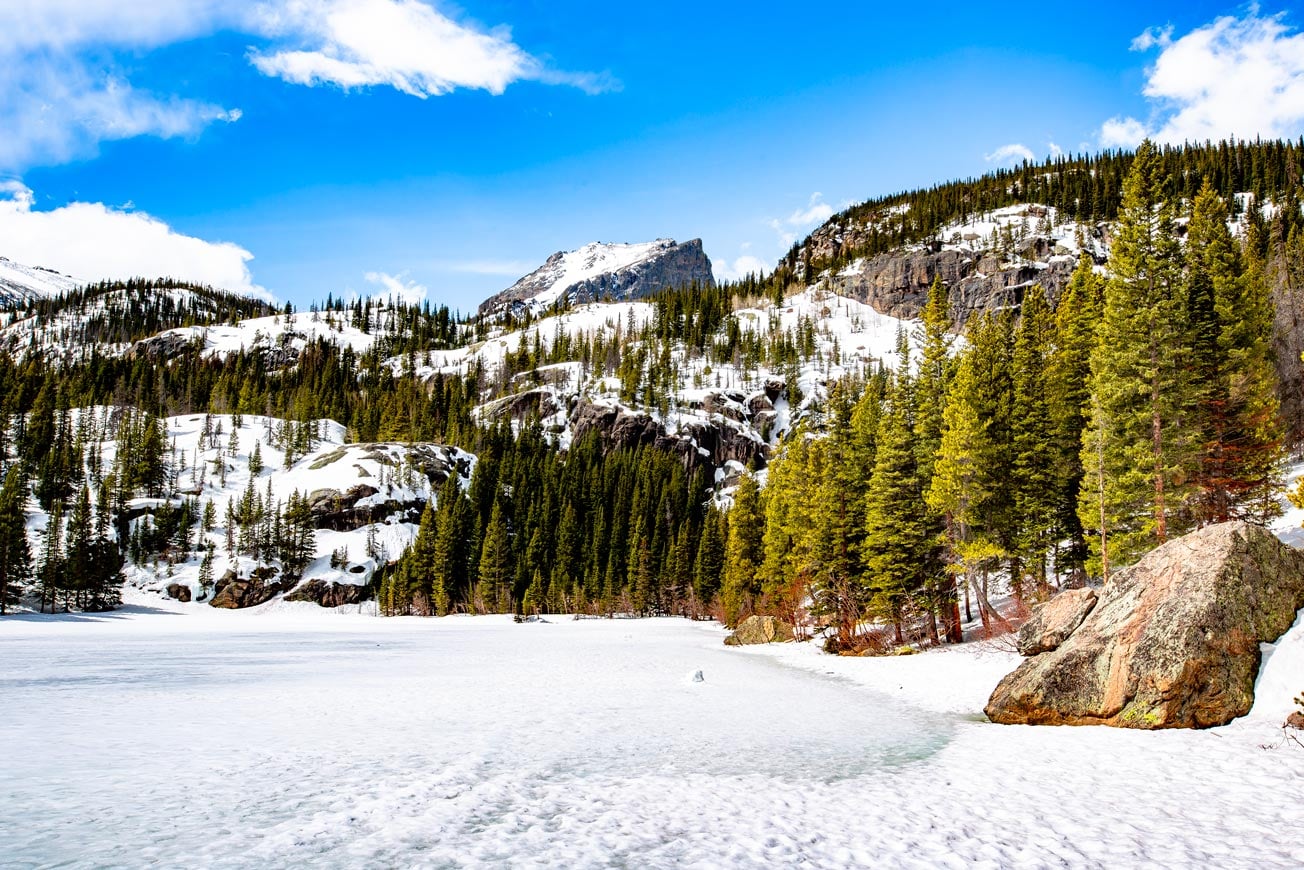
Denver averages 49.0 inches of snow a year and a January that runs from an average high of 44.6F down to an average low of 18.7F, per the National Weather Service 1991 to 2020 normals. That is the mild version. Head west or up and the numbers change fast, and the mountain towns measure snow in feet.
However, temperatures can drop well below freezing, particularly at higher elevations and in the mountains. Snow is an inevitable occurrence during the winter in Colorado, with many parts of the state receiving several feet of snowfall each year. The icy conditions caused by snow can make travel and outdoor activities challenging, and it is important to be prepared and to take precautions when driving or participating in winter sports.
The silver lining here is that despite the cold, sun is still abundant in the winter so we can all still soak in our fills of vitamin D.
5. Drug Abuse
I want to be careful here, because this is one of those cons that gets repeated in relocation forums using numbers that do not survive a look at the actual mortality data. Colorado’s drug overdose death rate was 25.7 per 100,000 in 2024, and its opioid overdose death rate of 16 per 100,000 was exactly the national rate, according to CDC figures compiled by KFF. That is a serious problem. It is not a worst in the country problem, and anyone telling you Colorado is number one for drug abuse is quoting a listicle, not a death certificate.
What is true is that legal weed is everywhere and visible in a way that surprises people. Recreational marijuana has been legal since voters passed Amendment 64 in November 2012, with retail sales starting in January 2014. Dispensaries are ordinary retail here. If you are raising teenagers and that worries you, it is a fair thing to weigh, and it is a conversation worth having before the moving truck rather than after.
6. High Altitude
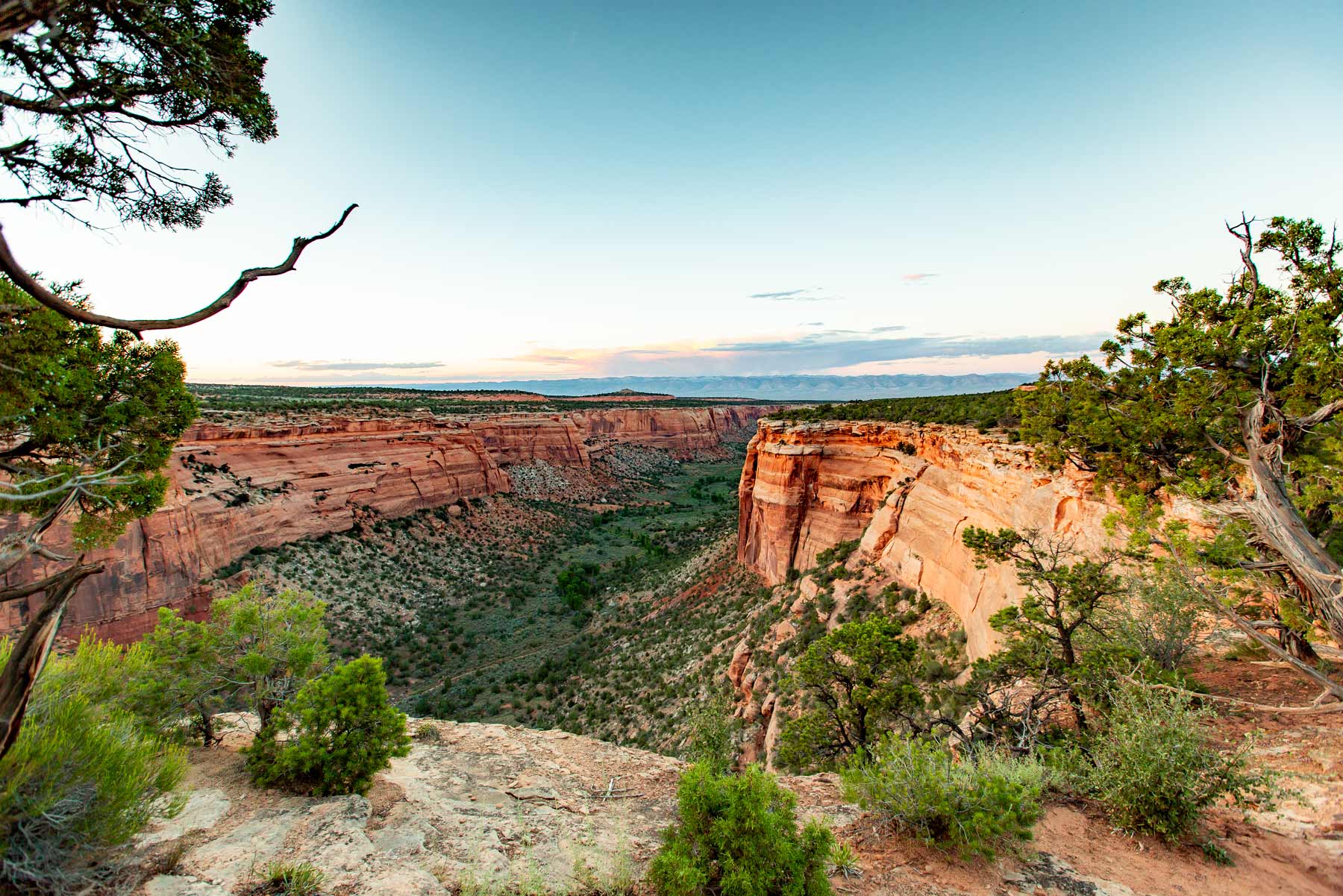
If you’re a professional athlete training for a competition then the high altitude makes living in Colorado a dream. For the rest of us it is an adjustment. With a mean elevation of 6,790 feet, Colorado is the highest state in the country.
Many of my friends not originally from here had a tough time adjusting to the altitude, some even complaining of persistent nosebleeds. See in the table below, of the 15 most populated cities in Colorado, only five are less than a mile high and all are within 600ft of the 5,280 ft mark (1 mile).
The Front Range cities sit between roughly 4,600 and 6,200 feet, which you can see in the table below. Headaches, dehydration and short breath for the first few weeks are real, and so is the sunburn. There is a lot less atmosphere between you and the sun up here. Buy the good sunscreen and use it in February.
Elevation of Cities in Colorado
| City | Altitude (ft) |
|---|---|
| Denver | 5280 |
| Colorado Springs | 6010 |
| Aurora | 5400 |
| Fort Collins | 5070 |
| Lakewood | 5280 |
| Thornton | 5280 |
| Arvada | 5280 |
| Westminster | 5280 |
| Pueblo | 4640 |
| Greeley | 4665 |
| Longmont | 5090 |
| Loveland | 4970 |
| Castle Rock | 6200 |
| Broomfield | 5348 |
| Northglenn | 5280 |
Tell the next person the thing the guide misses.
Colorado’s 2026 Reality Check
Governor Jared Polis declared a statewide drought emergency in June 2026 covering 95% of Colorado, and that one decision sits underneath almost everything else on this page. Snowpack hit a record low in January 2026. A record March heat wave melted what was left of it weeks early. By May the entire state was in drought for the first time since 2021, according to the Colorado Climate Center.
Then it burned. The Aspen Acres Fire started June 29, 2026, ran to 102,004 acres across three counties south of Pueblo, and destroyed more than 850 structures including 319 homes. That makes it the second most destructive wildfire in Colorado history, behind only the Marshall Fire of December 30, 2021, which took 1,084 homes near Boulder in a single day. Roughly 235,000 acres burned statewide in 2026.
Five other things a mover should know before reading the rest.
- Insurance is the new sticker shock. Colorado homeowners paid an average of $4,963 a year in Insure.com’s 2025 rate study, against a national average of $2,543. Hail and wildfire, in that order.
- Buying got slightly less brutal, renting got easier. The statewide median listing price was $568,900Median listing price, realtor.com via FRED, August 2026. Updates itself when the source does. in August 2026 (Realtor.com data via FRED), and Denver is now posting some of the biggest rent declines in the country on the back of a construction boom, per Apartment List’s August 2026 report.
- Colorado slid down the cost of living table. MERIC put the state at 102.7Cost of living index, MERIC, second quarter of 2026. housing 108.6. Updates itself when the source does. for second quarter of 2026, 2.7% above the national average, down from 105.2. Nevada and Montana are now more expensive than Colorado.
- Your income tax is on the ballot. Colorado has 14 measures going to voters in November 2026. A proposal to cap the state income tax rate qualified on August 21, 2026 (Colorado Politics), and the Colorado Sun reported on September 1, 2026 that voters will also decide Initiative 195, which would replace the flat 4.4% rate with a graduated one. A Front Range passenger rail sales tax measure made the ballot on August 28, 2026.
- Colorado Springs is losing Space Command. The move to Huntsville, Alabama was announced September 2, 2025 and takes at least 1,400 civilian jobs with it, with half of them gone by 2028.
Living in Colorado
Interesting Facts About Colorado
- Highest State: Colorado is the highest state in the country, with a mean elevation of 6,790 feet above sea level.
- Mountain Peaks: The state has 53 true fourteeners (58 named peaks over 14,000 feet, depending on how you count the subpeaks), including Mount Elbert at 14,440 feet, the highest peak in the Rocky Mountains.
- Four National Parks: Rocky Mountain, Mesa Verde, Black Canyon of the Gunnison, and Great Sand Dunes. Rocky Mountain alone is one of the five most visited national parks in the country.
- Craft Beer: Colorado had 423 craft breweries in the Brewers Association’s 2025 count, 5th most of any state and 6th per capita at 9.4 per 100,000 adults. Denver hosts the Great American Beer Festival every fall.
- Mining History: Colorado has a rich mining history, with gold, silver, and other minerals being extracted from the state’s mountains and valleys. The state’s official mineral is the rhodochrosite, a pink mineral that is found in the Rocky Mountains.
- Coins: The Denver Mint is the single largest producer of coins in the world, with a production capacity of more than 50 million coins a day. It has been striking money downtown since 1906.
- Oldest Hotel: Colorado is home to the oldest continually operating hotel in the United States, the Hotel Colorado in Glenwood Springs. The hotel was built in 1893 and has hosted a number of famous guests, including Theodore Roosevelt and John D. Rockefeller.
- Hot Springs: Colorado is known for its hot springs, with over 20 hot springs resorts located in the state. The hot springs are a popular tourist attraction and are believed to have therapeutic properties.
- Marijuana: Colorado was the first state in the United States to legalize recreational marijuana, which it did in 2012. The state’s marijuana industry has since grown significantly and has contributed to the state’s economy.
Top 5 Most Populated Cities in Colorado
| City | Population (2020 Census) | Metro Median Listing Price (Aug 2026) |
|---|---|---|
| Denver | 715,522 | $574,900 (Denver metro) |
| Colorado Springs | 478,961 | $489,000 (Colorado Springs metro) |
| Aurora | 386,261 | $574,900 (Denver metro) |
| Fort Collins | 169,810 | $575,000 (Fort Collins metro) |
| Lakewood | 155,984 | $574,900 (Denver metro) |
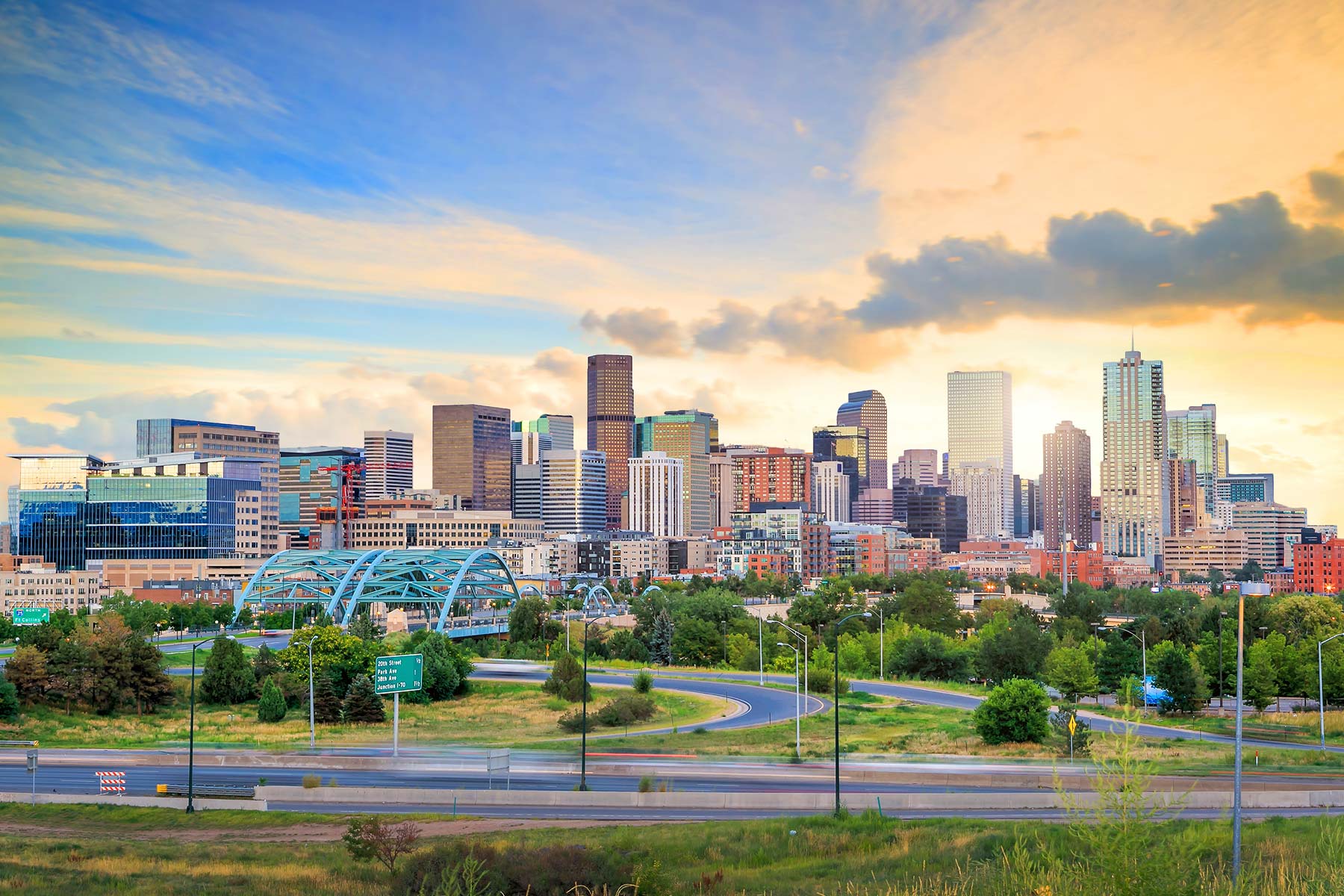
Listing prices come from Realtor.com data via FRED, August 2026. Aurora and Lakewood sit inside the Denver metro, so they carry the Denver number. Denver itself was estimated at 740,613 people in 2025, up 3.5% since the 2020 count, and the state as a whole passed 6 million (6,012,561 in the Census Bureau’s 2025 estimate). If you want the neighborhood-level version of the Denver market, I broke that out separately in my pros and cons of living in Denver.
Cost of Living in Colorado
Colorado runs about 2.7% pricier than the country as a whole, and most of that is the roof over your head. That’s MERIC’s second quarter of 2026 index, 102.7 against a US of 100, 34th cheapest of the 50 states and DC. On MERIC’s own categories, housing scores 108.6, groceries 101.1, health 101.8, miscellaneous goods and services 104.2, transportation 97.5 and utilities 85.4, so nothing else runs far over the line. The Bureau of Economic Analysis price parity for 2024 says the same thing, 103.1. BEA is blunter about where it comes from. It scores Colorado rents at 127.4, a quarter over the national figure, and goods at 98.7, so the milk costs what milk costs and the apartment doesn’t.
Cost of living by city in Colorado
Con #2 quotes what sellers are asking by metro, and Apartment List’s one-bedroom median for Denver. This table is a different animal, Zillow’s typical home value and typical rent for whole metro areas, which is what the middle house is worth and what the middle rental goes for. BEA only prices metro areas, so the mountain towns get a blank in that column.
| Metro area | Typical home | Typical rent | Prices vs US | Unemployment |
|---|---|---|---|---|
| Denver | $559,700 | $1,922 | 105.8 | 4.1% |
| Colorado Springs | $448,500 | $1,787 | 100.7 | 4.3% |
| Fort Collins | $549,200 | $1,975 | 101.1 | 3.8% |
| Boulder | $712,000 | $2,222 | 105.2 | 4.0% |
| Greeley | $490,700 | $1,692 | 100.2 | 4.5% |
| Pueblo | $283,400 | $1,344 | 91.8 | 6.1% |
| Grand Junction | $432,100 | $1,728 | 95.5 | 4.3% |
| Durango | $687,200 | $1,967 | 3.6% | |
| Steamboat Springs | $1,124,100 | $3,269 | 3.7% | |
| Edwards (Vail Valley) | $1,302,700 | $3,358 | 3.1% | |
| Breckenridge | $969,900 | $3,518 | 3.5% | |
| Cañon City | $339,700 | $1,359 | 5.3% |
Read that table twice. Pueblo is the cheapest place BEA prices in Colorado, 8% under the US, and it carries the highest unemployment on the list. Boulder is the priciest of the big metros at $712,000 and costs about the same to live in day to day as Denver on BEA’s parity. The ski towns are their own country, $970,000 to $1.3 million to buy and $3,269 to $3,518 a month to rent, and Edwards and Breckenridge post the two lowest unemployment rates on the table, in July’s summer rush. Grand Junction is the value on the Western Slope, $432,100 and 4.5% under the US on prices.
Housing, by the numbers. Zillow’s typical Colorado home is $532,748Typical home value, Zillow, August 2026. Colorado. Updates itself when the source does. as of August 2026, against $368,697Typical home value, United States, Zillow, August 2026. Updates itself when the source does. nationally on the same index, so we’re about 44% over the country. Realtor.com’s median listing is $568,900Median listing price, realtor.com via FRED, August 2026. Updates itself when the source does. here and $424,500Median listing price, United States, realtor.com via FRED, August 2026. Updates itself when the source does. nationally, a 34% gap, and Colorado ranks 39th of 49 states for cheap listings. The median renter hands over 31.4% of their income (Census, 2020 to 2024), which is over the 30% line where the housing people start saying burdened. And then there’s the insurance bill, which I covered in Con #1 and which you should read before you fall in love with a foothills address.
The rest of the monthly bill. Regular gas is $4.26Regular gas, the EIA, September 21, 2026. Updates itself when the source does. on the Energy Information Administration’s weekly Colorado price, and the state ranks 18th of 50 for cheap gas, one of the few bills that’s lighter here. Residential electricity ran 17.1 cents a kilowatt hour in June 2026 against 18.3 nationally (EIA). Sales tax is 2.9% at the state level with a combined state and local average of 7.89%Combined state and local sales tax, the Tax Foundation, 2026 midyear. state rate plus population-weighted average local rate. Updates itself when the source does., since every city and county adds its own. Income tax is a flat 4.4%Top state income tax rate, the Tax Foundation, 2026. Updates itself when the source does., one bracket, everybody, at least until November’s ballot. Property tax is genuinely light, an effective 0.48% with a median annual bill of $2,602 by the Census Bureau’s count (2020 to 2024), or 0.50% by the Tax Foundation’s, the figure Con #1 uses.
Where to Live in Colorado, by Who You Are
The best-cities FAQ below gives you the list. This is the sort, town by town, by the kind of life you’re bringing with you. Same figures as the table above unless I say otherwise, and the growth numbers are the Census Bureau’s estimates from April 2020 to July 2025. First, the thread’s most useful warning, from Lisa, who moved here from the East Coast and was on her way out.
I’m from the east coast and the lack of diversity was the thing that struck me the most when I moved here. Whitest place I’ve ever been. And the locals get mad if you mention it! If you’re not outdoorsy, there’s nothing to do unless you want to drive to Denver. I don’t like it here and that’s why I’m moving out.
Lisa, in the thread, December 2024
She’s right about the first half, and I’m not going to get mad about it. Jake said the same thing in July 2024, and Melanie’s answer this May was that there are pros to homogeneity, so even the defense concedes it. She’s right about the outdoors too. If the outdoors isn’t the reason you’re coming, pick a town inside Denver’s orbit or don’t come.
Families with kids
The growth went to the edge of the Front Range. Windsor, between Fort Collins and Greeley, grew from 32,714 people to 43,840 between 2020 and 2025, a 34% jump. Castle Rock went from 73,162 to 83,815 (+14.6%) and Parker from 58,381 to 65,985 (+13%), both south of Denver. Growth that fast means new subdivisions, and new subdivisions are where the metro district warning below comes in. Colorado Springs is the cheapest Front Range metro north of Pueblo at $448,500 with 4.3% unemployment, and Pro #2 is still worth reading before moving there for a defense job.
On safety, Colorado’s 2025 rate was 438 violent and 2,235 property crimes per 100,000 people, which puts us 43rd of 49 states for violent crime and 48th of 49 for property crime on our rankings, and the neighbor table further down shows Utah at about half the violent crime and 41% less property crime.
Two things a family buying a new build here needs to know that the listing photos won’t show you. First, a lot of new subdivisions sit inside a metropolitan district, a little government the developer set up to borrow for the streets and the sewer lines, and your property tax repays those bonds for years, so ask for the district’s mill levy and its debt before you sign. Second, radon. It’s common across the state, and the health department’s action level is 4 picocuries per liter, so test the house before you close. And read Con #3 again. The Marshall Fire burned suburbs, not cabins.
Retirees
Go west or south, and if Con #6 worries you, go lower. The Western Slope and the Arkansas Valley are where the retirement math works. Grand Junction is $432,100, grew from 65,642 to 71,827 people (+9.4%) and prices out 4.5% under the country, with a 4.3% unemployment rate that says the town isn’t dying. It also sits at about 4,800 feet on the weather service’s station elevation, under Denver’s 5,280, which is the point of “lower.” It’s about 450 feet, not a cure, so the doctor conversation in the retirement FAQ still stands. Pueblo is the cheapest place on the table at $283,400, with the unemployment rate to match, and it’s lower still at 4,640 feet on the table in Con #6. It’s also next door to this summer’s Aspen Acres Fire, which started south of Pueblo and took 319 homes, so read Con #3 before you buy. Cañon City, southwest of the Springs, is the price play, $339,700 with the second cheapest rent on the table at $1,359, and its 5.3% unemployment tells you it’s a place to retire to, not to job hunt in. Montrose, $493,900 and up 6.2% to 21,583 people, is cheaper than Denver but dearer than Grand Junction. Both sit higher than Denver, at roughly 5,400 and 5,800 feet, so neither helps with the altitude.
Two more things. The state’s senior property tax exemption, for homeowners 65 and older, half of the first $200,000 of your home’s value, only kicks in after you’ve owned and lived in the house for ten consecutive years, so a mover waits a decade for it. On the income side, the state lets anyone 65 or older subtract every dollar of Social Security that the federal return taxed, and up to $24,000 a year of pension and annuity income, minus whatever Social Security you already subtracted (Department of Revenue). The insurance bill in Con #1 doesn’t wait at all.
People in their 20s
Denver, Fort Collins, and Boulder only if the money’s there. Denver is the only place in the state where you can change careers without changing zip codes, and rent is finally moving your way in Denver, as Con #2 explains. Zillow’s rent index for the city is $1,881 as of August 2026, which reads higher than the Apartment List one-bedroom median in Con #2 because it covers every rental, houses included. I broke the city out in my pros and cons of living in Denver and the best neighborhoods in Denver. Fort Collins is the Colorado State University town, $549,200 to buy and $1,975 to rent, with the lowest unemployment of any big metro at 3.8%. Boulder is the University of Colorado town and the priciest metro on the Front Range, $712,000 and $2,222 a month, and the city itself shrank from 108,536 to 105,689 people between 2020 and 2025, and at those prices I’m not surprised.
Remote workers
You can live in the postcard now, and here’s the price of the postcard. Durango is $687,200 to buy and $1,967 to rent with 3.6% unemployment, and it’s the sanest of the mountain towns because it’s a real town first and a resort second. Steamboat Springs is $1,124,100 and $3,269 a month. The Vail Valley, which Zillow files under Edwards, is $1,302,700 and $3,358, and Breckenridge is $969,900 and $3,518, the highest rent on the table. If you want the Western Slope without the resort premium, Grand Junction at $432,100 has Colorado National Monument at the edge of town. Two cons are yours more than anyone’s. Con #3, because the big acreage fires burn in the western and southern counties, and the Lee Fire burned 137,758 acres in Rio Blanco County in 2025. And Con #1, because a mountain address is where the $4,963 insurance average turns into a quote you’ll read twice. Get that quote before you make an offer.
Moving to Colorado, the Checklist
The stuff nobody writes about and everybody Googles. All of it comes from state agencies, plus the Tax Foundation for the income tax rate, checked September 25, 2026, and every item links to the page it came from so you can see if a fee has moved.
- You’re a resident sooner than you think, then 30 days for the license. Colorado counts you as a resident the day you take a job here, open a business here, or have lived here 90 days in a row. From that day you have 30 days to swap your license and 90 to register the car. The license takes an appointment, no walk-ins, and you can pre-register online. Bring the identification and proof of address documents on the DMV’s list, and your old license, which they hole-punch. The state fee table lists $35 for a REAL ID driver license ($34 to renew) and $36 for the standard credential issued under the Road and Community Safety Act (from the Colorado DMV’s new to Colorado page and the state DMV fee table).
- Your car, 90 days, and the tax on it. Titles and registrations are handled by your county clerk, not the state. You need a Colorado-compliant insurance policy before you can register, at minimums of $25,000 per person, $50,000 per accident and $15,000 property damage, and a car coming from out of state needs a VIN inspection first. The title transfer fee is $7.20. The registration is where it adds up, because Colorado charges a Specific Ownership Tax on your car every year, a property tax figured on the car’s original taxable value and its age, on top of the registration fees and surcharges. Miss the 90 days and the late fee is $25 a month up to $100. Two more things. Opt in to the $29 Keep Colorado Wild pass, which turns your registration into a state parks pass at 60% off the regular $80. And if you’re in the emissions program area, which the state describes as the Denver metro and the North Front Range, expect an emissions test unless the car is a gas model in its first seven model years (from the Colorado DMV’s vehicle resource center, its pages on titling, taxes and fees and emissions, and the Division of Insurance on auto minimums).
- Income tax. You’re a Colorado resident for tax purposes if you’re domiciled here, or if you keep a home here and spend more than six months of the year in Colorado. Move in mid-year and you file as a part-year resident for the months after you arrived. The rate is a flat 4.4%Top state income tax rate, the Tax Foundation, 2026. Updates itself when the source does. (Tax Foundation, 2026), and the Department of Revenue’s own rate table shows 4.4% for tax year 2025. If you file a federal return, you file a Colorado one (from the Colorado Department of Revenue’s individual income tax guide).
- Property tax, what makes your bill. Colorado taxes a slice of your home’s value, not the whole thing. For 2026 the residential assessment rate is 6.80% for local governments, after a 10% reduction of the first $700,000 of actual value, and 7.05% for school districts, and then each taxing district’s mill levy hits that slice. The wild card is the metropolitan district if your subdivision has one, whose mills repay the developer’s bonds over many years, and which is why two identical houses a mile apart can carry very different bills (from the Division of Property Taxation’s pages on the residential local government assessment rate and the residential school assessment rate, and the Division of Local Government’s review of special districts for residents).
- Radon, before you close. The test and the 4 picocurie line are in the families section above. If the house is over the line and a mitigation system is more than you can afford, the state runs a Low Income Radon Mitigation Assistance program (from the Colorado Department of Public Health and Environment’s radon FAQ).
Colorado vs Utah, New Mexico and Arizona
Everybody shopping Colorado is shopping a neighbor too, so here are the same numbers side by side.
| Colorado | Utah | New Mexico | Arizona | |
|---|---|---|---|---|
| Prices vs US (100) | 103.1 | 98.9 | 92.2 | 100.7 |
| Rents vs US (100) | 127.4 | 107.8 | 73.6 | 106.8 |
| Typical home | $532,700 | $534,600 | $318,200 | $418,000 |
| Median household income, 2020 to 2024 | $95,470 | $95,166 | $64,059 | $79,964 |
| Unemployment | 4.0% | 3.5% | 4.7% | 4.9% |
| Violent crime per 100k | 438 | 225 | 648 | 383 |
| Property crime per 100k | 2,235 | 1,319 | 2,351 | 1,541 |
| Top income tax rate | 4.4% flat | 4.5% flat | 5.9% | 2.5% flat |
| Effective property tax (Census) | 0.48% | 0.52% | 0.70% | 0.48% |
| Combined sales tax | 7.89% | 7.42% | 7.68% | 8.54% |
| Electricity, cents per kWh | 17.1 | 13.4 | 15.1 | 15.2 |
| Movers in 2025 | -12,100 | +3,343 | -2,267 | +31,107 |
Against Utah. Utah is Colorado with half the violent crime and a cheaper lease. The typical house costs the same, $534,600 to our $532,700, and the households earn the same, about $300 apart on the five-year Census figure. Everything around the house is easier there, prices 4 points under ours, rents scoring 107.8 to our 127.4, a 3.5% unemployment rate, and 41% less property crime. What Utah costs you is a slightly higher flat tax, 4.5% to our 4.4%, a slightly higher property tax, 0.52% to our 0.48%, and a very different Saturday night. It’s also the youngest state in the country by median age. If you’re shopping purely on numbers, Utah wins this one and I won’t pretend otherwise.
Against New Mexico. This is the trade Front Range refugees actually make. New Mexico is 11 points cheaper, its rents score 73.6 to our 127.4, and the typical house is $214,500 less. Its electricity is cheaper too. The bill comes due on the paycheck and the police blotter. Households there earn $31,000 less than ours, unemployment is 4.7% to our 4.0%, the violent crime rate is 48% higher than ours, and on the Census Bureau’s 2025 estimate the state lost 2,267 movers. So did we, though, 12,100 of us, which is the first year in this decade Colorado has lost people to the rest of the country. The top income tax is 5.9% against our flat 4.4%, and property tax runs 0.70% to our 0.48%. If you want the mountains and the sun for less, Taos is $438,500 against $559,700 in metro Denver, and my New Mexico guide has the whole ledger.
Against Arizona. Arizona is the close call. BEA has it about 2 points under us for 2024, and MERIC’s 2026 index, the one up in Pro #9, has it 6 points over, so call prices a wash. The typical house is $114,800 less, rents score 106.8 to our 127.4, its flat income tax is 2.5%, the lowest of the four, and its property tax rate rounds to the same 0.48%. It also took 31,107 net movers in 2025 while we lost 12,100. What we keep is the paycheck, $15,500 more per household on the Census figure, a lower unemployment rate, 4.0% to 4.9%, and a cheaper register, 7.89% combined sales tax to Arizona’s 8.54%. Arizona’s violent crime rate is 13% under ours and its property crime rate is 31% under. And Arizona doesn’t have a January, which for some people is the whole argument.
FAQ – Living in Colorado
FAQ – Living in Colorado
List of Pros & Cons of Living in Colorado (Summary)
- Economy is booming
- A diversified job market
- Stunning natural beauty
- Plentiful outdoor recreation
- Highly educated
- Friendly people
- Healthy population
- Genuinely sunny, about 3,100 hours a year in Denver
- Less expensive than most west coast states
- High cost of living, and brutal home insurance
- Wildfire and drought
- Expensive housing
- High altitude
- Harsh winters
- Drug overdose deaths, though not the worst in the country
Pros & Cons of Living in Colorado (Post Overview)
| Pros of Living in Colorado | Cons of Living in Colorado |
|---|---|
| Economy is booming | High cost of living, and brutal home insurance |
| A diversified job market | Wildfire and drought |
| Stunning natural beauty | Expensive Housing |
| Plentiful outdoor recreation | High Altitude |
| Highly educated | Harsh winters |
| Friendly people | Drug overdose deaths, though not the worst in the country |
| Healthy population | |
| Genuinely sunny, about 3,100 hours a year in Denver | |
| Less expensive than most west coast states |
Map of Colorado
More From Colorado
Living in Colorado Springs: 15 Honest Pros & Cons of Living in Colorado Springs
Best Neighborhoods in Denver: 10 Best Neighborhoods in Denver
Living in Denver: 15 Honest Pros & Cons of Living in Denver
Best Places to Live in Colorado: 15 Best Places to Live in Colorado
Helpful Nearby Perspectives
Living in Utah: 15 Honest Pros & Cons of Living in Utah
Living in Salt Lake City: 16 Honest Pros & Cons of Living in Salt Lake City
Living in Arizona: 15 Honest Pros & Cons of Living in Arizona
Living in New Mexico: 15 Honest Pros & Cons of Living in New Mexico
Living in Nebraska: 15 Honest Pros & Cons of Living in Nebraska
Questions people ask about Colorado
Is Colorado a good place to live?
Colorado is a good place to live if you can absorb the housing and insurance costs. The unemployment rate was 4.0%Unemployment rate, BLS, August 2026. Preliminary. Updates itself when the source does. in August 2026, and median household income was $95,470 in the 2024 American Community Survey. The trade is that the statewide median listing price was $568,900Median listing price, realtor.com via FRED, August 2026. Updates itself when the source does. as of August 2026 and the average homeowners insurance premium was $4,963 a year in Insure.com’s 2025 study, roughly double the national average.
Is Colorado a good place to retire?
Colorado retires well on taxes and poorly on insurance. The income tax is a flat 4.40% and the effective property tax rate on owner occupied housing is just 0.50%, both among the friendlier numbers in the country per the Tax Foundation’s 2026 figures. Against that, homeowners insurance averaged $4,963 a year in 2025, and altitude is a genuine medical consideration if you have a heart or lung condition. Talk to your doctor about 5,280 feet before you commit.
What's the cost of living in Colorado?
Colorado scored 102.7Cost of living index, MERIC, second quarter of 2026. housing 108.6. Updates itself when the source does. on MERIC’s second quarter of 2026 cost of living index, meaning 2.7% above the national average, down from 105.2 in the prior series. Housing does almost all of the damage. Eight western states now cost more, including California at 140.3, Washington at 115.1, Arizona at 108.6 and, newly, Nevada at 105.4.
What are people that live in Colorado called?
People who live in Colorado are commonly referred to as Coloradans. This term can apply to anyone who lives in the state, regardless of their background or heritage. this term is not exclusive to any particular group of people and can be used to refer to anyone who calls Colorado their home.
Colorado is the what state? (nickname)
Colorado is known as the “Centennial State” because it became a state in the United States 100 years after the signing of the Declaration of Independence in 1776. The state was admitted to the Union on August 1, 1876, which was the 100th anniversary of the signing of the Declaration. The nickname was officially adopted by the state legislature in 1952.
What's the population of Colorado?
The population of Colorado is 6,012,561 as of the Census Bureau’s July 2025 estimate, which is the 20th largest in the country.
Is marijuana legal in Colorado?
Yes, marijuana is legal in Colorado for both medical and recreational use. In 2012, Colorado voters approved Amendment 64 to the state constitution, which legalized the possession, use, and sale of marijuana for adults 21 and older. Since then, the state has established a regulated market for marijuana, which has allowed businesses to legally sell marijuana to adults for recreational use.
What are the best cities to live in Colorado?
Denver is the state’s capital and largest city, and is known for its active art and culture scene, as well as its outdoor recreation opportunities.
Boulder is a college town that is known for its natural beauty and outdoor activities, such as hiking, biking, and climbing.
Colorado Springs is home to several military bases and is known for its beautiful views of the Rocky Mountains.
Fort Collins is a popular city for young professionals and is known for its excellent schools and high-tech industry.
Pueblo is a smaller city with a long history and cultural heritage, and is known for its affordable cost of living.
How is the weather in Colorado?
Dry, sunny and swingy. Denver averages 49.0 inches of snow a year and a January that runs from an average high of 44.6F to an average low of 18.7F, and about 3,100 hours of sunshine a year, roughly 70% of the possible total, per National Weather Service 1991 to 2020 normals. Ignore the “300 days of sunshine” line you will see on tourism sites. Also note that 2026 brought a record low January snowpack and a statewide drought emergency declared in June.
What's the median home price in Colorado?
Colorado’s median listing price was $568,900Median listing price, realtor.com via FRED, August 2026. Updates itself when the source does. as of August 2026, per Realtor.com data via FRED. By metro that month, Denver was $574,900, Fort Collins $575,000 and Colorado Springs $489,000. The Census Bureau’s 2024 American Community Survey put the median value of an owner occupied home at $539,400.
What are the top industries in Colorado?
Some of the top industries in Colorado include tourism, agriculture, mining, and manufacturing. The state is known for its natural beauty and outdoor recreation opportunities, so the tourism industry is a major contributor to the economy. The state is also home to many farms and ranches, and is a leading producer of cattle, corn, and wheat. Mining, particularly for coal and molybdenum, is another important industry in the state. Colorado is also home to many manufacturing companies, including those in the aerospace, technology, and biotechnology industries.
What are the top employers in Colorado?
As for the largest employers in Colorado, they include companies such as the University of Colorado, the state government, and various healthcare organizations. The University of Colorado is one of the largest, with campuses in Denver, Boulder, Colorado Springs and elsewhere, and state government employs a great many people across its agencies. Large hospital systems, the federal science labs in Boulder and Golden, and the military installations around Colorado Springs round out the list. On that last one, note that US Space Command headquarters is moving to Huntsville, Alabama, a decision announced on September 2, 2025 that takes at least 1,400 civilian jobs with it.
Median salary in Colorado
Median household income in Colorado was $95,470 in the Census Bureau’s 2024 American Community Survey, well above the national figure. Median rent for a Denver one bedroom was $1,427 in July 2026, against a national median of $1,221 in August.
Is Colorado a tax-friendly state?
Yes, on the numbers. Colorado charges a flat 4.40% income tax, a 2.90% state sales tax (7.89% once local rates are averaged in), and an effective property tax rate of 0.50% on owner occupied housing, all per the Tax Foundation’s 2026 figures. One thing to watch. Colorado has 14 measures on the November 2026 ballot, including a proposal to cap the income tax rate that qualified on August 21, 2026, and Initiative 195, which would replace the flat rate with a graduated one.
What do I need to do when I move to Colorado?
You’re a resident the day you take a job here, open a business or hit 90 days in a row, and from there you have 30 days to swap your license (by appointment, $35 for a REAL ID) and 90 days to register the car with your county clerk, with Colorado insurance at 25/50/15 minimums and a VIN inspection first. Budget for the Specific Ownership Tax on the car every year, file a part-year state return for your first year at the flat 4.4%, and test the house for radon before you close. The checklist above has every fee and the page it came from.
Is Colorado cheaper than Utah, New Mexico or Arizona?
No on two of three. On the Bureau of Economic Analysis price parities for 2024, Colorado is 103.1 against a US of 100, Utah is 98.9 and New Mexico is 92.2, and our rents score 127.4 against Utah’s 107.8 and New Mexico’s 73.6. Arizona is the close one, 100.7 on BEA and higher than us on MERIC’s 2026 index, with a typical house about $114,800 cheaper. What Colorado keeps is the paycheck, $95,470 a household, and a lower violent crime rate than New Mexico. The neighbor table above has all twelve rows side by side.
Where in Colorado should I live?
It depends on who you are, which is how the section above is sorted. Families are landing in Windsor, Castle Rock and Parker, the fastest growing towns on the Front Range edge. Retirees get the best math in Grand Junction and Pueblo, which also sit lower than Denver. In your 20s it’s Denver for the jobs and Fort Collins for the price. Remote workers can have Durango or a ski town if they can carry a $687,200 to $1.3 million house and a mountain insurance quote. Read Con #1 and Con #3 before you pick any of them.
Related Reading
- Pros & Cons of Living in Colorado Springs
- Pros & Cons of Living in Denver
- 15 BEST Places to Live in Colorado
- 10 BEST Neighborhoods in Denver
- Pros & Cons of Living in Wyoming
- Pros & Cons of Living in Nebraska
Figures marked with a dotted line update themselves from BLS, MERIC, Zillow, realtor.com via FRED, the EIA and the Tax Foundation. Last checked September 27, 2026.
Locals on this thread are mostly unhappy, with none of the three verdicts saying they’d move here again. The recurring complaint is a lack of diversity, with people describing Colorado as homogenous and whitewashed, and locals reporting that residents get defensive when it’s brought up. If you’re not into outdoor activities, several say there’s little to do unless you drive into Denver.
The split here runs between newcomers from more diverse regions who feel alienated and political transplants who blame the state’s cultural shift on liberal arrivals from places like California. One outsider even argued homogeneity has its upsides, comparing it to Japan. The surprise for anyone reading only glowing outdoor-lifestyle guides is how much friction exists around identity and politics rather than cost or weather.
“Colorado is also one person repeated millions of times.”
Jake Reader
“If you're not outdoorsy, there's nothing to do unless you want to drive to Denver.”
Lisa Reader
“There are pros to homogeneity – think Japan.”
Melanie B Reader