The Pros of Living in Albuquerque
1. The weather is a legitimate quality-of-life upgrade
Albuquerque claims 310 days of sunshine a year, and after enough winters here I stopped rolling my eyes at that number. It holds up. This is high desert, dry, with roughly nine inches of rain a year and humidity that rarely makes you sweat through a shirt. January afternoons in the fifties are common. You can hike in a t-shirt in the middle of what the rest of the country calls winter.
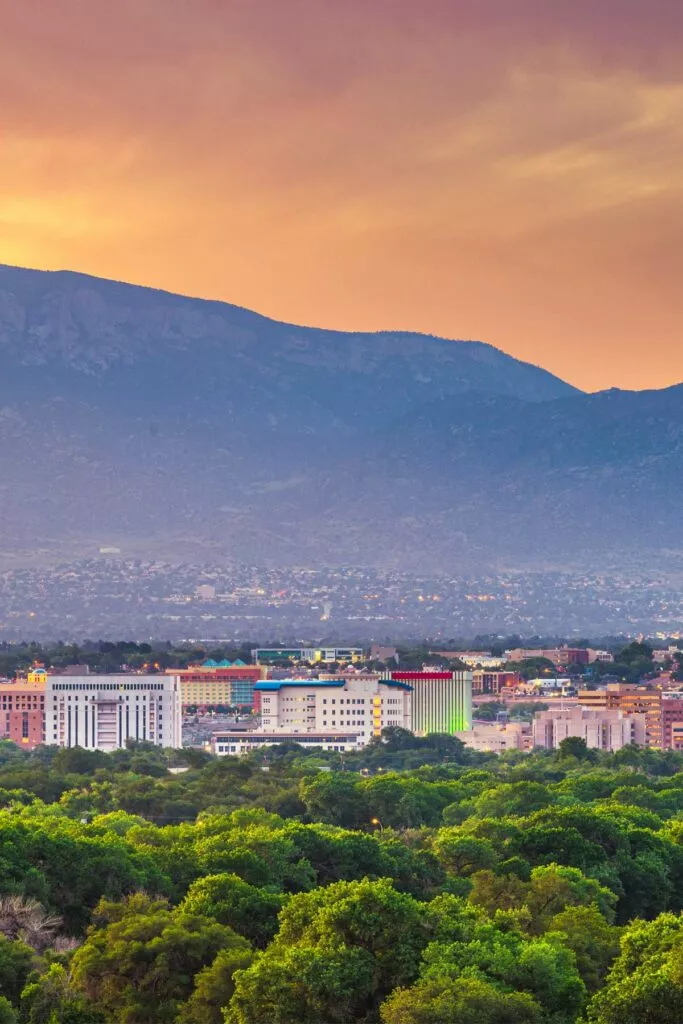
The elevation is the trick nobody tells you about. The city sits around 5,300 feet, which makes it the highest major metro in the country. That altitude shaves the worst edge off summer. It gets hot, low nineties in July, but the air is so dry and the nights cool off so fast that a summer evening on a patio is genuinely pleasant. No wall of humidity waiting for you at the door.
Fair warning though. That same dryness will chap your lips, crack your knuckles, and dehydrate you faster than you expect at this altitude. Buy the good lotion. Drink more water than feels reasonable. Your first summer, the sunburn will surprise you, because it does not feel as hot as the UV index says it is.
2. The Balloon Fiesta is not overhyped
I was ready to be cynical about this one. A hot air balloon festival sounds like the kind of thing a tourism board invents. Then I stood on the field at dawn during a mass ascension, watched several hundred balloons inflate and lift off in waves against a cold pink sky, and shut up entirely.
The Albuquerque International Balloon Fiesta runs nine days every October, October 3 through 11 in 2026 for the 54th edition, out at Balloon Fiesta Park on the north end of town. Dawn Patrol goes up before sunrise, the mass ascensions launch in two waves, and the evening balloon glows light the field up like paper lanterns. It is the largest event of its kind on earth, and it happens in your backyard if you live here.
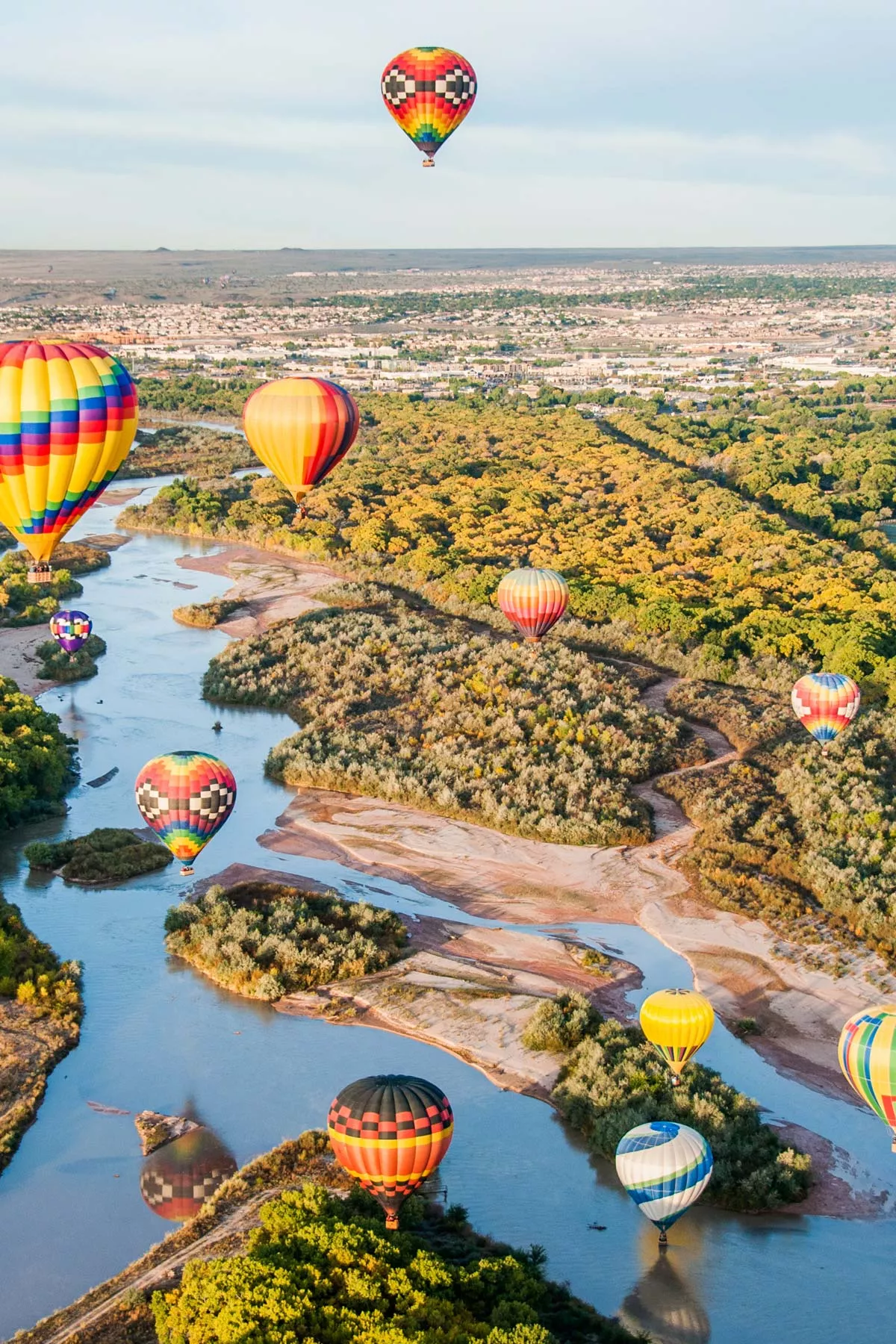
The honest footnote. Traffic during Fiesta week is genuinely miserable, the mornings are cold enough that you will want gloves, and hotel prices triple. Locals tend to go once or twice and then watch the ascensions drift over their own neighborhood with coffee in hand, which is honestly the better deal.
3. You get real mountains and real desert, both before lunch
The Sandia Peak Tramway climbs 2.7 miles from the edge of town to a 10,378-foot summit, and it is the longest aerial tram in North America. In the time it takes to ride it you go from desert scrub to alpine forest, and from the top you can see something like 11,000 square miles of New Mexico. There is skiing up there in winter and hiking all summer. Closer in, the Sandia foothills trails start right where the pavement ends, so a hard hour outdoors can be a weeknight habit rather than a weekend expedition.
Down in the valley, the Rio Grande runs a green ribbon of cottonwood forest right through the middle of the city, the bosque, threaded with trails you can walk or bike for miles. You can be in ponderosa pines at 10,000 feet and back down among the cottonwoods by afternoon. For anyone who moves for the outdoors, this is the whole argument. If you want a wider read on the state’s landscapes, my longer piece on the pros and cons of living in New Mexico gets into the terrain beyond the city limits.
And it does not stop at the city edge. Within a couple of hours you have Santa Fe and its art scene, the Jemez Mountains and their hot springs, White Sands, and some of the darkest night skies in the country once you get out past the light pollution. The desert here is not empty. It is a landscape you can spend a lifetime learning, and living in Albuquerque puts you in the middle of it rather than at the far end of a long weekend. For people who move for access to wild country, that central position is worth more than any single trail.
4. The food is a genuine regional cuisine, not a theme
New Mexican food is its own thing, distinct from Tex-Mex and from anything you have had in California. The dividing question here is red or green, meaning which chile you want on your plate, and “Christmas” if you want both. Green chile goes on burgers, in stew, folded into breakfast burritos, and it is a genuine local obsession rather than a marketing line.
The Frontier Restaurant across from the University of New Mexico has been open since 1971, and it is the closest thing this city has to a communal living room. Cheap breakfast burritos smothered in green chile, house flour tortillas, the famous sweet roll, and a crowd that runs from students to retirees at six in the morning. Old Town’s adobe plaza is three centuries old and worth a slow morning, and Nob Hill along old Route 66 is where the newer restaurants cluster. Come hungry and undecided.
The other thing to know about the food here is that late summer smells like roasting chile. Around August and September, grocery store parking lots fill with big metal drum roasters turning bushels of green chile over open flame, and the smell drifts for blocks. People buy chile by the sack, roast it, and freeze it for the year. It is one of those small seasonal rituals that tells you you actually live somewhere with a culture of its own, not just a collection of chain restaurants off the interstate.
5. The culture is genuinely layered, not manufactured
Albuquerque sits at the meeting point of Native American, Hispanic, and Anglo history, and that mix is not a museum exhibit here. It is the architecture, the food, the place names, the festivals. Pueblo Revival adobe is the default building style, not a novelty. The city has been continuously inhabited and shaped by these communities for centuries, and it shows in a way that newer Sunbelt boomtowns simply cannot fake.
Practically, that means real institutions. The Indian Pueblo Cultural Center, the neighborhood feast days, Old Town’s centuries-old church, a thriving local arts scene, and public murals that actually reflect the people who live here. If you came from a city where everything felt interchangeable, Albuquerque’s specificity is a relief. It looks and feels like exactly one place on earth.
My honest caveat. This is a mid-sized city, not a coastal cultural capital. The symphony, museums, and gallery scene are solid for the population, but if your idea of a good life requires a constant firehose of big touring acts and marquee institutions, you will feel the ceiling. It is deep in character and modest in scale.
6. It is more affordable than the desert cities people compare it to
Albuquerque’s overall cost of living sits right around the national average, a hair below it, roughly four percent under by most 2026 indexes. The median home price runs in the neighborhood of $350,000 to $360,000, which is not the bargain it was a decade ago but still lands well under Denver, Phoenix, or anywhere on the coasts.
If you are moving from a high-cost city, your housing dollar stretches noticeably further here, and adobe and Pueblo Revival homes with actual yards are still within reach in a lot of neighborhoods. Compared to the Front Range, the gap is real. I get into that math more in my rundown on the pros and cons of living in Denver, and the sticker shock cuts the other way. For a sunbelt alternative, the best places to live in Arizona tend to run pricier once you factor in Phoenix-metro housing.
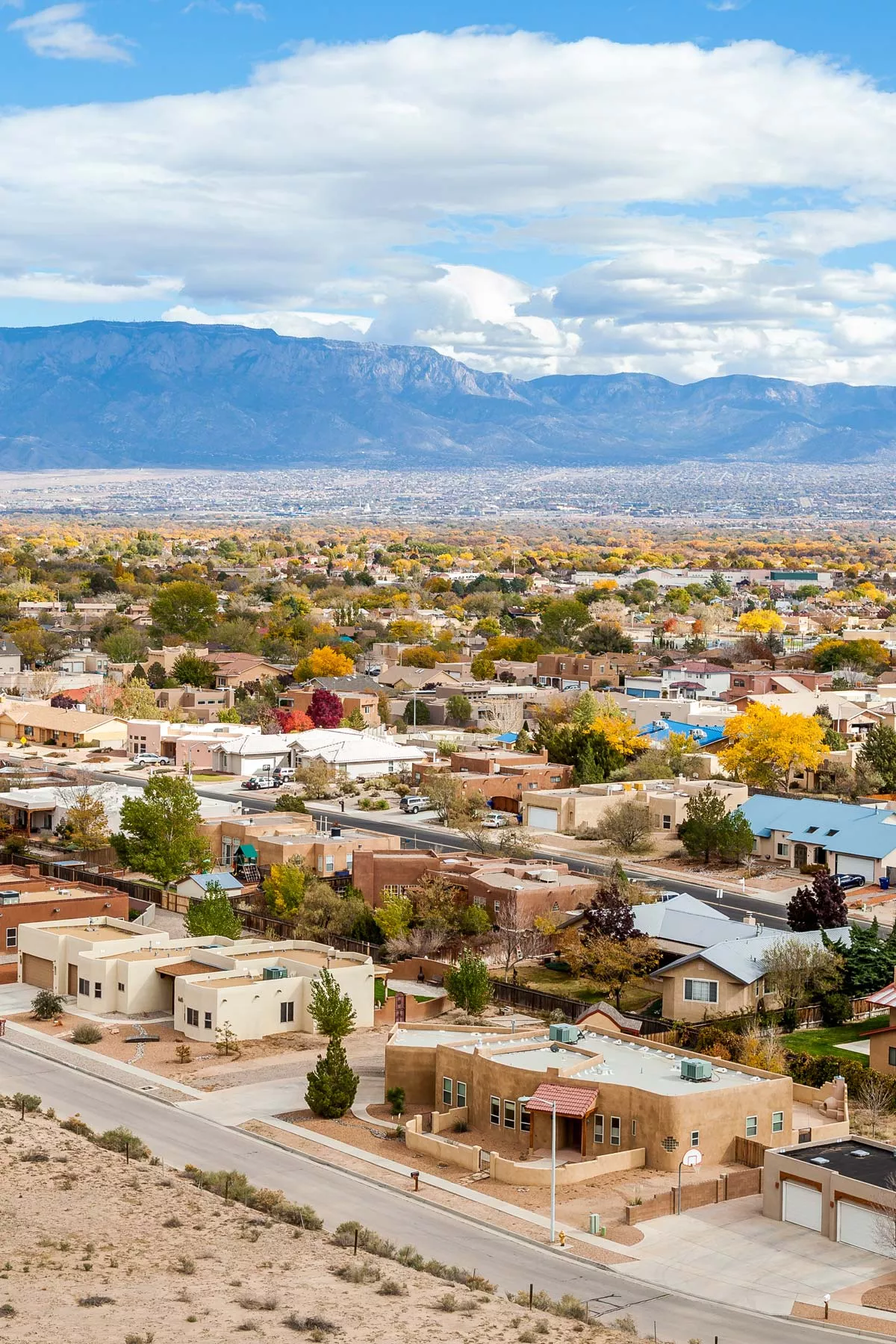
A quick geography lesson, because it will shape your budget and your daily life. The city runs roughly east to west, from the Sandia foothills down to the Rio Grande and up onto the West Mesa. The Northeast Heights is the big, sprawling, generally quieter residential swath where a lot of families land, with newer homes and mountain views. The North Valley and Corrales keep an older, semi-rural, cottonwood-and-horses character that people fall hard for. Nob Hill and the University area are the walkable, older, more urban pockets. And Rio Rancho, technically a separate city to the northwest, is where a lot of the newest master-planned subdivisions and the Intel campus sit. Where you land inside that spread changes your commute, your price, and your day-to-day feel more than almost any other decision you will make.
7. There is a real film industry paying real wages
Locals half-jokingly call it Tamale-wood, and the nickname has earned its keep. Netflix runs one of its largest production hubs on the planet out of ABQ Studios on the south side, part of a roughly two-billion-dollar commitment that added new soundstages, mills, and production offices. Between April 2024 and March 2025, New Mexico’s film and television industry directly and indirectly employed more than 8,000 people and paid full-time crew a median wage north of thirty-five dollars an hour. Direct spending has climbed past $794 million, up more than half since 2019.
If you work in production, or you want to break in, this is one of the few mid-sized cities in the country where that is a plausible career rather than a fantasy. The honest asterisk is that the business runs in cycles. Fewer productions greenlit in 2026 have meant a slower year, and everyone from grips to craft-service outfits feels it when the slate thins. Treat it as a real industry with real downturns, not a guaranteed paycheck. But the infrastructure and the tax incentives are not going anywhere, and that gives the local economy a lane most desert cities do not have.
8. A commuter train and a few genuinely walkable pockets
For a Southwestern car city, Albuquerque has one transit asset worth knowing about. The New Mexico Rail Runner Express runs a commuter train up the 100-mile corridor from Belen through downtown Albuquerque all the way to Santa Fe, with stations you can actually build a routine around. The full Albuquerque to Santa Fe run costs about ten dollars one way, or eleven for a day pass with the return, and kids nine and under ride free. It is not a subway, and the schedule is built around commuters rather than spontaneity, but for a day in Santa Fe without the mountain drive, or a job in one city and a home in the other, it genuinely works.
Add in the walkable older pockets, Nob Hill, the University area, Downtown, and Old Town, and you get more low-car living than the sprawl suggests at first glance. You will still own a car for most of your life here. But between the train and those few dense corridors, Albuquerque is not the total transit desert its reputation implies. If you value that, weight the neighborhoods along Central and the Rail Runner line when you shop.
- $1,455+0.5%Zillow Observed Rent Index (city) · 2026-0831st cheapest of 106 cities
- $411k−1.7%FRED / realtor.com · 2026-0953rd cheapest of 103 cities
- $346k+0.1%Zillow Home Value Index (city) · 2026-0856th cheapest of 105 cities
- 4.8%−0.7 ptBLS Local Area Unemployment Statistics · 2026-08tied for 80th lowest of 106 cities
- AQI 47GoodAirNow · 10/11/26tied for 74th cleanest of 105 cities
- $4.42+1.6%AAA · 2026-10-1273rd cheapest of 101 cities
Locals’ verdictGrade Albuquerque on cost, weather, jobs, people and safety · where it stands on our rankings
The Cons of Living in Albuquerque
9. The crime stats are the real conversation, so let’s have it
Here is the straight answer I promised. Albuquerque’s violent crime rate runs well above the national average, on the order of two to three times higher depending on the year and the source. The bulk of that number is aggravated assault rather than the random-stranger violence people picture, and property crime, especially car theft and break-ins, is the thing most residents actually deal with.
I will not soften this. Auto theft has been a chronic problem here for years, catalytic converter theft is common, and you learn quickly not to leave anything visible in your car. The pain is also very unevenly distributed across the city. Some neighborhoods feel like any quiet suburb. Others you learn to be alert in, especially after dark.
What this means in practice is that where you live matters more here than in a lower-crime city. Do the boring homework. Talk to people on the actual block, not just the listing agent. Get a garage if you can. It is a manageable risk for most residents, but it is a real one, and anyone who tells you the reputation is pure myth is selling you something.
10. The economy leans heavily on a few big institutions
The job market here is stable in a specific way and thin in another. The anchors are enormous. Sandia National Laboratories employs somewhere north of 11,000 people, Kirtland Air Force Base supports more than 20,000 personnel and contractors, the University of New Mexico is a major employer, and Albuquerque Public Schools and Presbyterian Healthcare round out the top tier. Intel’s big campus sits just up the road in Rio Rancho.
If your career fits national labs, defense, healthcare, higher ed, or semiconductors, there is real opportunity. If it does not, the private-sector options can feel comparatively shallow, and remote work is what a lot of transplants lean on. Wages tend to run below what the same job pays in a bigger metro, which the lower cost of living partly but not entirely offsets. Come with a plan, not just a moving truck.
11. Water is the long-term question mark
This is the con that keeps me most honest. The Rio Grande through Albuquerque has gone dry for stretches of the last two summers, and the San Juan-Chama Project that pipes Colorado River basin water into the region delivered a fraction of its usual allotment in recent years. The city draws on both that surface water and the aquifer beneath the valley, and both are under real strain from drought and long-term overuse.
The water authority has done more than most Western cities to cut per-person use, and taps are not running dry tomorrow. But if you are buying a house you plan to stay in for thirty years, the future of water in the high desert is a legitimate thing to factor in rather than wave away. It is the quietest risk on this list and maybe the most consequential.
12. The gross receipts tax and a few daily frictions
New Mexico’s income tax runs from 1.5 to 5.9 percent, moderate but not nothing. The bigger surprise for newcomers is the gross receipts tax, the state’s version of a sales tax, which lands around 7.9 percent combined in Albuquerque and applies to services in ways a normal sales tax does not. That plumber, that accountant, that gym membership all carry it. Property taxes, on the other hand, are genuinely low, with an effective rate under one percent, which softens the blow if you buy.
Beyond taxes, the daily frictions are real. Downtown has struggled with vacancy and does not have the walkable nightlife of a larger city, and the visible homelessness there is a challenge the city has not solved. None of these are dealbreakers on their own, but they add up, and it is the same plain math I use for anywhere, including my take on the pros and cons of living in Utah next door.
13. Getting here and getting around
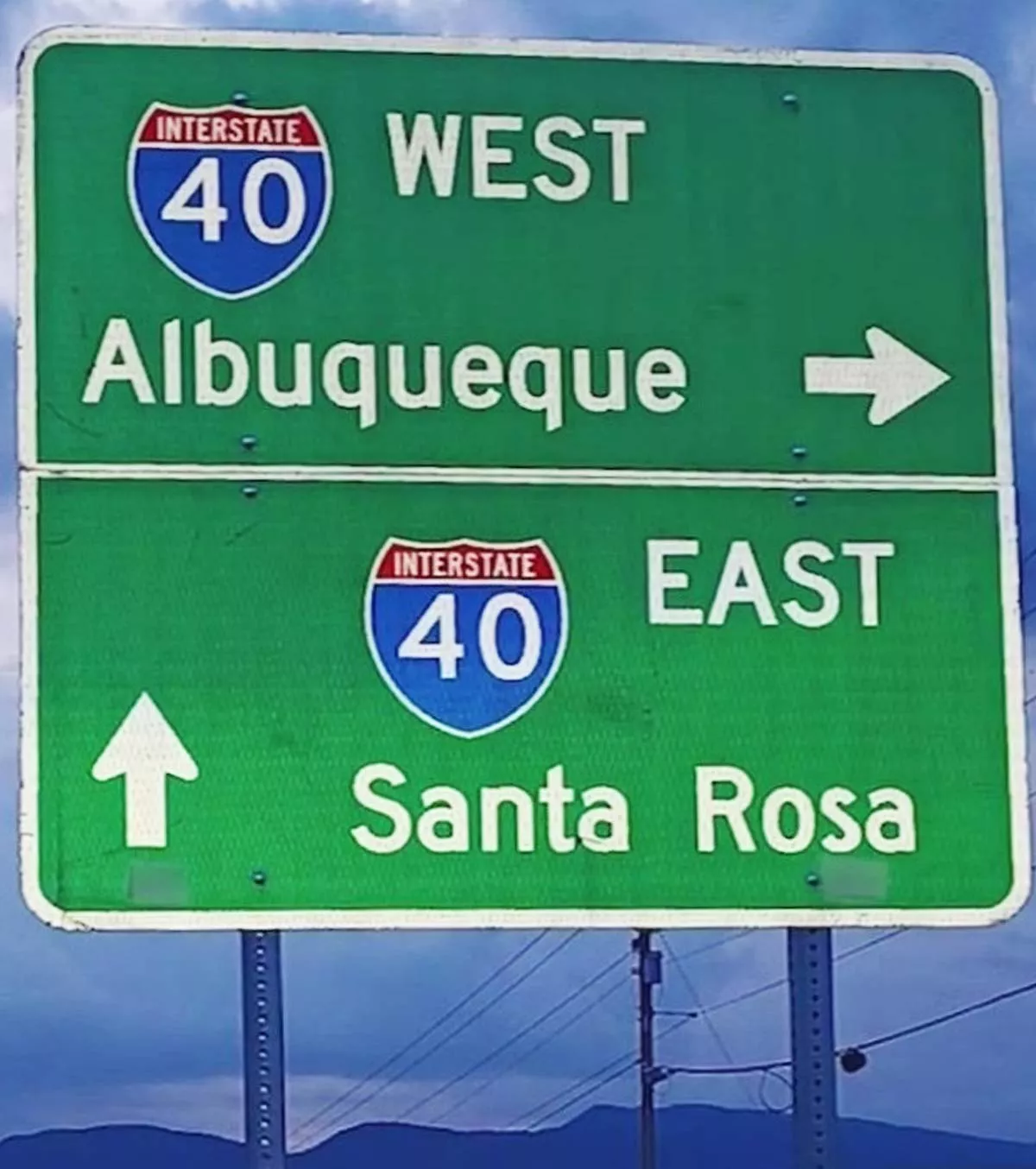
Albuquerque is remote in a way people from the coasts underestimate. The nearest other big city is basically El Paso a few hours south, and everything else is a serious drive. The Sunport airport is easy and pleasant to fly out of, but it is a mid-sized airport, so nonstop options are limited and fares can sting compared to a major hub. If you have family scattered across the country and plan to fly often, price that in honestly.
On the ground, despite the Rail Runner and a handful of walkable pockets, this is still fundamentally a car city. The ABQ RIDE bus system and the ART line down Central exist, but coverage is thin and most people drive everywhere. The upside is that traffic, by big-metro standards, is mild. A cross-town trip that would be a soul-crushing hour elsewhere is often twenty minutes here. You trade walkability for a genuinely low-stress commute, which for a lot of transplants turns out to be a fair swap.
14. Schools and services are a mixed bag
I will be plain about this because families ask me first. The public school picture is uneven. There are strong individual schools, charters with real reputations, and dedicated teachers, but the district overall has struggled with funding and outcomes for years, and it is a common reason families sort themselves carefully by neighborhood or go the charter and private route. It is not a reason to rule the city out, but it is a reason to research specific schools rather than trusting a zip code.
Healthcare is better than you might expect for the size, anchored by the University of New Mexico Hospital, the state’s only Level I trauma center, and the large Presbyterian network. Specialist wait times can run long, and rural New Mexico leans on Albuquerque for care, but for a metro this size the medical infrastructure is a genuine strength rather than a gap.
15. Spring wind, dust, and a long allergy season
Nobody warns you about the wind. From roughly March into May, the spring gales kick up for days at a stretch, hauling dust and grit across the mesa and pinging it against your windshield. It is not a passing squall, it is a season, and it sands the shine off the desert-perfect weather people sell you on. Screen doors rattle, patios need sweeping daily, and the occasional dust storm can drop visibility on the interstate fast enough to matter.
Riding along with that wind is one of the more punishing allergy calendars in the country. Juniper is the villain, and it starts pollinating as early as February and keeps going. The pollen is finer than a human hair and the wind carries it for miles, so newcomers who never had allergies sometimes develop them here, a phenomenon locals cheerfully call cedar fever. Summer grasses and fall ragweed keep the season long. If you are sensitive, budget for it. It is the one climate downside that catches almost everyone off guard.
Tell the next person the thing the guide misses.
The Real Trade-Off in Albuquerque
Line the two columns up and the shape of the decision gets clear. The pros here are mostly things the landscape and the culture hand you for free once you arrive. Sun you can count on, mountains and desert at the doorstep, a food scene with actual roots, housing that still pencils out, a film industry with real jobs, and one genuinely magic week in October when the sky fills with balloons. The cons are mostly things you manage, not things you fix. A crime problem you navigate through where you live and how you park, an economy resting on a handful of big institutions, a water future the whole Southwest is wrestling with, and a spring that blows dust and pollen for weeks.
So here is how I sort people. Move here if you want space, sun, mountains, and a regional culture that could not exist anywhere else, and you are the type who will do neighborhood homework and shrug off a smashed car window as the cost of admission. Look elsewhere if you need a deep, big-city job market outside the labs and the studios, if you require dense walkable nightlife, or if the long-term water question is the kind of thing that will keep you up at three in the morning. Those are not small caveats. I would rather you weigh them now, with both columns in front of you, than after the lease is signed.
What I will say is that Albuquerque tends to reward the people who give it a real chance. It is a slow-burn city, not a first-date city, and the payoff is in the ordinary days. The light on the Sandias at five in the afternoon, when the whole range goes watermelon pink and you understand why the Spanish named it that. The smell of roasting chile drifting across a parking lot in September. A green-chile cheeseburger after a hard hike in the foothills. If those are the things that would make you feel at home, the wind and the crime stats become manageable footnotes rather than the whole story. If they leave you cold, no amount of sunshine will make up the difference, and that is worth knowing before you point the truck west.
Frequently Asked Questions About Living in Albuquerque
Albuquerque’s violent crime rate runs roughly two to three times the national average, and property crime, especially auto theft, is the issue most residents actually deal with. The risk is very unevenly distributed by neighborhood. For most people it is manageable if you research the specific block before you buy or rent, use a garage, and never leave anything visible in your car.
Albuquerque’s overall cost of living sits right around the national average, roughly four percent below it by most 2026 indexes. The median home price runs about 350,000 to 360,000 dollars, well under Denver, Phoenix, or the coasts. Property taxes are low with an effective rate under one percent, though the gross receipts tax lands near 7.9 percent combined and applies to services.
Albuquerque gets about 310 days of sunshine a year in a dry high-desert climate with roughly nine inches of rain. Its 5,300-foot elevation, the highest of any major US metro, moderates summer heat, so July highs in the low nineties feel milder than the number suggests and nights cool off fast. Winters are mild, with January afternoons often in the fifties, though spring brings weeks of wind and dust.
The 54th Albuquerque International Balloon Fiesta runs nine days, October 3 through 11, 2026, at Balloon Fiesta Park on the north side of the city. Highlights include the pre-dawn Dawn Patrol, the two-wave mass ascensions, and the evening balloon glows. Expect heavy traffic, cold mornings, and tripled hotel prices during the event.
- What did the guide get wrong about Albuquerque?
- What does it actually cost you to live here this year?
- What would you tell someone arriving from out of state?