Spokane Is a Trade, Not a Postcard
Spokane sits in the far eastern corner of Washington, closer to Idaho than to Seattle, which is roughly a four to five hour drive west over the mountains. That distance is the key to everything. This is a Washington city with a Washington income structure and an inland, high-desert climate that has almost nothing to do with the drizzly coast most people picture when they hear the state’s name. It is drier, colder in winter, hotter in summer, and about a fifth cheaper. Nobody frames it that way in a relocation pitch, but that is the real shape of the place.
None of what follows is a rumor. The prices, the tax rates, the smoke days, the cloud numbers, they are all pulled from live 2026 sources and checked. The point is not to sell you on Spokane or scare you off it. It is to lay the tradeoff out plainly enough that you can look at it and decide for yourself whether the math works for your household.
The Pros of Living in Spokane
1. No State Income Tax on a Real Paycheck
Washington is one of the handful of states with no personal income tax, and that rule is baked into the state constitution rather than left to the whims of a legislature. For a Spokane household, that is not a rounding error. It is the single biggest financial reason people cross the state line from Idaho or move up from Oregon, where the top income tax rate takes a real bite.
The nuance worth knowing. Washington added a 7 percent capital gains excise tax that applies only to long-term gains above roughly 262,000 dollars in a year, so unless you are selling a large stock position, it will never touch you. For a salaried worker, a nurse, a warehouse lead, a teacher, the practical reality is simple. The money that would have gone to a state income tax somewhere else stays in your account. That is the paycheck half of the Spokane draw, and it is real.
2. Houses You Can Actually Buy
Here is the part that pulls people across the state. The median home across the Spokane metro sits around 415,000 to 420,000 dollars in early 2026, and Zillow’s average home value lands near 404,000. Those are real numbers, and they are not cheap in the way Midwest cities are cheap. But set them next to the west side of the state and the picture snaps into focus.
Spokane’s cost of living index runs about 96, roughly 4 percent below the national average and well below the Washington state average that Seattle and its suburbs drag upward. You are getting Washington’s tax structure and job market at a housing price that a two-income household earning near the local median can actually reach. If you want to see how it stacks against the rest of the region’s cities, the roundup of the best places to live in Washington State puts Spokane next to its more expensive neighbors and the gap is obvious.
3. The Job Market Leans on Something Sturdy
Spokane is the economic hub for all of Eastern Washington, and its anchor is healthcare. Providence is the largest employer in the region with more than 8,000 people, and roughly one in five workers in Spokane is in health care of some kind. That is a stabilizing thing. Hospitals do not offshore, and they do not vanish in a downturn the way a single tech campus can.
The other big story is Amazon’s fulfillment center in Spokane Valley, a facility on the scale of thousands of jobs that broadened the base beyond healthcare and higher education. If you are in nursing, allied health, logistics, or education, Spokane has a deeper market than a city its size usually offers. If you are in tech or finance, it is thinner, and you will likely want a remote arrangement.
4. Summers That Earn Their Keep
Smoke aside, and there is a smoke con coming, Spokane summers are the payoff for the winters. July is the sunniest month by a wide margin, the humidity is low, and the evenings cool off the way high-desert nights do. This is a city built around water and green space, and summer is when it shows off.
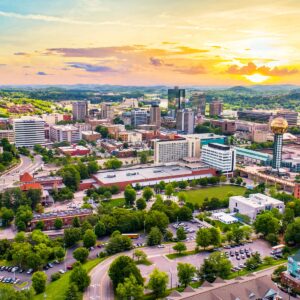
Riverfront Park is the centerpiece, 100 acres in the heart of downtown built for the 1974 World’s Fair, with a gondola that carries you out over the roaring Spokane Falls and a beautifully restored 1909 Looff Carrousel. Manito Park up on the South Hill is 90 acres of gardens, and its Duncan Gardens are laid out in formal European Renaissance style. Come May, the Lilac Festival takes over. These are the kind of everyday amenities that make a mid-size city feel bigger than its population.
Spokane earned its nickname, the Lilac City, honestly. The whole town leans into the outdoors the second the weather cooperates. The Centennial Trail runs about 40 miles along the river and connects downtown to the Idaho state line, which means you can walk out of a Kendall Yards apartment and be on a genuine riverside path in minutes. Bloomsday, the giant footrace held the first Sunday in May, draws close to 50,000 runners and walkers and is one of the largest timed road races in the country. This is a city that treats summer like a limited-time offer, because it is, and the payoff for enduring the winter is real.
5. The Outdoors Are Absurdly Close
This is where Spokane genuinely outperforms cities twice its size. You are surrounded by mountains, lakes, and rivers, and the access is measured in minutes, not hours. Mt. Spokane sits 28 miles north of town, about 1,700 acres with 52 runs, so you can ski after work. Count the region around it and there are five ski areas within roughly a two-hour drive, including Silver Mountain over in Kellogg, Idaho and Schweitzer above Sandpoint.
In summer the story is water. Coeur d’Alene Lake in Idaho is under an hour away, and there are something like 76 lakes within a one-hour drive for swimming, boating, and fishing. If your idea of a good life includes a truck, a paddleboard, and a season pass, few cities in the country deliver this much this close. Idaho’s side of this playground is close enough that the best places to live in Idaho guide reads almost like a Spokane weekend-trip map.
6. Neighborhoods With Actual Character
Spokane is not a wall of identical subdivisions. The South Hill is the classic established neighborhood, leafy, walkable to Manito and Comstock parks, with older homes and the best access to green space in the city. Kendall Yards, on the north bank of the river, is the newer built-from-scratch district, with restaurants, shops, and direct access to the Centennial Trail that runs along the water.
You get a real spread of choices here, from historic South Hill craftsman houses to riverfront condos to affordable starter neighborhoods further out. It is one of the reasons Spokane keeps showing up on lists of the best places to live in the Pacific Northwest. The character is there, and it is not manufactured.
The food scene has grown up alongside the neighborhoods, too. Kendall Yards has turned into a genuine dining district, with the Yards Bruncheon doing clever breakfast plates on Summit Parkway and a run of newer restaurants and wine bars strung along the river bluff. Downtown leans into its craft breweries and long-running diners rather than chasing trends. It is not a big-city restaurant scene, and you will notice that if you move from one. But it is real, it is affordable, and it keeps getting better, which is more than a lot of cities Spokane’s size can say.
7. Property Taxes Stay Reasonable
Homeowners get a small break here to offset the sales tax sting. Spokane’s median effective property tax rate runs around 0.96 percent, right in line with the Washington state median and modest against the national picture. For 2026, Spokane County commissioners voted to hold the levy rate flat rather than take the 1 percent bump state law allows, which is a small but real signal on the tax-restraint side.
On a 415,000 dollar house, a rate near 0.96 percent is a manageable annual bill, especially with no state income tax stacked on top of it. Combined with the housing prices, the total cost of owning a home in Spokane pencils out better than most Washington buyers expect.
8. The Overall Trade Holds Together
Add it up and Spokane’s case is sturdier than most. You get Washington’s no-income-tax paycheck, a housing market a working household can actually enter, a healthcare-anchored job market, and world-class outdoor access, all for a cost of living slightly under the national average. That is a coherent, real deal, not a marketing fantasy. Whether it is the right deal for you depends entirely on the cons that follow, because they are not small.
- $1,483+0.5%Zillow Observed Rent Index (city) · 2026-0935th cheapest of 106 cities
- $478k−2.5%FRED / realtor.com · 2026-0973rd cheapest of 103 cities
- $393k+0.2%Zillow Home Value Index (city) · 2026-0970th cheapest of 105 cities
- 4.2%+0.8 ptBLS Local Area Unemployment Statistics · 2026-08tied for 56th lowest of 106 cities
- AQI 41GoodAirNow · 10/23/26tied for 28th cleanest of 105 cities
- $5.01−2.7%AAA · 2026-10-2486th cheapest of 101 cities
Locals’ verdictGrade Spokane on cost, weather, jobs, people and safety · where it stands on our rankings
The Cons of Living in Spokane
9. The Sales Tax Takes a Bite Back
The state gives on income and takes on consumption. Spokane’s combined sales tax runs 9.1 percent, made up of the 6.5 percent Washington state rate plus 2.6 percent local. That applies to most of what you buy that is not groceries, and it stings most on big-ticket purchases like a car or furniture.
Run the math before you celebrate the no-income-tax line. If you are a moderate earner who spends most of what you make, the sales tax quietly claws back a chunk of what you saved. If you are a higher earner who saves and invests a big share of your income, the no-income-tax structure wins by a mile. Spokane rewards savers more than spenders. That is not a slogan, it is just how the two tax systems interact.
10. Prices Have Climbed and Wages Trail Seattle
Two caveats sit under that housing win. First, Spokane is no longer the secret it was a decade ago. Home values climbed hard through the early 2020s as remote workers and California and Seattle transplants discovered it, and while 2026 has cooled to roughly flat, the days of buying a solid house for under 250,000 dollars are gone.
Second, and more important, the paychecks are smaller here than on the coast. Spokane city’s median household income sits around 70,000 dollars. Seattle’s is about 123,860. That is a massive gap, nearly double. Spokane County did just cross the national median household income for the first time in 2026, which is genuinely good news, but you should know what you are trading. You are swapping a smaller salary for a much smaller mortgage, and that only nets out in your favor if your field pays reasonably well here. A remote job at coastal rates makes Spokane feel like a steal. A locally-tied job in a low-paying field can erase the housing savings faster than you expect.
Do the arithmetic honestly before you fall for the low sticker price. Take a real job offer, subtract Spokane rent or a mortgage on a 415,000 dollar house, and compare that leftover number to what you have now. The no-income-tax line helps, but it does not rescue a paycheck that is simply too small for your household. Plenty of people win this trade. Some lose it and only find out after the move.
11. Smoke Season Is a Real Season Now
This is the one locals will tell you about only after you have signed a lease. Late summer and early fall in Spokane come with wildfire smoke, and it is not occasional anymore. Over the last five summers, the region has averaged about six days a year of genuinely unhealthy air from regional fires, and in bad stretches the air quality index blows past 200 into hazardous territory. In mid-July 2026, it topped 300, hazardous by any measure, with outdoor events cancelled and advisories in effect.
What this actually means for daily life. A few weeks each summer, you keep the windows shut, run an air purifier, and cancel the hike. Kids with asthma stay in. The gorgeous, dry, sunny summer that is one of Spokane’s best features has a smoke asterisk stapled to it, and it is getting more reliable, not less. If clean summer air is non-negotiable for your health, factor this in before anything else.
12. The Winter Is Long, Cold, and Genuinely Gray
Now the other half of the weather. Spokane winters are the price of admission, and they are steep. The city averages around 44 inches of snow a year, so this is a real shovel-and-scrape climate, not a dusting. Cold is manageable. The gray is what gets people.
January is the cloudiest month, overcast about 72 percent of the time. December is the darkest, averaging roughly two hours of actual sunshine a day. If you are coming from a sunnier place, that stretch from November into February is a genuine adjustment, and seasonal affective disorder is not a punchline here, it is a thing people manage with light boxes and vitamin D. Spokane gets about 171 sunny days a year overall, which is respectable, but they are heavily loaded into summer. Winter is a long gray tunnel, and you should know that going in. Portland’s version of the gray is milder and wetter, and the pros and cons of living in Portland break down that different flavor of Pacific Northwest winter if you are comparing the two.
13. You Will Drive Everywhere
Spokane is a car city. Transit exists and covers the core, but it is not the kind of network that lets you skip owning a vehicle, and the region’s shape, spread out across a valley with the recreation an hour in every direction, assumes you have wheels. Factor a car, insurance, and gas into every household here, and remember that 9.1 percent sales tax bites hardest when you buy that car.
The upside is that traffic is mild by big-city standards and commutes are short, so the driving is at least painless. But if you are moving from a walkable city and hoping to shed your car, Spokane is not that place.
14. Property Crime Runs High
Here is the con that gives new residents pause, and it is a fair one. Spokane’s property crime rate sits around 4,841 per 100,000 people, roughly 175 percent above the national rate of about 1,760. That puts the city among the worst tenth in the country for property crime, and it translates to a real chance of a car prowl, a package theft, or a break-in over the years you live here.
Context matters. This is overwhelmingly property crime, not violent crime, and it is concentrated in specific areas rather than spread evenly. Established neighborhoods like the South Hill feel very different from the rougher pockets downtown and along certain corridors. But do not wave it off. Get a garage, install cameras, do not leave anything visible in your car, and read the crime maps block by block for any neighborhood you are considering. This is not a city where you can be casual about it.
15. Getting Out of Town Takes Effort
Spokane International Airport is genuinely useful for a city this size, served by seven airlines with nonstop flights to more than 20 destinations, and the workhorse routes to Seattle, Denver, and Portland run often. That is more than many mid-size cities can claim.
The caveat is that beyond those hubs, a lot of trips mean a connection, and fares out of a smaller market tend to run higher than out of a major one. Add the four to five hour drive to Seattle over the mountains, a pass that can close in winter storms, and the fact that you are a long way from anywhere, and Spokane can feel remote when you want to leave. For a homebody who loves the region, that is a non-issue. For someone who flies constantly or needs frequent quick trips to a coastal city, it is a real cost.
Tell the next person the thing the guide misses.
Who Spokane Actually Fits
Spokane fits the person who wants to own a home in Washington without a Seattle salary to pay for it, who would rather ski on a Tuesday than sit in traffic, and who can live with a long gray winter and a few smoky weeks in August. That describes a lot of people, and most of them end up glad they came. The no-income-tax paycheck plus a reachable mortgage is a combination that simply does not exist on the wet side of the state.
It is a harder fit if you have a health condition that clean summer air is not optional for, if winter darkness genuinely wrecks your mood, or if your income would take a real hit tied to the local market. If that is you, the housing savings can evaporate in ways the sticker price never warns you about. Before you commit, spend a July week here breathing the smoke and a December week here in the dark, walk the South Hill and then walk the corridors the crime maps flag, and price out a real Spokane job against a real Spokane mortgage. The city rewards the people who did that homework and quietly frustrates the ones who moved for the low price tag alone.
Relatively, yes. Spokane’s cost of living index runs about 96, roughly 4 percent below the national average and well under the Washington state average. The metro median home price sits around 415,000 to 420,000 dollars in early 2026, and there is no state income tax, though the combined sales tax is a high 9.1 percent.
Increasingly, yes. Over the last five summers Spokane has averaged about six days a year of unhealthy air from regional wildfires, and in bad stretches the air quality index climbs past 200 into hazardous territory. In mid-July 2026 it topped 300. Late summer and early fall carry the highest smoke risk, so a few weeks of shut windows and cancelled hikes are a realistic part of the year.
Long and gray more than brutally cold. Spokane averages around 44 inches of snow a year, and the darkness is the real challenge. January is overcast about 72 percent of the time and December averages only about two hours of sunshine a day. The city gets roughly 171 sunny days a year overall, but they are heavily concentrated in summer, so the stretch from November into February is a genuine adjustment.
It depends heavily on the neighborhood. Spokane’s property crime rate is about 4,841 per 100,000 people, roughly 175 percent above the national average, which places it among the highest in the country. It is mostly property crime rather than violent crime, and it is concentrated in specific areas. Established neighborhoods like the South Hill feel much safer than the rougher downtown corridors, so researching block by block matters.
- What did the guide get wrong about Spokane?
- What does it actually cost you to live here this year?
- What would you tell someone arriving from out of state?