Pros of Living in Raleigh
#1. The Research Triangle Job Market is Exceptional
The Triangle (Raleigh, Durham, Chapel Hill) is one of the strongest tech and biotech corridors on the East Coast. Apple is building a $1 billion campus in Research Triangle Park. Google, Cisco, Epic Games, Red Hat (IBM), and dozens of biotech firms have major operations here. The unemployment rate hovers around 3.2%, and the median household income sits around $74,000.
What makes the job market different from, say, Austin or Denver is the depth. You’re not just relying on one industry. Tech, pharma, higher education (NC State, Duke, UNC), and state government all contribute to a diversified economy that doesn’t collapse when one sector stumbles.
#2. The Weather is Genuinely Pleasant
Raleigh gets about 215 sunny days per year. Winters are mild, with average lows in the low 30s and only about 4 inches of snow annually (though the city shuts down for 2 inches). Summers are warm, with highs in the upper 80s to low 90s and humidity that’s noticeable but not Gulf Coast level.
Spring is the star season. Azaleas, dogwoods, and cherry blossoms start blooming in March, and the city looks genuinely beautiful from mid-March through May. Fall is long and comfortable, with temperatures in the 60s and 70s well into November. If you’re coming from the Midwest or Northeast, the extra months of warmth feel like a lifestyle upgrade.
#3. Cost of Living is Still Below Major Metros
The median home price in Raleigh is around $420,000, and median rent runs about $1,550 per month. That’s not cheap, and it’s risen sharply since 2020, but compare it to D.C. ($650K+), Boston ($750K+), or San Francisco (don’t even ask) and the math still works. North Carolina has no estate tax and a flat state income tax of 4.5%.
Neighborhoods like Garner, Knightdale, and Fuquay-Varina on the outskirts still offer homes under $350K. Inside the beltline, areas like Five Points and Oakwood run $500K-$800K+ but come with walkability and character that’s hard to find in newer developments.
#4. The Food Scene Has Arrived
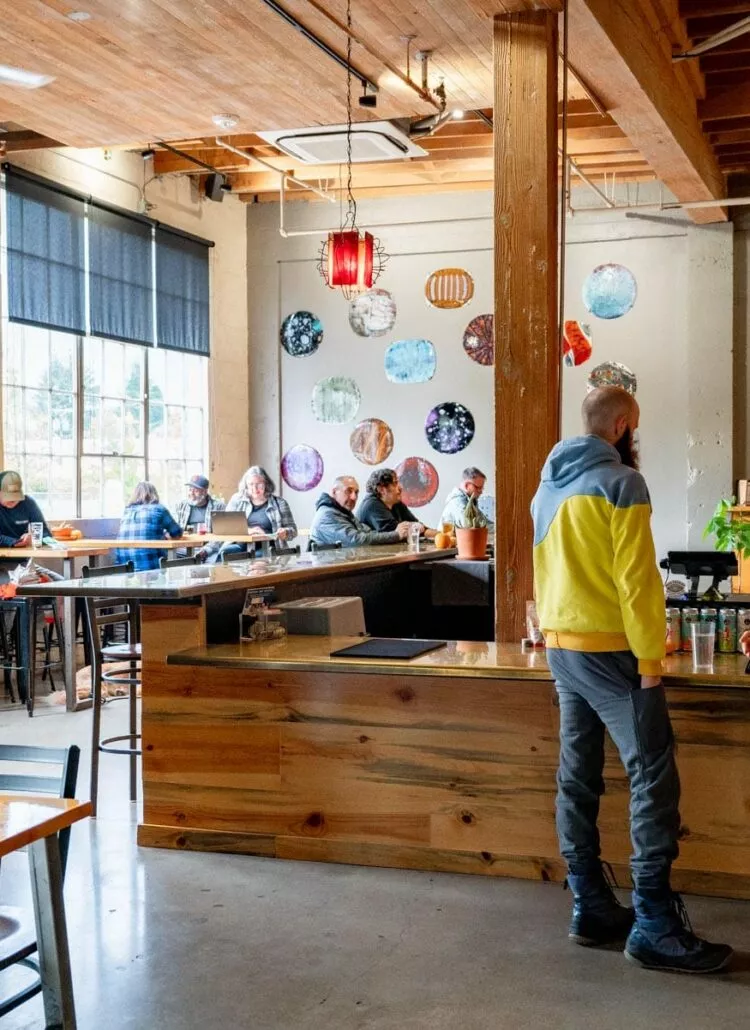
Raleigh’s food scene has gone from “a few good spots” to legitimately impressive. Transfer Co. Food Hall in the Olde East neighborhood is a standout, with vendors like Benchwarmers Bagels and Locals Oyster Bar. Downtown, places like Poole’s Diner (Ashley Christensen’s flagship), Bida Manda (Laotian), and Crawford and Son have put Raleigh on the national food map.
The barbecue culture is serious. You’re in the heart of Eastern NC vinegar-based barbecue territory. The Pit downtown and Sam Jones BBQ (a drive to Winterville but worth it) are excellent. And the brewery scene, led by places like Trophy Brewing, Burial Beer (from Asheville but with a Raleigh taproom), and Brewery Bhavana, is thriving.
#5. Access to Mountains and Beaches
Raleigh sits in the geographic sweet spot of North Carolina. The Outer Banks and Wrightsville Beach are about 3 hours east. The Blue Ridge Parkway and Asheville are about 3.5 hours west. You can realistically do a long weekend to either without it feeling like a major expedition.
Within the Triangle itself, Jordan Lake is 30 minutes away and popular for kayaking and swimming. Umstead State Park, right inside the city limits, has 22 miles of trails and feels surprisingly wild for being sandwiched between suburbs and the airport. Falls Lake is another 30-minute drive for fishing and boating.
#6. The University and Cultural Infrastructure
Having NC State in the city (and Duke and UNC within 30 minutes) gives Raleigh a cultural depth that most mid-size cities can’t match. The North Carolina Museum of Art has a 164-acre campus with free admission. The NC Museum of Natural Sciences is the most visited museum in the state. PNC Arena hosts NHL hockey (the Hurricanes), concerts, and events year-round.
The university influence also keeps the city feeling younger and more dynamic than its government-town reputation might suggest. There’s a steady pipeline of talent and energy that keeps bars, restaurants, and cultural events rotating.
#7. The Greenway Trail System is Excellent
Raleigh has over 115 miles of paved greenway trails connecting neighborhoods, parks, and commercial areas. The Neuse River Greenway Trail runs 28 miles from Falls Lake to the Wake County line. You can bike commute, run, or walk your dog on dedicated paths that are separated from traffic.
For a Sun Belt city that’s built around cars, the greenway system is a genuine bright spot. It’s well-maintained, well-used, and still expanding. The city has plans to add another 80+ miles in the coming years.
- $1,577+0.3%Zillow Observed Rent Index (city) · 2026-0845th cheapest of 106 cities
- $445k−1.1%FRED / realtor.com · 2026-0963rd cheapest of 103 cities
- $429k−0.1%Zillow Home Value Index (city) · 2026-0877th cheapest of 105 cities
- 3.1%−0.1 ptBLS Local Area Unemployment Statistics · 2026-08tied for 10th lowest of 106 cities
- AQI 59ModerateAirNow · 10/14/26tied for 89th cleanest of 105 cities
- $3.72−10.0%AAA · 2026-10-154th cheapest of 101 cities
Locals’ verdictGrade Raleigh on cost, weather, jobs, people and safety · where it stands on our rankings
Cons of Living in Raleigh
#1. The Sprawl is Out of Control
Raleigh is spreading in every direction, and most of what’s being built is the same suburban template: subdivisions with identical houses, strip malls with a Starbucks and a Chick-fil-A, and six-lane roads connecting them all. Wake County adds roughly 60-70 people per day, and the development is overwhelmingly car-dependent.
If you live inside the beltline (I-440), the city feels walkable and interesting. But most of the growth is happening in places like Holly Springs, Apex, and Wake Forest, where you’re driving 20-30 minutes to reach anything with character. The sprawl is the defining tension of Raleigh’s growth story.
#2. Public Transit is Basically Nonexistent
GoRaleigh runs buses, but the routes are limited, the frequency is low, and very few people use it as their primary transportation. There’s no rail system, no subway, no light rail. The long-discussed commuter rail connecting Raleigh, Durham, and Chapel Hill has been in planning stages for decades and keeps getting delayed.
You need a car. That’s not a suggestion. If you’re coming from a city with real transit (New York, Chicago, D.C.), the adjustment is significant. The I-40 and I-440 corridors are increasingly congested during rush hour, and the infrastructure isn’t keeping pace with the population growth.
#3. Summers are Hot and Humid
July and August in Raleigh average highs around 90 degrees with humidity that makes it feel like 100+. The heat index regularly pushes past 105 during heat waves. If you’re not accustomed to Southern humidity, the first summer will be a shock. You’ll run your AC from May through September, and your electricity bill will reflect it ($200-$350/month in peak summer is common).
Outdoor activities shift to early morning or evening during peak summer. Midday in July is genuinely oppressive. It’s not Houston or Miami level, but it’s enough to change your daily routine for three to four months of the year.
#4. Housing Prices Have Spiked
Between 2020 and 2024, Raleigh’s median home price jumped roughly 40%. A house that cost $300K in 2019 is now listed at $420K+. Rent has followed the same trajectory. The affordability advantage over coastal cities is shrinking, and for longtime locals, watching their city become unaffordable has been painful.
The problem is compounded by wages that haven’t kept pace. While tech workers do well, service industry, education, and government employees are increasingly squeezed. The “affordable Southern city” label is outdated. Raleigh is now a moderately expensive city that just happens to be cheaper than the really expensive ones.
#5. Downtown Still Feels Thin
Raleigh’s downtown has improved dramatically (new restaurants, the Union Station district, the Warehouse District), but it still lacks the density and energy of a true urban core. After 10 PM on a weekday, many blocks are quiet. The weekend nightlife concentrates in a few spots along Fayetteville Street and Glenwood South, but it’s not deep.
If you’re coming from a walkable, transit-rich city, Raleigh’s downtown can feel like it’s still under construction. There’s potential everywhere, and new buildings are going up constantly, but the “there there” is still developing. Give it five more years and it might be a different story.
#6. The Allergy Capital of the South
Raleigh regularly ranks among the worst cities in the U.S. for allergies. The pine pollen season (March through April) coats everything in a visible yellow-green layer. Cars, patios, sidewalks, even pools turn yellow. If you have respiratory sensitivities, this is not a minor inconvenience.
Beyond pine pollen, there’s oak, grass, and ragweed that keep the allergy season going from February through November. Year-round allergy medication is standard for a significant portion of residents. It’s one of those things nobody warns you about until you’re here.
#7. State Politics Can Be Frustrating
Raleigh itself leans progressive, but the North Carolina state legislature is firmly conservative. The city often finds its local policies overridden by state-level decisions. This disconnect between a blue city and a red state legislature creates friction on issues like transit funding, zoning reform, and social policy.
If you’re politically engaged, this dynamic can be exhausting. If you’re not, it may not affect your daily life much. But it’s a real part of the context of living in Raleigh, and it shapes everything from how quickly the city can invest in infrastructure to what local schools look like.
Tell the next person the thing the guide misses.
FAQ – Living in Raleigh
For many people, absolutely. The job market is strong, the weather is pleasant for most of the year, and you get access to both mountains and beaches within a few hours. The tradeoffs are sprawl, rising costs, and a lack of public transit. If you’re coming from an expensive coastal city and want more space for your money without giving up career opportunities, Raleigh is one of the strongest options in the country.
It’s getting there. The median home price is around $420,000 and rents average $1,550. That’s still well below D.C., Boston, or West Coast cities, but it’s not the bargain it was five years ago. Inside the beltline, expect to pay a premium. Outlying areas like Garner, Clayton, and Knightdale are still more affordable, but you’ll trade walkability for savings.
Five Points is walkable and close to everything. Oakwood has historic homes and tree-lined streets. North Hills is a mixed-use hub with shopping and dining. Cameron Village area is centrally located and family-friendly. Glenwood South is the nightlife center. Outside the city, Apex and Cary are popular with families for their schools and parks.
The Research Triangle is one of the top job markets in the Southeast. Tech, biotech, healthcare, and higher education drive the economy. Apple, Google, Cisco, Epic Games, and dozens of biotech firms have major presences. The unemployment rate is around 3.2%, and the median household income is approximately $74,000. State government also provides a large, stable employer base.
Raleigh gets about 215 sunny days a year and four real seasons without brutal extremes. Winters are mild, with lows in the low 30s and only about 4 inches of snow annually. The catch is summer: July and August average highs around 90 degrees with humidity that can push the heat index past 105. You will run the AC from May through September. Spring also brings heavy pine pollen, since Raleigh ranks among the worst U.S. cities for allergies.
Pros & Cons of Living in Raleigh (Post Summary)
Raleigh is a city that’s genuinely delivering on its potential, but growing pains are real. The job market, weather, food scene, and outdoor access make it one of the most compelling mid-size cities in the Southeast. But the sprawl, the rising costs, and the near-total reliance on cars are real downsides that shape your daily experience. If you prioritize career opportunities, mild weather, and access to nature over urban density and public transit, Raleigh is a strong pick. Just don’t expect the 2015 price tags.
You may also be interested to read: Pros & Cons of Living in North Carolina
- What did the guide get wrong about Raleigh?
- What does it actually cost you to live here this year?
- What would you tell someone arriving from out of state?