What Nobody Warns You About Before You Move to Savannah
Spend a weekend downtown and Savannah does a very good impression of a place with no downsides. You sip a to-go cup under the live oaks, watch the light move across a square, and start doing mortgage math in your head before you have even finished dinner. I have watched that exact spell take hold in people more than once. The trouble is that a weekend and a life are two different things, and the gap between them is where most relocation regret lives.
No tourism board handed me talking points and no relocation company sponsored a single word of this. What follows is the plain version, the genuinely charming and the genuinely maddening, with real 2026 numbers so you can decide for yourself. Savannah is one of the most beautiful cities in the country to actually live in. It is also hot, humid, and complicated in ways nobody mentions on the trolley tour, and the people who thrive here are the ones who knew that going in.
Here are 15 honest pros and cons of living in Savannah.
The Pros of Living in Savannah
1. You Live Inside One of the Most Beautiful Cities in America
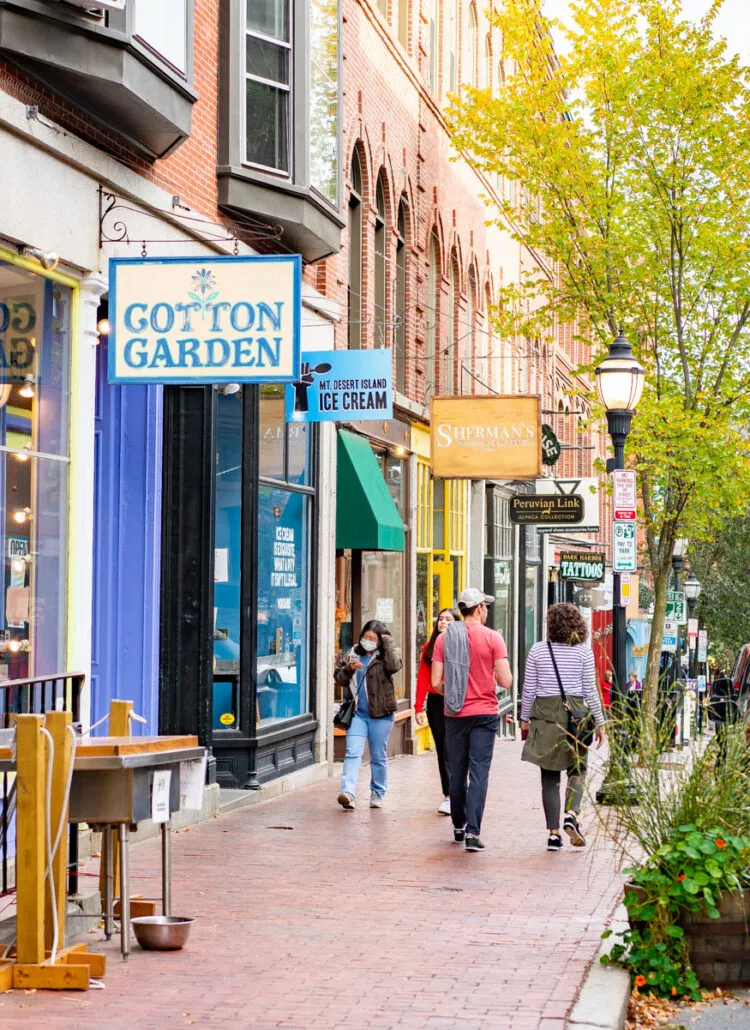
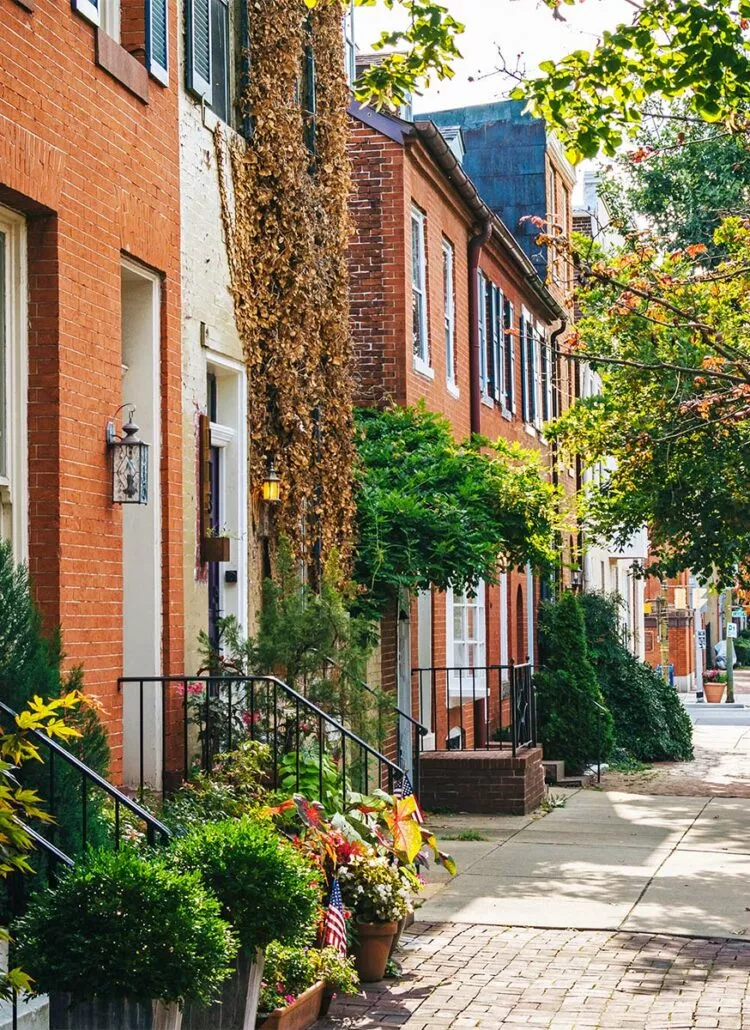
This is the headline, and it holds up. Savannah’s Historic District is built on a grid of 22 squares laid out from James Oglethorpe’s original 1730s plan, and there is nothing else quite like it in the United States. Live-oak canopies, cast-iron balconies, and shaded pocket parks are not a tourist attraction you visit. They are your walk to the coffee shop.
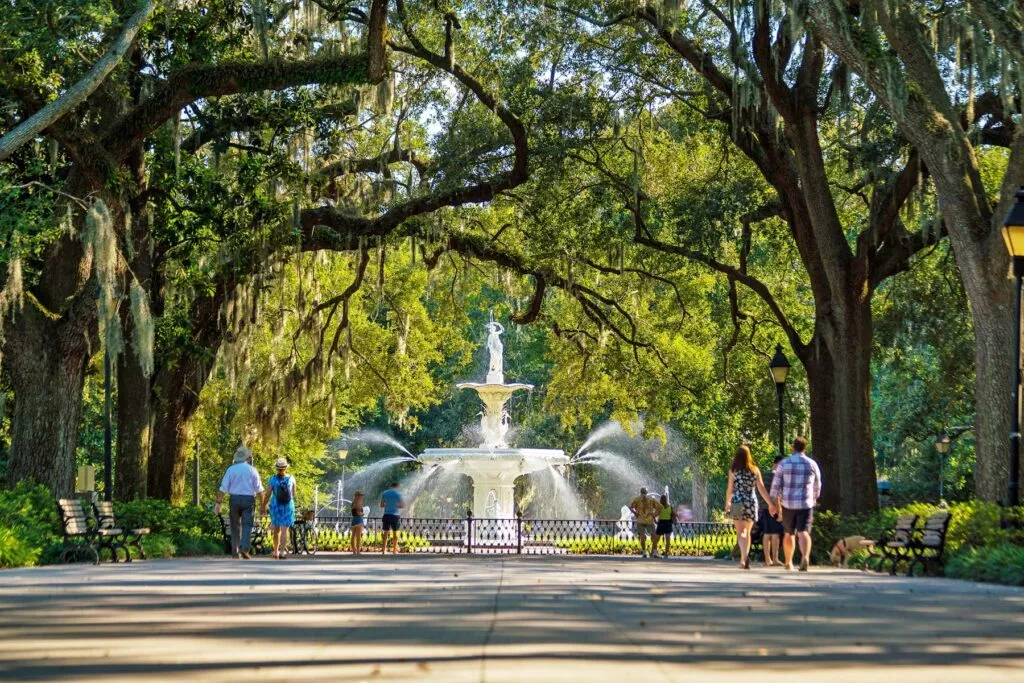
Forsyth Park anchors the southern end of the district, and its white fountain is the single most photographed spot in the city. Most days you can have that beauty essentially to yourself before nine in the morning. Waking up inside a place this genuinely lovely does not get old, and it is the reason a lot of people never leave. The winters help too. From November into March the humidity finally breaks, the light goes gold and long, and those squares become the kind of place you sit in for an hour with no particular plan. Spring and fall stretch out warm and easy in a way they simply do not further north, so the reward for surviving one brutal season is roughly nine months of weather other cities would envy.
2. It Is Still Affordable by Coastal-City Standards
For a walkable, historic, waterfront city, Savannah’s cost of living runs roughly 9 percent below the national average. The median home value sits around 326,000 dollars across the city, and if you look outside the postcard blocks you can find plenty well under 300,000. Average rent lands near 1,700 dollars a month.
Compare that to what a historic walkable neighborhood costs in Charleston two hours up the coast, never mind a coastal city in the Northeast, and the value is obvious. You are not getting Midwest-cheap. But for the kind of city this is, close to the water and full of century-old architecture, the price of admission is genuinely reasonable, and it is the single biggest reason people from pricier coasts start seriously considering the move.
3. Taxes Are Getting Lighter Every Year
Georgia is a reasonably friendly tax state and moving in the right direction. The state income tax is a flat 5.19 percent for 2026 (Tax Foundation, 2026), part of a phased reduction that is scheduled to keep stepping down toward 3.99 percent in future years. That is a real, ongoing raise for everyone who lives here, built right into the calendar.
Combined sales tax in Savannah and Chatham County sits at 7 percent, which is on the low end nationally. The effective property tax rate on a Savannah home runs around 0.87 percent as a median, below the national average, though it varies by ZIP and can climb past 1.4 percent in some districts. Georgia also exempts a good chunk of retirement income, which makes the city popular with retirees. Do your own math by neighborhood, because that spread between 0.87 and 1.4 percent is real money on a 326,000 dollar house, but the overall tax picture here is a genuine plus.
4. The Food and Drink Scene Punches Above Its Weight
For a city this size, Savannah eats extraordinarily well. This is Lowcountry cooking at its source, shrimp and grits, fresh Georgia shrimp, oysters pulled from the coast an hour away, and the kind of biscuits that ruin you for the chain version forever. The Grey, set in a restored 1938 Greyhound bus terminal, put the city on the national fine-dining map and still earns the reservation.
Then there is the drinking. Savannah has an open-container law in the Historic District, so within that zone you can legally carry a to-go cup down the street, which turns an evening walk into something most of the country does not get to do. Add a serious coffee culture, a run of neighborhood bars, and the seafood-shack tradition out toward Tybee, and eating and drinking here is a genuine daily pleasure rather than a tourist checkbox. Fair warning though. All that easy access to good food and a drink at hand is not the kindest thing for the waistline or the budget, and it is very easy to treat every week like a vacation.
5. The Job Market Is Anchored by the Port
For a mid-sized city, Savannah’s economy is sturdier than you might expect, and the reason is the water. The Port of Savannah is the largest single container terminal in the Western Hemisphere, and port activity supports more than 85,000 jobs across Coastal Georgia. That is a serious, growing engine that most cities this size do not have.
Beyond the port, Gulfstream Aerospace builds business jets here and is one of the region’s largest private employers, and Hyundai’s massive electric-vehicle Metaplant, about thirty minutes west in Bryan County, has added thousands of manufacturing jobs to the area. Logistics, manufacturing, healthcare, and tourism carry the local economy. It is not a one-industry town, which means it tends to weather downturns better than places that ride on a single sector.
6. SCAD Gives the City a Creative Pulse
Savannah could easily have coasted on history and become a museum. It did not, largely because of the Savannah College of Art and Design. SCAD enrolls somewhere around 18,550 students across its programs, its flagship campus is woven right through the Historic District, and it was founded on Madison Square in 1978.
What that means for a resident is a city with a genuine creative undercurrent. Galleries, restored buildings that SCAD saved from demolition, film production, design festivals, and a steady stream of young artists give Savannah an energy that pure heritage tourism would never produce. The students bring their share of noise and rentals, sure, but the creative pulse they add is a real reason the city feels alive rather than embalmed.
7. The Beach and the Lowcountry Are Right There
One of the quiet luxuries of Savannah is what surrounds it. Tybee Island, the city’s own beach, is a twenty-minute drive from downtown, an unfussy, slightly weathered barrier island with real sand and a real lighthouse rather than a manicured resort strip. That is a genuine daily-life perk most inland cities cannot match.
Beyond Tybee, the Lowcountry stretches out in every direction, tidal marshes, kayaking creeks, and coastal state parks, with Hilton Head and Charleston both an easy drive up the coast. If you want water and marsh and long horizons, you are living in the middle of it. The catch, and there is always a catch, is that on a hot summer weekend everyone else wants the beach too. The two-lane road out to Tybee backs up, and parking on the island fills early. Locals learn to go at odd hours or take a kayak into the quieter creeks instead. But even with the crowds, having genuine coast this close is a daily-life luxury most cities cannot offer, and it is one of the things residents miss most when they leave.
8. The Sense of Community Is Real
For all its tourist traffic, Savannah underneath is a genuinely neighborly place. Southern friendliness here is not a marketing line, it is the cashier who chats with you, the neighbor who waves from the porch, the way people actually turn out for a stranger having a hard week. Because the city is small and walkable in its core, you run into the same faces, and community forms fast.
Festivals anchor the calendar too, from the enormous St. Patrick’s Day celebration, one of the largest in the country, to the Savannah Food and Wine Festival and a steady run of art and film events tied to the creative scene. It is easy to feel rooted here quickly, which is not true of every city this size. That sense of belonging is one of the quieter reasons people stay.
- $1,712−0.9%Zillow Observed Rent Index (city) · 2026-0962nd cheapest of 106 cities
- $400k±0FRED / realtor.com · 2026-09tied for 49th cheapest of 103 cities
- $319k−0.3%Zillow Home Value Index (city) · 2026-0949th cheapest of 105 cities
- 2.9%+0.2 ptBLS Local Area Unemployment Statistics · 2026-08tied for 3rd lowest of 106 cities
- AQI 42GoodAirNow · 10/20/26tied for 36th cleanest of 105 cities
- $3.80−2.5%AAA · 2026-10-2117th cheapest of 101 cities
Locals’ verdictGrade Savannah on cost, weather, jobs, people and safety · where it stands on our rankings
The Cons of Living in Savannah
9. The Summer Heat and Humidity Are No Joke
Let me be honest about the weather, because it is the thing people underestimate most. July highs average around 90 to 91 degrees, and that number lies, because the humidity routinely pushes the heat index past 105 and on bad afternoons toward 111. The air in August is thick enough to chew.
Savannah gets around 52 inches of rain a year, a lot of it arriving as sudden muggy thunderstorms that soak you between the car and the front door. Summer here is not a season you spend outside for long stretches. Air conditioning is not a comfort, it is survival gear, and your power bill from June through September will remind you every month. You do trade that brutal summer for a short, mild winter, which is a fair deal for a lot of people. But roughly four months of the year, the beautiful outdoor city you moved for is a place you scurry across from one air-conditioned room to the next. Know the trade going in.
10. The Tourists Are Constant, and You Live in Their Backdrop
This is the part the relocation brochures skip, so I will not. Savannah drew roughly 12.9 million visitors in 2025, spending about 4.1 billion dollars. That is fantastic for the economy and genuinely exhausting to live inside of.
If you settle in the Historic District, tour trolleys will rumble past your window, ghost-tour groups will gather on your corner after dark, and finding parking near your own home on a Saturday can be a small war. Locals adapt, they learn the back streets and the off-hours, and many happily live a few neighborhoods out where the crowds thin. But the tourism that makes the city hum is also a daily fact of life downtown, and pretending otherwise would be dishonest. The single best move a lot of new arrivals make is resisting the pull of the postcard blocks and settling one or two neighborhoods south, where the beauty holds but the crowds do not follow.
11. Crime Is a Real, Uneven Problem
This is the honest counterweight to all the charm. Savannah’s overall violent crime rate hovers around the national average, but the murder rate is the number that stands out, running near 11.6 per 100,000, well above the national figure closer to 6.3. Property crime is the bigger day-to-day issue, sitting roughly 45 percent above the national average, so car break-ins and package theft are things residents actively plan around.
Like most cities, the crime is geographically concentrated, and the tourist-heavy and well-off neighborhoods feel far safer than the citywide averages suggest. Trends have generally improved over the past couple of years too. But this is not a city where you can be careless, and anyone who tells you Savannah is uniformly safe has not looked at the numbers. Pull the crime map for the specific block you are considering, not the citywide figure, because in Savannah the difference between two streets a few blocks apart is real.
12. Hurricane Season Is a Real Cost of Coastal Living
You are on the coast, which is glorious most of the year and nerve-wracking from roughly June through November. Savannah sits far enough up a river to get some buffer, but the risk is real. In 2016, Hurricane Matthew triggered a mandatory evacuation of everyone east of Interstate 95, flooded President Street, and left more than 370,000 in the region without power.
Most years pass without a direct hit, and locals take the drill in stride, keeping a go-bag and watching the tropics all season. But you should budget for the possibility of an evacuation, check flood zones and insurance carefully before you buy, and understand that a bad storm year is part of the deal here. This is the tax you pay for living on the beautiful Georgia coast, and it is a tax that shows up on your homeowners insurance premium whether or not a storm ever arrives.
13. Wages Trail the Cost of the Charm
Here is the honest asterisk on the affordability. Savannah’s local wages sit below the national median, and the tourism-heavy job base leans toward hospitality and service work that does not pay especially well. The low cost of living offsets it, which is the whole bargain, but it is a bargain with two sides.
If you work remotely for an out-of-town employer, you win big here, your salary stretches and you get to live inside a beautiful city. If your paycheck is set by the local market, understand that the affordability comes packaged with lower pay. The math usually still favors you, but run your own numbers against a real local salary offer before you assume the cheap cost of living lands in your pocket.
14. You Will Probably Need a Car
The Historic District is one of the most walkable neighborhoods in the South, and if you live and work inside it, you can genuinely get by on foot. Outside that core, though, Savannah sprawls, and public transit is limited. The CAT bus system covers the city but is not built for car-free suburban life.
Once you move out to the more affordable neighborhoods, the beaches, or the suburbs toward the port, life assumes a car. If you were hoping to ditch yours entirely, only the downtown core really supports that, and you will want the cost of owning and parking a vehicle in your budget for anywhere else. That is worth weighing against the affordability, because the money you save on rent a few neighborhoods out often goes straight back into a second car.
15. It Can Feel Small When You Need Big-City Things
Savannah is a real city, but with roughly 150,000 residents it is a small one, and there are days that fact catches up with you. The nonstop-flight map out of Savannah/Hilton Head International is limited, so getting to the West Coast or overseas usually means connecting through Atlanta or Charlotte first. For serious specialized medical care, a major concert tour, or a certain kind of career move, you may find yourself driving the two-plus hours to Atlanta or flying out.
Day to day this rarely bites, and plenty of residents love the intimacy. But if you are coming from a major metro, be honest with yourself about how often you actually use big-city amenities, because Savannah trades some of that reach for its charm. Knowing the trade before you move keeps it from turning into a resentment later.
Tell the next person the thing the guide misses.
Who Savannah Actually Suits
Savannah rewards a specific kind of person, and it is worth knowing whether that is you before the moving truck arrives. If you can shrug off four months of heat you can chew, if a trolley outside the window reads as character rather than nuisance, and if your income comes from somewhere other than the local wage floor, this city will hand you more beauty per dollar than almost anywhere in the country. The retiree with exempt income, the remote worker with a coastal-priced salary, and the creative who wants to be near SCAD’s orbit all tend to flourish here.
It suits you less if you need a deep job market for a specialized career, if you count on nonstop flights and big-city medicine, or if you assumed the low cost of living meant safety was uniform across town. None of those are dealbreakers, but they are the things that turn a honeymoon into a mistake when nobody flagged them first. Pull the crime map for your actual block, check the flood zone and the insurance quote, and price out the car you will probably need. Do that homework and Savannah is very easy to fall for, and very hard to leave.
If you are weighing the wider region, it is worth reading our fuller take on the honest pros and cons of living in Georgia as a whole, along with our roundup of the best places to live in Georgia. Savannah also sits at the heart of a broader region worth exploring in our guide to the best places to live in the South, and if you are eyeing the neighboring coast, our list of the most charming places to live in South Carolina covers what is just up the road.
Frequently Asked Questions About Living in Savannah
Relatively, yes. Savannah’s cost of living runs roughly 9 percent below the national average, which is a good value for a walkable, historic, coastal city. The median home value sits around 326,000 dollars, with plenty of options under 300,000 outside the Historic District, and average rent is near 1,700 dollars a month. The catch is that local wages also trail the national median, so it stretches furthest if you work remotely for an out-of-town employer.
Hot and very humid. July highs average around 90 to 91 degrees, but the humidity routinely pushes the heat index past 105 and toward 111 on the worst afternoons. The city gets about 52 inches of rain a year, much of it as sudden summer thunderstorms, so air conditioning is essential from June through September. The trade-off is that winters are short and mild, with snow being a rare event.
Georgia’s state income tax is a flat 5.19 percent in 2026, part of a phased reduction scheduled to keep dropping toward 3.99 percent in coming years. Combined sales tax in Savannah and Chatham County is 7 percent, on the low end nationally, and the median effective property tax rate on a Savannah home is around 0.87 percent, though it varies by ZIP and can exceed 1.4 percent in some districts. Georgia also exempts a large share of retirement income.
It is a mixed picture. Savannah’s overall violent crime rate hovers around the national average, but the murder rate is elevated at roughly 11.6 per 100,000, well above the national figure near 6.3, and property crime runs about 45 percent above average, so car break-ins and package theft are real concerns. The crime is geographically concentrated, and tourist-heavy and well-off neighborhoods feel far safer than the citywide numbers suggest, but it is not a city where you can be careless.
It faces real hurricane risk from roughly June through November. Savannah sits up a river, which gives it some buffer, but strong storms still threaten the area. Hurricane Matthew in 2016 forced a mandatory evacuation of everyone east of Interstate 95, flooded President Street, and knocked out power to more than 370,000 people in the region. Most years pass without a direct hit, but residents keep a go-bag and should check flood zones and insurance carefully before buying.
- What did the guide get wrong about Savannah?
- What does it actually cost you to live here this year?
- What would you tell someone arriving from out of state?