In the guide16 sections
Locals: still true in 2026? Say so in the thread.
The Honest Truth About Living in Milwaukee
Milwaukee gets a quick pitch from outsiders: cheap houses, cold beer, Lake Michigan, and a Bucks championship still fresh in memory. All of that holds up. But the brochure leaves out the property tax bill, the winters that genuinely test your resolve, and a violent crime rate that the numbers will not let you ignore. Milwaukee is an underrated, affordable, characterful city, and it is also a city with some real edges.
We are not selling you anything here. No real estate agent fed us talking points and no tourism board approved this. What follows is the plain version, the good and the genuinely tough, with real 2026 numbers so you can decide for yourself. There is a lot to like about Milwaukee. There are also a few things people conveniently skip over.
Here are 15 honest pros and cons of living in Milwaukee.
Pro 1. Housing Is Remarkably Affordable
This is Milwaukee’s headline strength. The median home sale price sits around 234,000 dollars in early 2026, nearly half the national median. For a real city on a Great Lake with major-league sports and a genuine downtown, that is an extraordinary value. First-time buyers who would be locked out of the coasts can actually own a home here, often a charming older one with character, brick, and hardwood floors.
Pro 2. The Overall Cost of Living Is Low
Milwaukee’s cost of living index lands around 88, comfortably below the national average. Beyond housing, everyday expenses from groceries to entertainment run cheaper than in comparable large cities. Your paycheck simply covers more here. For people relocating from Chicago just 90 minutes south, the drop in daily costs is dramatic and immediate, which is exactly why so many Chicagoans have made the move north. The same restaurant meal, the same gym membership, the same night out costs noticeably less here, and the gap compounds month after month into real savings that many transplants funnel straight into a down payment they could never have managed in their old city.
Pro 3. Lake Michigan Defines the City
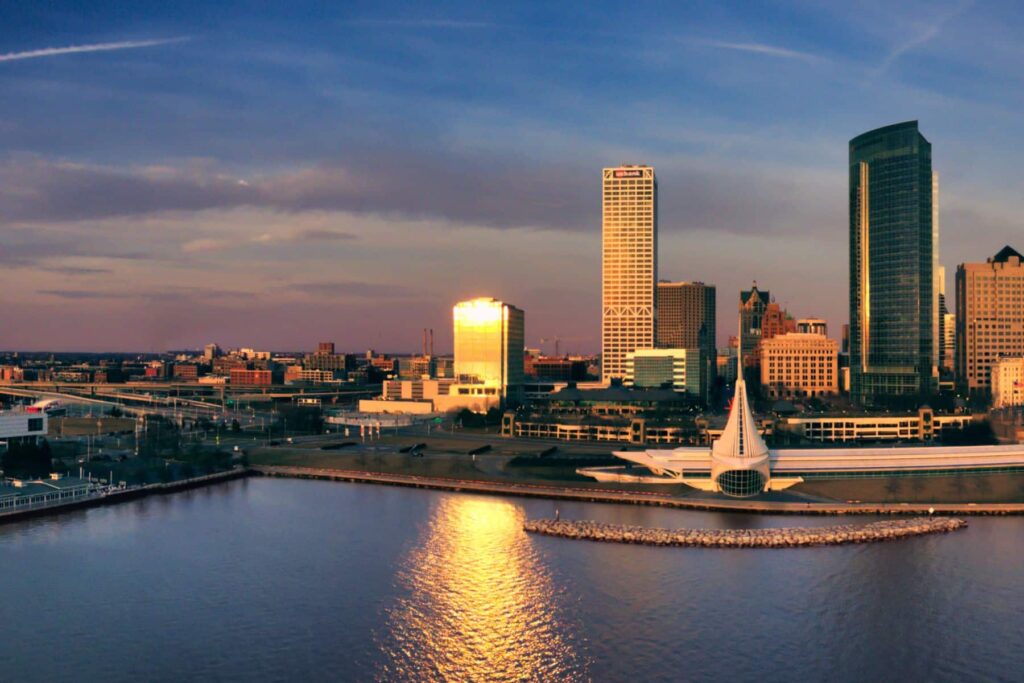
Milwaukee’s lakefront is its crown jewel. Miles of public beaches, parks, trails, and the striking Santiago Calatrava-designed art museum line the shore, all free and open to residents. Summers on the lake are spectacular, with festivals, sailing, and the famous Summerfest music marathon. Living next to one of the largest freshwater lakes on earth gives the city a beauty and a recreational backyard that few inland cities can match. The lake also moderates the climate at the margins and gives summer evenings a cool breeze, and the chain of parks and bike paths along the bluffs means residents are never far from open water and a long view.
Pro 4. The Job Market Is Stronger Than People Expect
Milwaukee quietly hosts a surprising concentration of major employers. Northwestern Mutual is headquartered here, alongside Fiserv, Milwaukee Tool, Froedtert and the Medical College of Wisconsin, and Advocate Aurora Health. The greater metro is home to six Fortune 500 headquarters. The economy spans finance, healthcare, advanced manufacturing, and water technology, giving job seekers more depth than the city’s modest national profile would suggest.
Pro 5. The Food, Beer, and Festival Scene Is Real
Milwaukee earned its beer reputation honestly and has expanded well beyond it. The city has a thriving craft brewery scene, a serious supper-club tradition, a strong custard and bratwurst culture, and a summer festival calendar anchored by Summerfest, billed as one of the world’s largest music festivals. For a mid-sized city, the depth of food, drink, and event options is genuinely impressive and a big part of local pride.
Pro 6. You Get Major-League Sports
For a city its size, Milwaukee delivers on sports. The NBA’s Bucks, fresh off a championship era, play downtown at Fiserv Forum, and the MLB’s Brewers play at American Family Field with its retractable roof and tailgating culture that locals treat as a sacred ritual. Game-day shuttles run from bars and restaurants across the city. Having two major pro franchises in an affordable city is a real quality-of-life perk.
Pro 7. The Location Is Excellent
Milwaukee sits just 90 minutes north of Chicago, giving you access to a world-class city’s airport, culture, and job market without paying to live there. Madison and the University of Wisconsin are a short drive west, and the lakes and woods of the upper Midwest are an easy weekend away. For people who want affordability without isolation, the location is hard to beat.
Con 1. The Winters Are Long and Brutal
There is no sugarcoating it. Milwaukee averages around 45 inches of snow a year, well above the national average, and January highs sit near 28 degrees with lows around 16. The cold off Lake Michigan has a bite, and the gray, frozen stretch runs for months. If you have never lived through a real Midwestern winter, the reality of scraping ice off your car in the dark every morning is a serious adjustment.
Con 2. Property Taxes Are High
The flip side of cheap homes is a heavy property tax. Wisconsin’s average effective property tax rate runs around 1.61 percent, one of the highest in the nation. On even a modestly priced home, that bill adds up fast and eats into the savings from the low purchase price. When you budget for a Milwaukee home, the annual tax line is the number that surprises newcomers most.
Con 3. Violent Crime Is a Genuine Concern
This is Milwaukee’s hardest truth. The city’s violent crime rate runs around 1,482 per 100,000 residents, nearly five times the Wisconsin state average. There is good news in the trend, with homicides down 8 percent and auto thefts down 19 percent in the first quarter of 2026, but the baseline is high. Crime is concentrated in specific neighborhoods, and choosing where you live with care is not optional here, it is essential.
Con 4. The Sales Tax Recently Jumped
Milwaukee’s combined sales tax rose to 7.9 percent in 2024, made up of 5 percent state, 0.9 percent county, and a new 2 percent city tax added to address fiscal pressures. While still not the highest in the country, the increase was a real hit to residents and a reminder that the city’s finances have been strained. Every purchase now carries a little more sting than it used to.
Con 5. The Population Has Been Shrinking
Like many older industrial cities, Milwaukee has struggled with population loss and the segregation and disinvestment that came with decades of manufacturing decline. Some neighborhoods show the strain in vacant properties and underfunded services. The city is working to reverse the trend, and downtown has seen real revitalization, but the legacy challenges of a Rust Belt city are part of the honest picture.
Con 6. The Job Market Has a Ceiling on Big Salaries
While Milwaukee has solid employers and low unemployment, the very high salaries found in Chicago, the coasts, or major tech hubs are harder to come by. The local median household income sits well below the national figure. For most people the low cost of living more than makes up for it, but if you are chasing a top-tier paycheck in your field, Milwaukee may not be where you find it.
A Closer Look at the Numbers and Neighborhoods
Laying the money out together shows why Milwaukee is such a strong value with one big asterisk. The cost of living index around 88 and a median home sale price near 234,000 dollars mean your housing dollar goes remarkably far, especially for anyone arriving from Chicago 90 minutes south. The asterisk is taxes: Wisconsin’s graduated income tax runs 3.5 to 7.65 percent, the average effective property tax rate near 1.61 percent is among the highest in the nation, and the city’s sales tax climbed to 7.9 percent in 2024. Run the full picture and the low home price gives back some of its savings through the annual property tax bill, so the smart move is to budget the total monthly cost, mortgage plus taxes plus insurance, rather than fixating on the purchase price alone.
Neighborhood choice matters more in Milwaukee than in most cities, because the gap between areas is wide. The East Side near the lake and the university draws younger residents and renters. Bay View to the south has become a magnet for young families and creatives with its walkable commercial strip. The historic Third Ward offers loft living and nightlife downtown. To the west and north, suburbs like Wauwatosa and Shorewood deliver leafy streets, strong schools, and quick access to the city. Because Milwaukee’s violent crime is concentrated in specific neighborhoods rather than spread evenly, doing your homework on a given block, and ideally walking it at different times of day, is essential before you sign anything.
So, Should You Move to Milwaukee?
Milwaukee is one of the best-value cities in America for people who can handle a real winter. The affordable housing, the low cost of living, the spectacular lakefront, two major-league teams, and a food and festival scene that overdelivers all make it a genuinely livable place. For first-time buyers, families, and anyone fleeing Chicago prices, it offers a quality of life that is hard to find this cheap.
If you want an affordable home on a Great Lake, real sports, great beer, and a short hop to Chicago, Milwaukee delivers in a way few cities can, and the remote-work crowd in particular can do very well here. If you need mild winters, low property taxes, top-tier salaries, or a low citywide crime rate, you should weigh the cons carefully and pick your neighborhood with real intention.
A few practical notes round out the picture. Commuting in Milwaukee is mercifully easy by big-city standards. The metro’s freeway system moves well, rush hour is real but mild compared to Chicago, and a typical cross-town drive runs 20 to 30 minutes rather than the soul-crushing hauls of larger metros. Transit exists in the form of buses and a downtown streetcar, but most residents drive, and the short distances make that manageable. The one seasonal wildcard is winter weather snarling the morning commute, so a reliable vehicle and a good set of tires are not optional from December through March.
It is also worth setting expectations about the rhythm of the year. Milwaukee is a tale of two seasons. The summer, roughly June through September, is glorious: festival after festival, packed beaches and beer gardens, and a lakefront that turns the whole city extroverted. Then the long gray cold sets in, and the city turns inward to its bars, supper clubs, and the warmth of two pro sports seasons. Newcomers who plan for that contrast, leaning into summer and finding indoor community for winter, tend to thrive. Those who expect year-round mildness tend to struggle through their first February.
It is not paradise and it is not a lost cause. It is an affordable, characterful, lakefront Midwestern city with a great summer and a few real warts. Go in clear-eyed, choose your neighborhood wisely, and most people end up genuinely glad they came.
Yes, very. Milwaukee’s cost of living index sits around 88, below the national average, and the median home sale price is about 234,000 dollars, nearly half the national median. For a real city on Lake Michigan with major-league sports, that is an outstanding value, though high property taxes offset some of the savings from low home prices.
Wisconsin charges a graduated state income tax from 3.5 to 7.65 percent. Property taxes are a key consideration, with the state average effective rate around 1.61 percent, among the highest in the nation. Milwaukee’s combined sales tax rose to 7.9 percent in 2024, made up of 5 percent state, 0.9 percent county, and a new 2 percent city tax.
Milwaukee has hot summers and long, cold winters. The city averages around 45 inches of snow a year, well above the national average, with January highs near 28 degrees and lows around 16. The cold off Lake Michigan has a real bite. Summers, by contrast, are warm and beautiful along the lakefront, which is when the city truly comes alive.
It is a mixed picture. Milwaukee’s violent crime rate runs around 1,482 per 100,000 residents, nearly five times the Wisconsin state average, and crime is concentrated in specific neighborhoods. The trend is improving, with homicides down 8 percent and auto thefts down 19 percent in early 2026, but choosing your neighborhood carefully is essential to feeling safe in the city.
Milwaukee hosts a surprising concentration of major employers, with six Fortune 500 headquarters in the greater metro. Northwestern Mutual is headquartered in the city, alongside Fiserv, Milwaukee Tool, Froedtert and the Medical College of Wisconsin, and Advocate Aurora Health. The economy spans finance, healthcare, advanced manufacturing, and water technology, giving job seekers more depth than the city’s profile suggests.
- What did the guide get wrong about Milwaukee?
- What does it actually cost you to live here this year?
- What would you tell someone arriving from out of state?