Pros of Living in Detroit
#1. The Housing Market is Absurdly Affordable
This is the single biggest draw. The median home price in Detroit proper is around $78,000. That’s not a typo. For context, the national median sits above $400,000. Even in nicer neighborhoods like Corktown, Midtown, and Indian Village, you’re looking at $200K-$400K for a solid home.
Median rent in Detroit runs about $1,100 per month. In Corktown you’ll pay $1,000-$1,500 for a one-bedroom. Midtown runs $1,200-$1,800. West Village is around $1,000. If you’re a remote worker pulling a coastal salary, your money goes absurdly far here. That’s the single biggest reason young professionals have been flooding into the city over the past five years.
A word of caution though: not every cheap house is a deal. Some homes sell for $5,000-$10,000 because they need $100,000+ in repairs. Do your homework before buying.
#2. The Downtown Revival is Legit
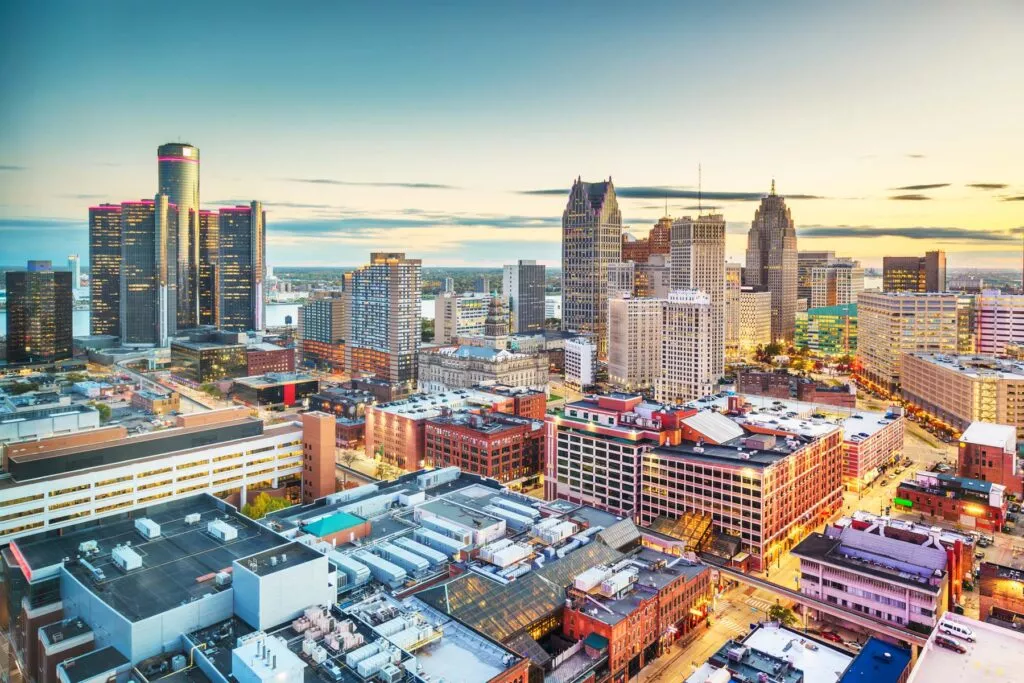
If you visited Detroit 15 years ago and haven’t been back, you wouldn’t recognize downtown. Dan Gilbert’s Bedrock has invested billions into the city center. The Gordie Howe International Bridge connecting Detroit to Windsor, Canada is opening in 2026. Michigan Central Station, the iconic train station that sat abandoned for decades, has been fully renovated by Ford into a 640,000 square foot mixed-use campus.
There are 34 major development projects underway in Detroit heading into 2026, including luxury hotels (the Detroit EDITION, JW Marriott Water Square), a new 15,000-seat soccer stadium in Corktown, and the Cosm entertainment venue at Cadillac Square.
Here’s a number that would have been unthinkable a decade ago: Detroit is actually gaining population. The city added nearly 7,000 residents in 2024 alone, the first sustained growth in decades. It recently overtook Portland, Oregon as the 26th largest US city. Midtown and Corktown have transformed into walkable, vibrant neighborhoods with restaurants, galleries, and small businesses. The energy is real, and it’s not slowing down.
#3. A Food City That Doesn’t Get Enough Credit
Detroit’s food scene is seriously underrated. Dearborn, directly adjacent, has the largest Arab American community in the US, and the Middle Eastern food there is some of the best in the country. Hamtramck has an incredible Yemeni and Bangladeshi food scene. Mexicantown in Southwest Detroit serves the real deal.
Beyond ethnic food, the city has a growing fine dining scene. Mabel Gray, Selden Standard, and The Apparatus Room have all gotten national recognition. The Detroit-style pizza (thick, rectangular, crispy cheese edges) has gone from local secret to national obsession.
And you can’t talk Detroit food without mentioning Coney dogs. The Lafayette vs. American Coney Island debate has been going on for a century, and locals have strong opinions.
The Corktown and Midtown restaurant scenes alone would justify a weekend trip. Living here means you get to eat this well every day.
#4. The Sports Culture is Unmatched
Detroit is the only city in America where all four major pro sports teams (Lions, Tigers, Red Wings, Pistons) play within the downtown city limits. Ford Field, Comerica Park, and Little Caesars Arena are all within walking distance of each other.
The Lions have been one of the best stories in the NFL over the past two seasons. The city’s energy around game day is electric. Detroiters take their sports seriously, and the communal experience of watching games downtown is genuinely special.
#5. Motown Heritage and a Real Arts Scene
The Motown Museum on West Grand Boulevard is where Stevie Wonder, The Supremes, Marvin Gaye, and The Temptations recorded some of the most important music in American history. Detroit’s cultural contribution to music is hard to overstate.
Beyond Motown, Detroit literally invented techno music. The Movement Electronic Music Festival draws tens of thousands to Hart Plaza every Memorial Day weekend. The Detroit Jazz Festival on Labor Day is the largest free jazz festival in the world. Add a strong hip-hop tradition (Eminem, J Dilla, Big Sean), and the Detroit Institute of Arts, which houses one of the most significant art collections in the US including Diego Rivera’s famous “Detroit Industry” murals.
The creative energy here is grassroots and authentic. It doesn’t feel manufactured or curated for tourists. That matters.
#6. Violent Crime is Dropping at Historic Rates
This is the one people don’t expect. Detroit ended 2025 with 165 homicides, the lowest number since 1965. That’s down 35% from just two years ago. Non-fatal shootings dropped 26%. Carjackings plummeted 46%. Robberies fell 21%.
Is Detroit still more dangerous than the average American city? Yes. But the trajectory is remarkable, and the improvement is happening fast. The city credits community violence intervention programs, better policing partnerships, and investment in neighborhoods that were previously ignored.
#7. Access to the Great Lakes and Canada
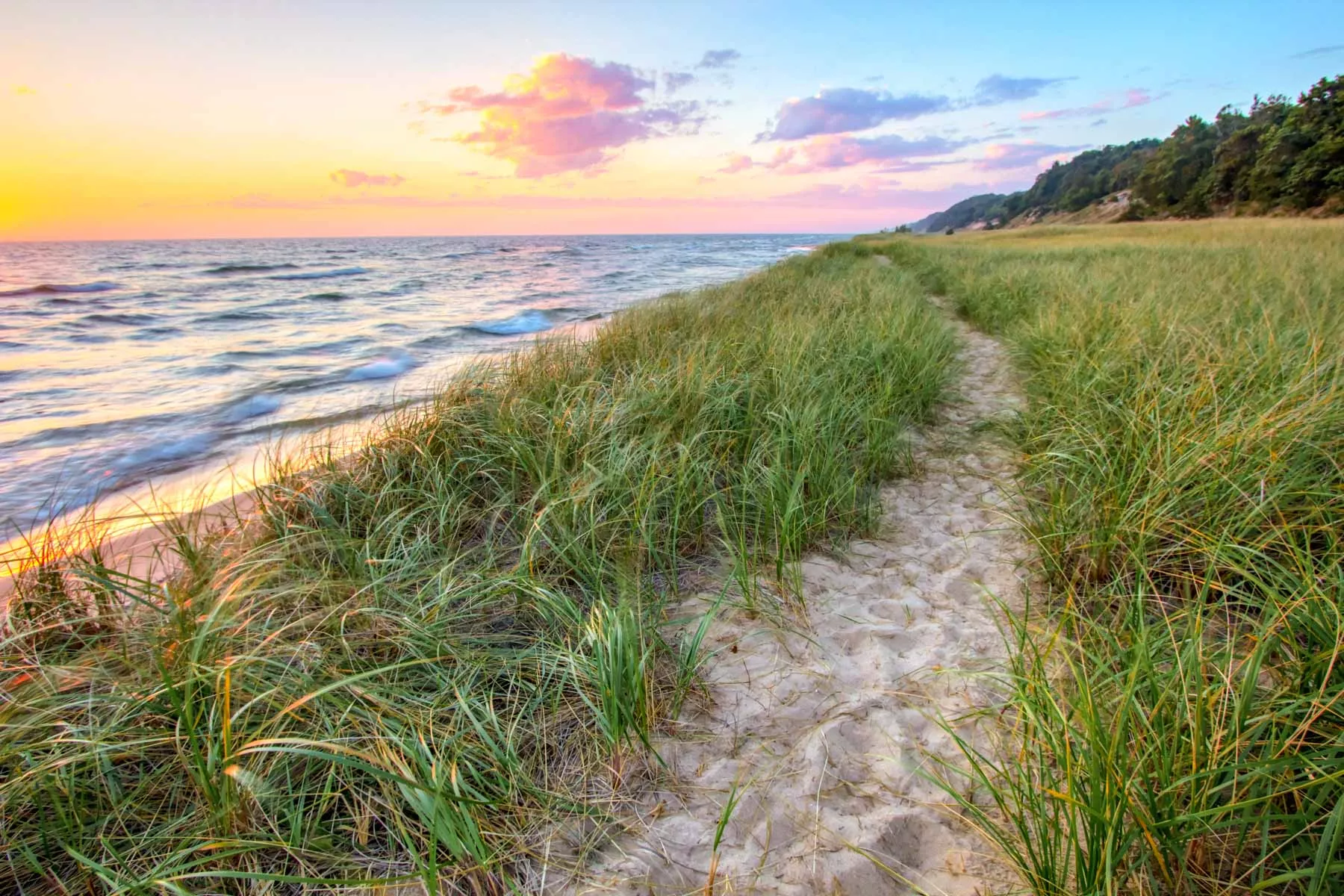
Detroit sits on the Detroit River with Windsor, Ontario directly across the water. The Ambassador Bridge and the new Gordie Howe Bridge make Canada a 10-minute drive. Lake St. Clair and Lake Erie are close, and the Michigan coastline on Lake Michigan is a few hours north.
Summer in Metro Detroit is legitimately great. Belle Isle (a 982-acre island park in the Detroit River), the Metroparks system, and easy access to Northern Michigan make the warm months worth waiting for.
- $1,341+0.4%Zillow Observed Rent Index (city) · 2026-0816th cheapest of 106 cities
- $275k±0FRED / realtor.com · 2026-096th cheapest of 103 cities
- $77k+0.3%Zillow Home Value Index (city) · 2026-081st cheapest of 105 cities
- 5.7%−0.3 ptBLS Local Area Unemployment Statistics · 2026-08tied for 100th lowest of 106 cities
- AQI 55ModerateAirNow · 10/12/26tied for 85th cleanest of 105 cities
- $4.58+2.4%AAA · 2026-10-1378th cheapest of 101 cities
Locals’ verdictGrade Detroit on cost, weather, jobs, people and safety · where it stands on our rankings
Cons of Living in Detroit
#1. The Poverty Rate is Still Devastating
The median household income in Detroit is $39,575. The national median is $78,538. That’s not a gap, it’s a chasm. About 33% of Detroit residents live below the poverty line, one of the highest rates of any major US city.
The downtown revival is real, but it hasn’t reached most of the city. Drive 15 minutes from Midtown in any direction and the reality looks very different. Vacant lots, boarded-up homes, and a lack of basic services like grocery stores persist in many neighborhoods. Detroit is the largest Black-majority city in the US (about 77% Black), and decades of disinvestment, white flight, and deindustrialization created the conditions that persist today. The revitalization raises legitimate gentrification concerns.
#2. Public Schools Have a Long Way to Go
Good news first: Detroit Public Schools Community District hit an 83.2% graduation rate in 2025, the highest since 2008. That’s nearly on par with the state average of 84%. Thirteen of the district’s 24 high schools now meet or exceed the state average.
The bad news: 85% of students still score below benchmarks in math and nearly 64% score below in reading. Only 46% of graduates enroll in higher education. The progress is encouraging, but academic outcomes still lag significantly.
Families with school-age kids should research individual schools carefully. Charter schools, magnet programs, and some neighborhood schools perform well, but the district overall is still catching up.
#3. You’ll Need a Car (Public Transit is Lacking)
Detroit was built by and for the auto industry, and it shows. The QLine streetcar runs 3.3 miles along Woodward Avenue. The People Mover loops 2.9 miles around downtown. Neither is a serious transportation solution.
DDOT bus service exists but coverage is limited and reliability is a constant complaint. Metro Detroit’s sprawl (the metro area covers over 3,900 square miles) makes a car essentially mandatory for daily life. And Michigan car insurance rates are among the highest in the nation, so budget accordingly.
#4. The City vs. Suburbs Divide is Stark
8 Mile Road isn’t just an Eminem movie. It’s the literal dividing line between Detroit and its suburbs, and crossing it can feel like entering a different world. Suburbs like Birmingham, Royal Oak, and Grosse Pointe have excellent schools, well-maintained infrastructure, and median home prices 3-5x higher than Detroit proper.
The regional fragmentation is a real problem. Metro Detroit has 130+ separate municipalities, each with its own services, tax base, and priorities. Regional cooperation has historically been limited, and it shows.
#5. The Winter Weather is Brutal
Detroit averages 43 inches of snow per year. January highs hover around 32F with lows in the teens. Lake-effect moisture off the Great Lakes makes overcast skies the norm from November through March. Seasonal depression is common and worth taking seriously.
The upside is that Michigan summers are genuinely beautiful, with temperatures in the 70s-80s and long daylight hours. But you earn those summers by surviving the winter.
#6. Infrastructure Still Needs Serious Work
Michigan roads are famously terrible, and Detroit is no exception. Potholes, broken streetlights, and slow city services remain daily realities in many parts of the city. Water infrastructure has improved since the Flint crisis brought statewide attention, but aging pipes remain a concern.
The city declared bankruptcy in 2013 with $18 billion in debt, the largest municipal bankruptcy in US history. Recovery has been real but uneven. Basic services that people in other cities take for granted (reliable trash pickup, quick emergency response, well-lit streets) can be hit or miss depending on the neighborhood.
#7. The Auto Industry Giveth and Taketh Away
GM, Ford, and Stellantis employ roughly 111,000 people in Metro Detroit. That concentration is both an asset and a vulnerability. When the auto industry struggles (2008 financial crisis, pandemic shutdowns, EV transition layoffs), the entire regional economy feels it immediately.
The economy has diversified somewhat. Healthcare (Henry Ford Health, Detroit Medical Center), tech (Rocket Companies), and the creative sector are growing. But auto still dominates in a way that creates real risk.
#8. Population Loss and Visible Blight
Detroit’s population peaked at 1.85 million in 1950. It bottomed around 620,000 before the recent uptick to about 645,000. That’s still a 65% decline over 75 years. The result is roughly 40 square miles of vacant land within city limits. Entire blocks sit empty in some parts of the city.
The city has demolished over 25,000 blighted structures since 2014, and land bank programs are working to repurpose vacant lots. But the scale of the vacancy issue is unlike any other American city. Some people find the open space liberating. Others find it unsettling.
Tell the next person the thing the guide misses.
FAQ – Living in Detroit
Is Detroit a good place to live?
It depends entirely on what you value. If affordability, cultural richness, food, and sports matter to you, Detroit offers things that most American cities can’t match at any price. If you need strong public schools, reliable transit, and polished infrastructure everywhere you look, you’ll find the city frustrating. Detroit is best suited for people who are adaptable, resourceful, and excited by a city in the middle of reinventing itself.
Is Detroit safe?
Safer than it’s been in 60 years, and getting safer fast. Violent crime dropped 10% in 2025 alone, and homicides hit their lowest level since 1965. That said, the overall crime rate still exceeds the national average significantly. Neighborhood choice matters a lot. Downtown, Midtown, Corktown, and Indian Village are generally safe. Other areas require more caution, especially at night.
What are the best neighborhoods in Detroit?
Corktown is the oldest neighborhood and the hottest right now, with Michigan Central Station, great restaurants, and a growing residential scene. Midtown is walkable, artsy, and home to Wayne State University and the DIA. Indian Village has stunning historic mansions. West Village is quieter and community-oriented. Palmer Woods and Sherwood Forest offer large homes on tree-lined streets.
What is the cost of living in Detroit?
Detroit’s cost of living runs well below the national average. The median home price in the city is around $78,000. Median rent is about $1,100. The median household income is $39,575, so while costs are low, so is earning potential for many residents. Remote workers with outside income have the biggest advantage.
Pros & Cons of Living in Detroit (Post Summary)
Detroit is a city that rewards honesty. The problems are real and visible, from poverty to blight to struggling schools. But the momentum is also real, from historic crime drops to billions in development to a food and arts scene that punches way above its weight. It’s not for everyone. But for the right person, there’s no city in America offering more potential per dollar.
You may also be interested to read: 15 Honest Pros & Cons of Living in Michigan
Frequently Asked Questions About Living in Detroit
Detroit is in the middle of a genuine comeback, and the people who got in early are the ones benefiting most. The downtown and Midtown areas have been transformed with new restaurants, breweries, and development. The arts scene (DIA, MOCAD, music venues) punches well above its weight. Housing is absurdly cheap by big-city standards. The auto industry is still the backbone, but healthcare (Henry Ford, Beaumont), tech, and startups are growing. The downsides are real: crime remains a serious concern in many neighborhoods, public services (especially in the city proper) are inconsistent, and the suburban sprawl creates a stark city-suburbs divide. If you are willing to be part of the rebuild, Detroit rewards that energy.
Detroit proper is one of the cheapest major cities in America. The median home price in the city is around $85,000, though that number is misleading because it includes a lot of distressed properties. In the desirable neighborhoods (Corktown, Midtown, Indian Village, West Village), expect $200,000 to $400,000. The suburbs (Royal Oak, Ferndale, Birmingham, Ann Arbor) range from $250,000 to $500,000+. Rents for a one-bedroom average $1,000 to $1,400 in the city, higher in the suburbs. Michigan state income tax is a flat 4.25%, and Detroit city has an additional 2.4% income tax for residents. Groceries and utilities are near the national average. Car insurance in Michigan is notoriously expensive due to the state’s no-fault system.
Car insurance is the hidden cost that shocks everyone. Michigan’s no-fault insurance system makes Detroit one of the most expensive cities in the country for auto coverage. Budget $300 to $500+ per month. The city-suburb divide is significant: Detroit proper and the surrounding suburbs (Oakland County, Macomb County) have very different tax structures, services, and school systems. The 8 Mile Road boundary is both literal and cultural. Winters are serious: lake-effect snow, ice, and gray skies from November through March. A car with good winter tires is essential. The Detroit city income tax (2.4% for residents, 1.2% for non-residents who work there) adds up. And the comeback is real but uneven: some neighborhoods are thriving while others still have blocks of vacant homes. Research specific streets, not just neighborhoods.
Helpful Related Articles
- Pros & Cons of Living in Michigan
- Best Places to Live in Michigan
- Pros & Cons of Living in Ohio
- Pros & Cons of Living in Minneapolis
- Pros & Cons of Living in Chicago
Related Reading
- Pros & Cons of Living in Michigan
- 15 BEST Places to Live in Michigan
- Pros & Cons of Living in Ohio
- Pros & Cons of Living in Indiana
- Pros & Cons of Living in Wisconsin
- What did the guide get wrong about Detroit?
- What does it actually cost you to live here this year?
- What would you tell someone arriving from out of state?