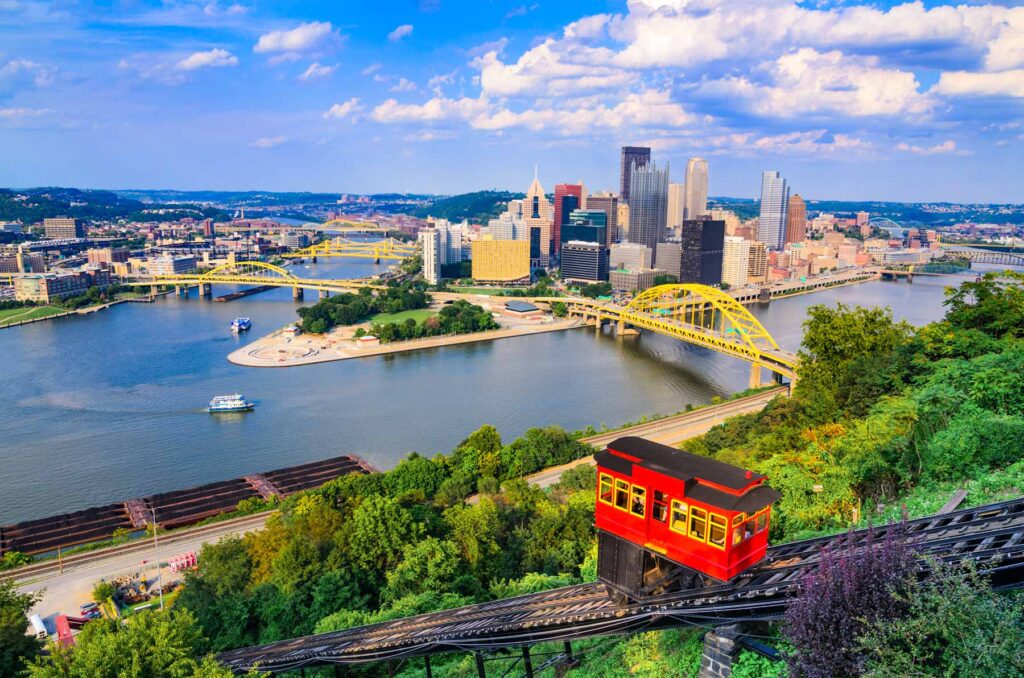
Pittsburgh has pulled off one of the most impressive reinventions of any American city. The steel mills are gone, replaced by a tech corridor, world-class hospitals, and universities that pump talent and energy into the city. The neighborhoods are fiercely distinct, the food is better than you’d expect, and housing is still absurdly affordable compared to peer cities.
But Pittsburgh is also a city built on hills and rivers, which means navigating it is an adventure (and not always a fun one). The weather is gray for months on end, the population is aging, and some neighborhoods are still struggling with the legacy of deindustrialization. It’s a city of real highs and real lows, sometimes on the same block.
Here’s an honest breakdown of what it’s actually like to live in Pittsburgh in 2026.
Locals: still true in 2026? Say so in the thread.
Pros of Living in Pittsburgh
#1. Housing is Remarkably Affordable
The median home price in Pittsburgh is around $235,000, and median rent runs about $1,200 per month. For a city with this much cultural infrastructure, university presence, and job market depth, those numbers are striking. Neighborhoods like Brookline, Beechview, and Dormont offer solid homes under $180K within 15 minutes of downtown.
Even the trendier neighborhoods are accessible. Lawrenceville, which has exploded with restaurants and boutiques over the last decade, has homes in the $250K-$400K range. Squirrel Hill, one of the most walkable and desirable neighborhoods, runs $300K-$500K. Compare that to similar neighborhoods in Boston, D.C., or San Francisco and the value is extraordinary.
#2. The Tech and Healthcare Economy is Real
Carnegie Mellon’s robotics and AI programs have turned Pittsburgh into a legitimate tech hub. Google, Apple, Meta, Uber, Aurora, and Argo AI (now dissolved but its talent stayed local) all have or had significant offices here. UPMC (University of Pittsburgh Medical Center) is the largest employer in the region with over 95,000 employees and drives healthcare, research, and biotech.
The combination of affordable living and high-paying tech and healthcare jobs creates a quality of life equation that’s hard to beat. A software engineer making $120K in Pittsburgh lives considerably better than one making $160K in San Francisco, purely on cost of living math.
#3. The Neighborhoods Have Real Character
Pittsburgh has 90 official neighborhoods, and they don’t just have different names. They have different identities. Lawrenceville is the restaurant and gallery district. Squirrel Hill is the walkable, diverse intellectual hub near Carnegie Mellon and the University of Pittsburgh. The Strip District is the old market district with produce stands, specialty food shops, and Primanti Brothers. Mount Washington offers probably the best urban view in America, looking down on the confluence of the three rivers.
The neighborhood loyalty runs deep here. People identify with their neighborhood first and “Pittsburgh” second. That creates tight-knit communities and a sense of belonging that larger, more transient cities often lack.
#4. The Food Scene Punches Above Its Weight
Forget pierogies and Primanti’s for a second (though both are institutions). Pittsburgh’s food scene has grown into something genuinely impressive. Morcilla in Lawrenceville does Spanish-influenced small plates that would hold up anywhere. Apteka is a nationally recognized vegan bar and restaurant. Bitter Ends Garden and Luncheonette in Bloomfield channels a seasonal, farm-driven menu.
The Strip District on a Saturday morning is one of the best food experiences in any American city. Pennsylvania Macaroni Company, Enrico Biscotti, Wholey’s Fish Market, and dozens of vendors create a walking food tour that’s authentic, not staged for Instagram. The craft beer scene, anchored by Grist House, Hitchhiker, and Cinderlands, is excellent.
#5. Sports Culture is Unmatched for a City This Size
Pittsburgh is one of only 13 cities in the U.S. with teams in all four major sports leagues. The Steelers (NFL), Penguins (NHL), and Pirates (MLB) aren’t just teams, they’re civic institutions. Steelers fandom borders on religious. The Terrible Towel is sacred. Game days reshape the entire city, and the communal energy around sports is something newcomers either love immediately or find overwhelming.
PNC Park, the Pirates’ stadium on the North Shore, is regularly cited as the most beautiful baseball park in America, with the downtown skyline as its backdrop. Even if the Pirates’ record frustrates you, watching a summer game there is hard to beat.
#6. The Cultural Institutions are World-Class
The Carnegie Museum of Art and Natural History is one of the largest museums in the country. The Andy Warhol Museum (the largest museum dedicated to a single artist) is a unique draw. The Mattress Factory is an experimental contemporary art space that takes real risks. Phipps Conservatory, a gorgeous Victorian glasshouse and botanical garden, is a place you’ll visit repeatedly and never get tired of.
The theater scene is also strong. The Benedum Center and the O’Reilly Theater host Broadway tours and Pittsburgh Public Theater productions year-round. For a city of 305,000, the cultural infrastructure rivals cities three times its size.
#7. Access to Nature is Better Than You Think
The three rivers (Allegheny, Monongahela, Ohio) and the hills create a surprisingly green city. Frick Park is 644 acres of wooded trails inside the city limits. The Great Allegheny Passage, a 150-mile rail trail from Pittsburgh to Cumberland, Maryland, connects to the C&O Canal Towpath for a 335-mile car-free ride to Washington, D.C.
Ohiopyle State Park, about 90 minutes southeast, offers whitewater rafting, waterfalls (Cucumber Falls, the natural waterslides), and some of the best hiking in the Mid-Atlantic. The Laurel Highlands are a legitimate outdoor recreation region that’s an easy day trip from the city.
Cons of Living in Pittsburgh
#1. The Weather is Relentlessly Gray
Pittsburgh averages only about 160 sunny days per year, making it one of the cloudiest cities in the United States. From November through March, the sky is a near-constant slate of gray. The city gets about 44 inches of rain and 28 inches of snow annually. It’s not the coldest city (average winter lows in the low 20s), but the persistent overcast creates a heaviness that wears on people.
If you struggle with seasonal depression, this is a serious consideration. The gray isn’t occasional. It’s the default setting for almost half the year. Locals develop coping strategies (vitamin D, light therapy, embracing the brewery scene), but it’s the number one complaint from transplants.
#2. The Hills and Roads are Brutal
Pittsburgh is built on steep hills, and the road system was designed for horse-drawn wagons, not modern traffic. Streets change names randomly, dead-end into hillsides, and intersect at angles that defy logic. GPS struggles here because vertical elevation doesn’t translate well to a flat map. Canton Avenue in Beechview has a 37% grade, making it one of the steepest public streets in the world.
Winter driving on Pittsburgh hills is genuinely dangerous. Locals know which hills to avoid when it snows, but newcomers learn the hard way. The city also has more bridges (446 in Allegheny County) than any other city in the world, which creates bottlenecks, closures, and detour headaches constantly.
#3. Population Decline is a Real Issue
Pittsburgh’s metro area has been losing population for decades. The city proper peaked at 677,000 in 1950 and sits around 305,000 today. While the tech economy has stabilized the decline, and young professionals are moving in, the overall trend is still flat to negative. That shows up in an aging population, struggling school enrollment, and some neighborhoods that feel emptied out.
The loss of population also means a shrinking tax base, which puts pressure on city services, infrastructure maintenance, and public investment. Some neighborhoods that were thriving in the steel era now have significant vacancy and disrepair.
#4. The Earned Income Tax Stings
Pittsburgh levies a 3% earned income tax on residents (1% city, 2% school district). Pennsylvania also has a flat 3.07% state income tax. So right off the top, you’re paying over 6% of your income in state and local taxes before federal taxes. Pennsylvania also has some of the highest gas taxes in the country ($0.576 per gallon as of 2026).
The silver lining is that property taxes, while not low, are manageable given the home prices. But the earned income tax is a real hit, especially for W-2 workers. It’s one of the hidden costs of Pittsburgh’s otherwise affordable reputation.
#5. Air Quality Has History
Pittsburgh’s air quality has improved dramatically from the steel mill days, but it still ranks among the worse metro areas in the U.S. for particulate pollution. The American Lung Association regularly gives Pittsburgh poor marks. The topography (river valleys surrounded by hills) traps pollution in a way that flat cities don’t experience.
The Clairton Coke Works, about 15 miles south of downtown, is one of the largest remaining sources. On inversion days (cold air trapped under warm air), the haze can be visible and the air quality alerts go out. For people with asthma or respiratory conditions, this is worth serious consideration.
#6. The Airport is Inconveniently Located
Pittsburgh International Airport (PIT) is about 25 miles west of downtown, which translates to a 35-50 minute drive depending on traffic. There’s no rail connection to the airport. A cab or rideshare from downtown runs $45-$60. The 28X bus takes about an hour from downtown.
The airport itself is fine (it was recently renovated with a new terminal in 2025), and it has decent route coverage. But the distance from the city center is a real inconvenience for frequent travelers, especially compared to cities where the airport is 15-20 minutes from downtown.
#7. The “Old Guard” Culture Can Be Insular
Pittsburgh is proud of its identity, and that pride can sometimes feel like insularity. The “Where did you go to high school?” question is legendary. Longtime residents often socialize within networks that have been established for decades, and breaking in as a newcomer takes effort. The city’s tight-knit neighborhood culture, which is a pro in many ways, can also feel exclusionary if you don’t have roots here.
This is changing as more transplants move in for tech and healthcare jobs, and neighborhoods like Lawrenceville and East Liberty have become more cosmopolitan. But the old Pittsburgh culture is still strong, and it can take a couple of years to feel truly integrated.
FAQ – Living in Pittsburgh
For many people, yes. The combination of affordable housing, strong job markets in tech and healthcare, distinctive neighborhoods, and cultural institutions that rival much larger cities makes Pittsburgh a genuinely compelling option. The gray weather, hilly terrain, and population decline are real downsides. But if you value character, affordability, and community over sunshine and growth, Pittsburgh delivers.
Very much so compared to peer cities. The median home price is around $235,000, and median rent is about $1,200. The cost of living is roughly 5% below the national average. The earned income tax (3%) and state taxes add up, but the overall math still favors Pittsburgh, especially if you’re comparing it to East Coast or West Coast metros.
Squirrel Hill is walkable, diverse, and close to universities. Lawrenceville is the restaurant and nightlife hub. Shadyside is upscale shopping and dining. The Strip District is the market and food destination. Mount Washington has the famous city view. Regent Square is quiet, walkable, and family-friendly. East Liberty is rapidly revitalizing with major retail and dining.
Gray. Pittsburgh averages only 160 sunny days per year. Winters bring lows in the low 20s and about 28 inches of snow. Summers are warm with highs in the low 80s and moderate humidity. Spring and fall are pleasant but short. The overcast skies from November through March are the dominant weather story and the biggest adjustment for most transplants.
Yes. Pittsburgh levies a 3% earned income tax on residents (1% to the city, 2% to the school district), on top of Pennsylvania’s flat 3.07% state income tax. That puts you over 6% in state and local income tax before federal. Pennsylvania also has some of the highest gas taxes in the country at about $0.576 per gallon. Property taxes are manageable given the home prices, but the earned income tax is a real hit for W-2 workers.
Pros & Cons of Living in Pittsburgh (Post Summary)
Pittsburgh is a city that has reinvented itself without losing its identity. The affordability, the neighborhood character, the food and cultural scenes, and the growing tech economy make it one of the most undervalued cities in the country. The gray weather, the challenging terrain, the aging population, and the insular old-guard culture are legitimate downsides. But for people who want a real city with real character at a price that doesn’t require a tech salary, Pittsburgh is hard to beat. It rewards people who invest the time to get to know it.
You may also be interested to read: Pros & Cons of Living in Pennsylvania
- What did the guide get wrong about Pittsburgh?
- What does it actually cost you to live here this year?
- What would you tell someone arriving from out of state?